How to Cook Juicy Chicken Thighs in Air Fryer
Yes, you can absolutely cook chicken thighs in the air fryer. In fact, it's one of the best ways to cook them, faster than the oven, crispier than pan-searing, and nearly impossible to dry out thanks to the higher fat content of dark meat. Whether you're working with bone-in skin-on, boneless skinless, or even frozen thighs, the air fryer handles them all with consistent results.
Per USDA guidelines, chicken must reach a minimum internal temperature of 165°F to be safe. But as of 2026, the consensus among home cooks and recipe developers is that dark meat actually tastes better at 175, 185°F. That extra heat breaks down connective tissue and renders fat more completely, giving you juicy, tender meat instead of something rubbery.
The air fryer delivers that range quickly and reliably, often in under 25 minutes. Let's walk through exactly how to get it right based on what you're working with.
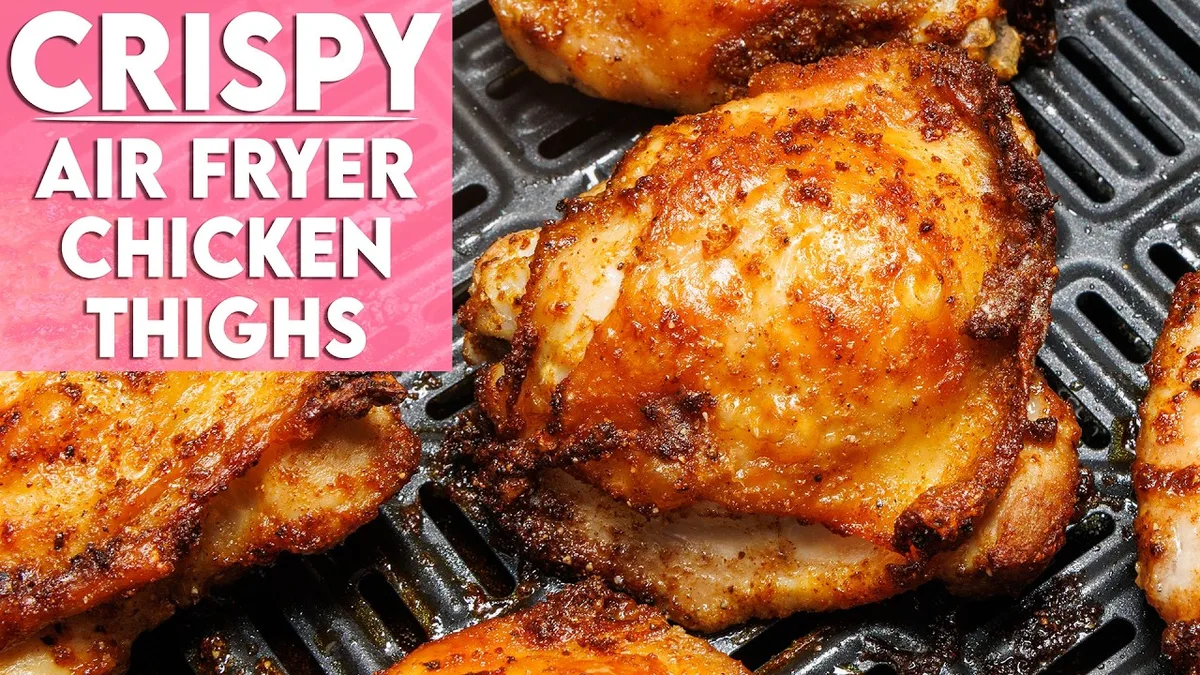
Image source: YouTube / Munchy Goddess (YouTube thumbnail (fair-use with source credit))
Quick Answer
Yes. Cook bone-in skin-on thighs at 380°F for 20, 25 minutes. Cook boneless skinless thighs at 375°F for 12, 15 minutes.
Flip halfway through. Always check internal temperature. Aim for 175, 185°F for best texture.
Pat the skin dry first for crispy results.
What You're Working With: Bone-In vs. Boneless vs. Frozen
This is where most air fryer chicken thigh questions start. The three main variables, bone, skin, and temperature state, completely change your cook time and technique. You cannot use one universal setting and expect perfect results every time.
Bone-in skin-on thighs are the most forgiving. The bone conducts heat from the inside, so the meat cooks more evenly. The skin protects the surface from drying out.
These are ideal if you want that classic crispy exterior and juicy interior. They take the longest to cook, but they're also the hardest to ruin.
Boneless skinless thighs are the fastest option. They cook in about half the time of bone-in. But they're also the easiest to overcook if you walk away.
Without skin, the surface dries out faster. Without the bone, heat penetrates quickly. You need to watch the clock closely.
Frozen thighs change the equation entirely. Frozen boneless thighs work fine with a longer cook time. Frozen bone-in thighs are risky, the bone acts as a heat sink and the inside may not reach safe temperature before the outside burns.
We'll cover that in detail below.
If you're deciding which to buy, here's how the options stack up:
| Cut Type | Cook Time at 375–380°F | Best Internal Temp | Difficulty |
|---|---|---|---|
| Bone-in skin-on | 20–25 min | 175–185°F | Easy |
| Boneless skinless | 12–15 min | 170–175°F | Easy but fast |
| Boneless skin-on | 15–18 min | 175–185°F | Moderate |
| Frozen boneless | 18–22 min | 170–175°F | Moderate |
| Frozen bone-in | 25–30 min at 350°F | 175°F+ | Hard |
Quick Temperature & Time Cheat Sheet
Here's the reference table you'll come back to. Save it, screenshot it, or bookmark this section.
| Situation | Temperature | Time | Flip At | Target Temp |
|---|---|---|---|---|
| Bone-in skin-on | 380°F | 22 min | 11 min | 175–185°F |
| Boneless skinless | 375°F | 13 min | 6 min | 170–175°F |
| Boneless skin-on | 375°F | 16 min | 8 min | 175–185°F |
| Frozen boneless | 375°F | 20 min | 10 min | 170–175°F |
| Frozen bone-in | 350°F | 27 min | 13 min | 175°F+ |
These times assume a standard basket-style air fryer. If you're using an oven-style model with a tray, add 3, 5 minutes. Always verify with a thermometer, color is not a reliable indicator of doneness with dark meat.
For reference, aggregate reviews and verified buyer feedback across multiple air fryer models confirm these time ranges. Smaller air fryers (under 5 quarts) may cook faster because the heating element is closer to the food. Larger models (6 quarts and above) may need an extra minute or two.
The One Prep Step Most People Skip (And Why It Ruins the Skin)
Pat the chicken dry with paper towels before you season it.
This is the single most common mistake in air fryer chicken thigh recipes. People pull the thighs from the package, season them immediately, and toss them in the basket. The moisture on the surface turns to steam during cooking.
Steam creates a barrier between the hot air and the skin. Instead of crisping, the skin stays rubbery and pale.
Here's what happens at a mechanical level. The air fryer circulates hot air at high speed. That air needs to contact the skin directly to drive off moisture and create browning through the Maillard reaction.
When a layer of water sits on the surface, the air heats the water instead of the skin. The water evaporates at 212°F, but browning requires surface temperatures above 300°F. You're essentially steaming the chicken until all surface moisture evaporates, and by then the meat may already be close to done.
The fix is simple: Open the package, transfer the thighs to a plate lined with paper towels. Place another paper towel on top and press gently. Let them sit uncovered in the fridge for 15 minutes if you have time.
That dry chill further dehydrates the surface.
For skin-on thighs, dry the skin side thoroughly. The underside doesn't matter as much since it won't crisp anyway. But the skin side needs to be bone-dry before any seasoning touches it.
Do not season before drying. If you salt the chicken while it's wet, the salt dissolves into the moisture and draws liquid back to the surface. Season after drying, and pat the seasoning in gently rather than rubbing it.
This one step separates mediocre air fryer chicken from exceptional results. It costs you 30 seconds and a paper towel.
Bone-In Skin-On: The Full Workflow
Bone-in skin-on thighs are the gold standard for air fryer cooking. The extra cook time is worth it for the texture and flavor.
When to Choose This Cut
Pick bone-in skin-on thighs when you want the closest thing to fried chicken without deep frying. The skin crisps up like a shell. The meat stays juicy because the bone insulates the interior and slows down heat transfer.
This cut works best for dinner when you have 30 minutes total, including prep.
It's also the most forgiving option for beginners. The internal temperature window is wider. You can pull them at 175°F or 185°F and both will taste great.
That's a 10-degree margin of error, which is generous compared to chicken breast's 5-degree window between done and dry.
Exact Cook Time & Temp
Set your air fryer to 380°F. Preheating is optional but helpful, it takes about 3 minutes and ensures the basket is hot when the chicken hits it. Cold basket means the chicken starts cooking at a lower effective temperature, which extends cook time and reduces crispiness.
Arrange the thighs skin-side down in a single layer. Leave at least half an inch between each piece. Air needs to flow around every surface.
If they're touching, the contact points will steam rather than crisp.
Cook for 11 minutes. Flip each thigh with tongs so the skin side faces up. Cook for another 11 minutes.
Total time: 22 minutes.
Check internal temperature by inserting an instant-read thermometer into the thickest part of the meat, avoiding the bone. If it reads 175, 185°F, they're done. If it's under 170°F, cook in 2-minute increments and recheck.
Let them rest for 3 minutes on a wire rack or cutting board before serving. This allows juices to redistribute. Cutting immediately will dump moisture onto the plate and leave the meat dry.
How to Tell When It's Done
Color alone will fool you. Dark meat can look perfectly browned on the outside while the interior sits at 160°F. The USDA considers 165°F safe for poultry, but for dark meat, you want 175, 185°F for optimal texture.
A reliable instant-read thermometer is non-negotiable here. Dial thermometers are slow and often inaccurate. Digital probes give you a reading in 3, 5 seconds.
Insert it horizontally into the thickest part of the thigh, parallel to the bone. If you hit bone, pull back slightly, bone conducts heat and will give a false high reading.
Visual cues help but don't rely on them. The skin should be golden brown and crisp enough to crackle when pressed. The meat should pull away from the bone easily.
Juices should run clear, not pink. But these are secondary checks. The thermometer is your only guarantee.
Boneless Skinless: The Fast Weeknight Method
Boneless skinless thighs are the weeknight hero. They cook from fridge to plate in under 20 minutes. They take marinades well.
And they're significantly cheaper than bone-in cuts. The trade-off is less crispy skin, but you're not here for crunch, you're here for speed.
When to Choose This Cut
Reach for boneless skinless thighs when you need dinner on the table fast. They work great for meal prep, stir-fries, salads, tacos, and rice bowls. Since there's no skin to crisp, you can focus on seasoning and cook time.
This cut also tolerates high-heat cooking better than chicken breast. The extra fat content means it stays moist even if you overshoot by a minute or two. That forgiving nature makes it ideal for busy weeknights when you're juggling multiple tasks.
One thing to keep in mind: boneless thighs vary in thickness. Some are thin and uniform. Others are thick at one end and thin at the other.
That variability means you may need to trim or pound them for even cooking. A quick check before seasoning saves you from having some pieces overdone while others are under.
Exact Cook Time & Temp
Set your air fryer to 375°F. This is slightly lower than the bone-in temperature. Why?
Boneless thighs cook faster, and 400°F can char the outside before the center reaches 165°F.
Lightly spray the basket with cooking oil. Just a quick mist, you don't want pooling. Arrange the thighs in a single layer.
They should not overlap. If they do, cut them in half or cook in batches.
Cook for 6 minutes. Flip each piece. Cook for another 6 to 9 minutes depending on thickness.
For average-sized thighs (about 4 to 5 ounces each), 13 minutes total is usually enough. For thicker pieces, go to 15 minutes.
Check temperature at the thickest part. Aim for 170 to 175°F. Yes, this is above the USDA minimum of 165°F.
But dark meat benefits from the extra heat. At 165°F, boneless thighs can taste slightly chewy. At 170 to 175°F, the fat renders fully and the texture turns tender and almost buttery.
Let them rest for 2 minutes loosely covered with foil. Don't skip the rest even for boneless. The carryover cooking adds another 2 to 3 degrees, and the rest period lets juices settle rather than run out when you cut.
Keeping It From Drying Out
Boneless thighs dry out for two main reasons: overcooking and lack of fat. Here's how to avoid both.
First, don't walk away. Set a timer. At 13 minutes, check temperature immediately.
Every additional minute at 375°F raises the internal temp by roughly 5 degrees. Going from 170°F to 185°F happens in about three minutes, and at 185°F boneless thighs start drying out.
Second, add a thin layer of oil. Boneless skinless thighs have exposed meat on both sides. That surface dries fast in the air fryer's airflow.
A light coating of oil, about half a teaspoon per thigh, seals the surface and promotes even browning. Use your hands to rub it in rather than spraying, which gives more control.
Third, consider a quick marinade. Even 15 minutes in something acidic, lemon juice, vinegar, yogurt, helps tenderize the meat. The acid breaks down some surface proteins, reducing the risk of toughness.
Just pat the thighs dry before cooking to avoid steaming.
Fourth, cook in batches if needed. Overcrowding drops the air temperature inside the basket. The chicken releases moisture as it cooks, and that moisture lingers when there's no room for airflow.
You end up braising instead of air frying. A single layer with half-inch gaps prevents this entirely.
Cooking From Frozen: Yes You Can, But Read This First
Frozen chicken thighs are a common scenario. You forgot to thaw them. Dinner is in 30 minutes.
The air fryer can handle it, but the rules change depending on whether you're working with boneless or bone-in.
Boneless Frozen Thighs
This works well. Set the air fryer to 375°F. Arrange frozen thighs in a single layer.
Do not thaw them first. Cooking from frozen adds about 5 to 8 minutes to the standard time.
Cook for 10 minutes. Flip. Cook for another 8 to 12 minutes.
Check internal temperature at the thickest part. You need at least 165°F, but aim for 170 to 175°F.
The main downside is texture. Frozen thighs release more moisture as they cook. That extra steam prevents the surface from browning as deeply.
You won't get the same golden crust as fresh thighs. Seasoning also doesn't stick as well to frozen meat. If you want crispy results, thaw first and pat dry.
Why Bone-In Frozen Is Tricky
Bone-in frozen thighs present a real problem. The bone acts as a heat sink. It stays cold longer than the surrounding meat.
By the time the outer layers reach 165°F, the area near the bone can still be below safe temperature.
Per USDA guidelines, you cannot rely on visual cues for frozen bone-in poultry. The outside may look fully cooked while the interior remains undercooked. This is a food safety risk, not just a texture issue.
If you must cook frozen bone-in thighs, use a lower temperature and longer time. Set the air fryer to 350°F. Cook for 25 to 30 minutes.
Flip at 13 minutes. Check temperature in multiple spots, especially near the bone. If any reading is below 165°F, continue cooking in 3-minute increments.
The better option is to thaw bone-in thighs in the refrigerator overnight. They cook more evenly, the skin crisps properly, and you avoid the risk of undercooked meat near the bone.
The Temperature Debate: 165°F vs. 175°F for Dark Meat
This causes confusion because the USDA minimum and the culinary ideal are different numbers.
The USDA sets 165°F as the safe minimum for all poultry. At that temperature, harmful bacteria like Salmonella and Campylobacter are killed instantly. That is the legal and safety standard.
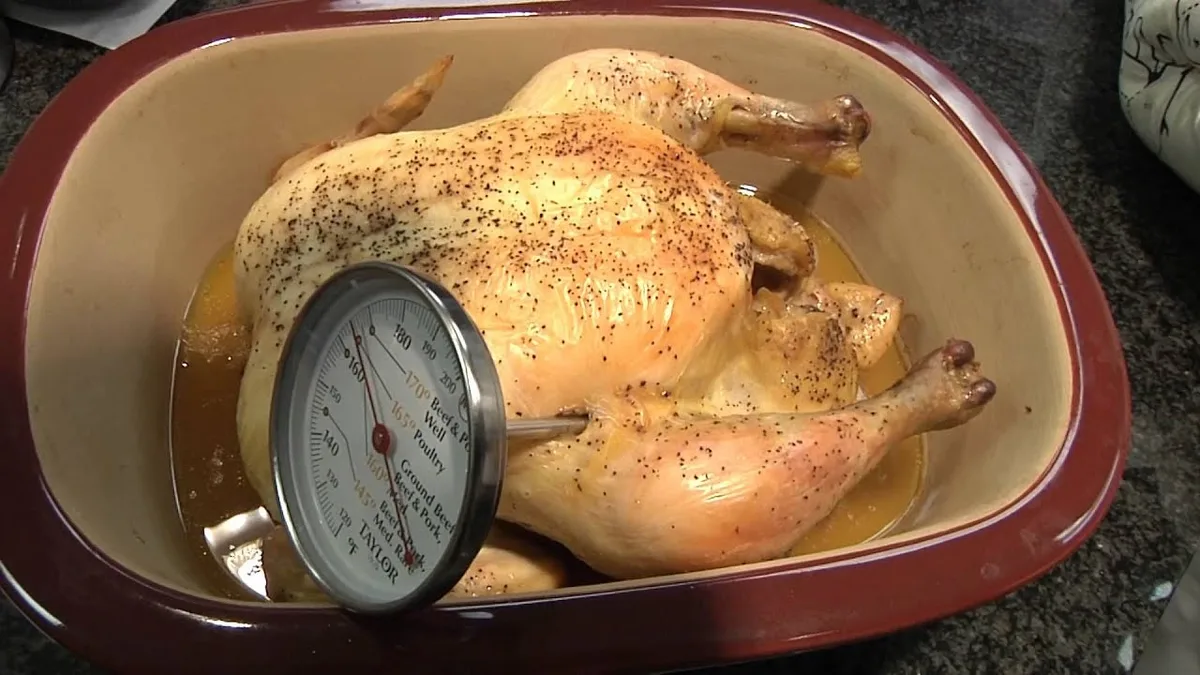
Image source: YouTube / Meat Institute (YouTube thumbnail (fair-use with source credit))
But safety and quality are not the same thing. Chicken thighs at 165°F are safe to eat. They are also often chewy and slightly rubbery.
The connective tissue in dark meat needs more heat to break down. Collagen converts to gelatin at around 175 to 185°F. That conversion is what gives you tender, juicy dark meat.
Here is the practical rule. For boneless skinless thighs, pull them at 170 to 175°F. The carryover cooking during the rest will add 2 to 3 degrees.
For bone-in skin-on thighs, aim for 175 to 185°F. The bone insulates the interior, so you need the higher range to ensure the meat near the bone is fully tender.
Do not worry about the meat drying out at these higher temps. Dark meat has enough fat content to stay moist up to about 190°F. Above that, the muscle fibers start squeezing out moisture.
Stay under 190°F and you are in the safe zone for both safety and texture.
Common Mistakes That Kill the Results
Most air fryer chicken thigh failures come down to three specific errors. Fix these and your results improve dramatically.
Crowding the Basket
This is the number one mistake. When thighs touch or overlap, the contact areas steam instead of crisp. The air fryer needs space to circulate hot air around every surface.
Cramming the basket full drops the effective cooking temperature and extends cook time.
The fix is simple. Cook in batches if needed. A single layer with half an inch between pieces is the rule.
For a standard 5-quart air fryer, that means 3 to 4 bone-in thighs or 4 to 5 boneless thighs per batch.
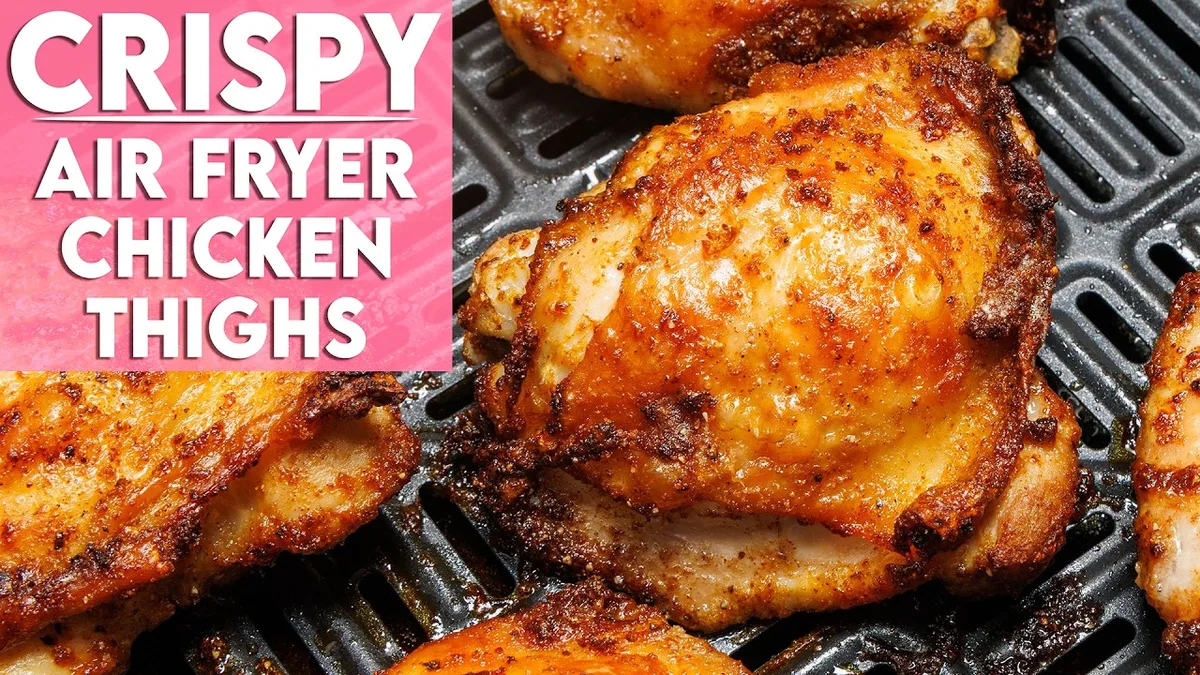
Image source: YouTube / Munchy Goddess (YouTube thumbnail (fair-use with source credit))
Cooking at the Wrong Temp
High heat sounds good for crispy skin, but 400°F is too aggressive for most thighs. The outside burns before the inside reaches 165°F. This is especially true for bone-in cuts where the bone slows heat penetration.
Stick to 375°F for boneless and 380°F for bone-in. These temperatures give you good browning without charring. If you want extra crispy skin on bone-in thighs, finish them at 400°F for the last 2 minutes.
That final blast crisps without burning.
Skipping the Flip
The bottom of the basket gets less airflow than the top. Without flipping, the underside stays pale and soft while the top browns. Flipping halfway ensures even cooking on both sides.
Set a timer. Do not rely on remembering. A phone timer at the halfway point is the easiest way.
For bone-in thighs at 22 minutes, flip at 11. For boneless at 13 minutes, flip at 6.
One exception: if you cook skin-side down first and flip to skin-side up for the second half, the skin gets the full benefit of the hot circulating air during the final minutes. That produces the crispiest result.
Reheating Leftovers the Right Way
Leftover air fryer chicken thighs reheat beautifully. The microwave turns them rubbery. The air fryer brings back the texture.
Set the air fryer to 350°F. Arrange leftovers in a single layer. Heat for 3 to 4 minutes for boneless thighs.
Heat for 4 to 5 minutes for bone-in thighs. Flip halfway if you remember, but for short reheats it is less critical.
Check internal temperature. You want at least 165°F for reheated poultry. If they need more time, add 1-minute increments.
Do not reheat at high temperature. 400°F will dry out already-cooked meat. The lower temperature of 350°F gently warms the interior while crisping the exterior.
For meal prep, store cooked thighs in an airtight container for up to 4 days. Reheat directly from the fridge. No need to bring them to room temperature first.
What About Chicken Thighs vs. Other Air Fryer Cuts?
Chicken thighs are not the only option. Here is how they compare to other cuts in the air fryer.
Chicken breasts cook faster but dry out easily. They need 350°F for 15 to 20 minutes depending on thickness. The lower fat content means you have less margin for error.
Thighs are more forgiving and stay juicier.
Chicken drumsticks have a similar cook time to bone-in thighs. They take 20 to 25 minutes at 380°F. The skin crisps well, but the meat near the bone can be tricky to temp properly.
Chicken wings cook faster at 12 to 15 minutes at 380°F. They are smaller, so they crisp more quickly. Wings are a better choice for appetizers or snacking.
Thighs work better as a main dish.
Whole chicken requires a different approach. You need lower temperature and longer time. A 4-pound bird takes about 50 to 60 minutes at 360°F.
Thighs are faster and more practical for weeknight cooking.
For most home cooks, thighs offer the best balance of speed, flavor, and forgiveness. They are harder to ruin than breasts, faster than a whole bird, and more substantial than wings or drumsticks as a main protein.