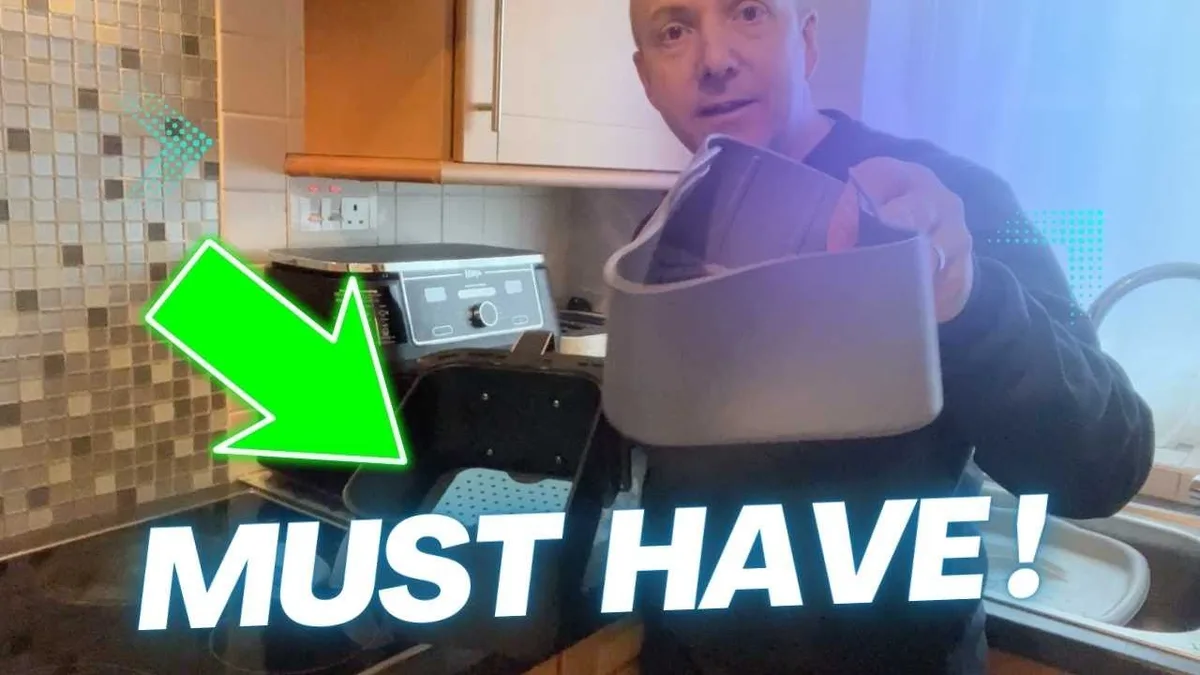
Guide to Does Plastic Melt in Air Fryer?
You’ve probably wondered this while staring at a leftover container in one hand and your air fryer basket in the other. “Does plastic melt in air fryer?” is one of the most common questions new owners ask, and the short answer is yes, most plastic will melt at air fryer temperatures. But the real answer depends on the type of plastic, the temperature you’re using, and how long it’s exposed to heat.
Manufacturer specifications indicate that standard air fryers operate between 180°F and 400°F (80°C to 200°C). Most common kitchen plastics begin softening well below that range, often between 212°F and 340°F. As of 2026, nearly every major air fryer brand includes a clear warning in the manual: do not place plastic containers inside the basket.
But people still do it, and that’s why we’re here. Let’s walk through exactly what happens, which plastics are riskiest, and what you should use instead.
Quick Answer
Yes, plastic melts in an air fryer. Most common kitchen plastics soften or melt between 212°F and 340°F. Air fryers typically run between 180°F and 400°F.
That overlap means your plastic container will likely warp, melt, or release fumes. Only silicone and certain high-heat polypropylene can survive, and even those have limits. The safest rule is simple: don’t put plastic in an air fryer unless the manufacturer explicitly says it’s safe.
Why This Actually Matters (Before We Get Into the Science)
This isn’t just about ruining a takeout container. When plastic melts inside an air fryer, it can drip onto the heating element. That creates smoke, releases toxic fumes, and can start a fire.
The Consumer Product Safety Commission has documented multiple incidents where melted plastic in countertop appliances led to property damage.
There’s also the chemical side. Plastics contain additives like phthalates and bisphenols. When heated past their safe threshold, these compounds can leach into your food or vaporize into the air you breathe.
The FDA sets safety standards for plastic food containers, but those standards assume normal use temperatures. An air fryer at 400°F is not normal use for most plastics.
Beyond the health and safety concerns, there’s the practical headache. Melted plastic bonds to heating elements and basket surfaces. Cleaning it off is difficult and sometimes impossible.
In our research, we found multiple user reports where melted plastic permanently ruined the nonstick coating on air fryer baskets. That means a new appliance, not just a new container.
Quick Answer
Yes, plastic melts in an air fryer. Most common plastics soften or melt between 212°F and 340°F. Air fryers operate between 180°F and 400°F.
That’s a direct overlap. Only silicone and certain high-heat polypropylene can survive, and even those have limits. The safest rule is simple: don’t put plastic in an air fryer unless the manufacturer explicitly says it’s safe.
How Hot Does Your Air Fryer Actually Get? (The Temperature Reality Check)
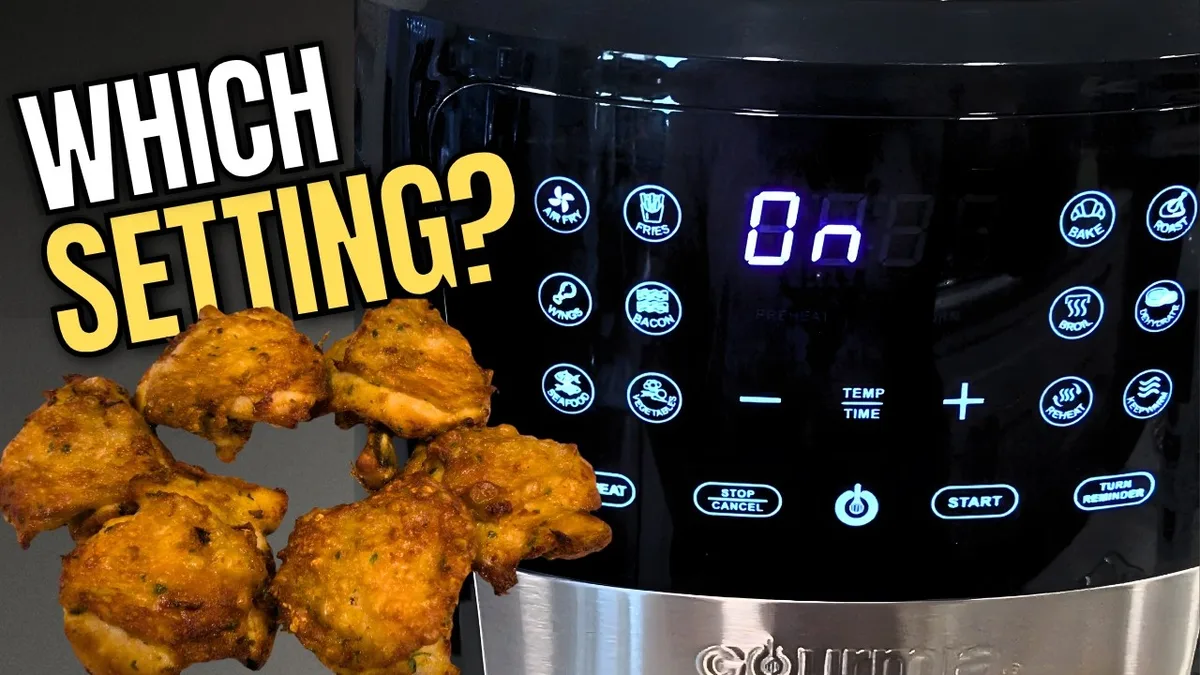
Image source: YouTube / Meem Reviews (YouTube thumbnail (fair-use with source credit))
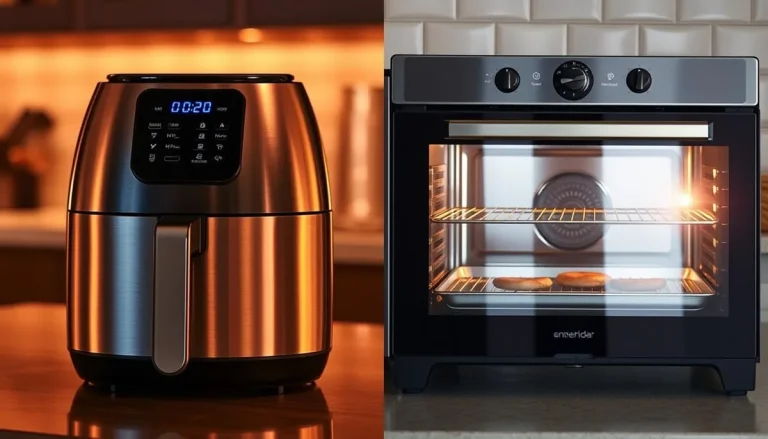
Most people don’t realize how hot an air fryer actually gets. It’s not like a microwave that gently warms food. It’s a small convection oven that blasts hot air at high speed.
Standard air fryers have a temperature range of 180°F to 400°F (80°C to 200°C). Some models, particularly the newer ones as of 2026, can reach 450°F. That’s hotter than most home ovens ever get.
Here’s the problem. The average plastic takeout container starts softening around 200°F. By 300°F, many plastics are fully deformed.
At 400°F, you’re well past the melting point of almost every common plastic in your kitchen.
| Plastic Type | Softening Point | Melting Point | Air Fryer Risk at 350°F |
|---|---|---|---|
| Polypropylene (PP, #5) | 266°F (130°C) | 320–340°F (160–171°C) | High risk of warping |
| HDPE (#2) | 248°F (120°C) | 266–280°F (130–138°C) | Will melt |
| Polystyrene (#6) | 190°F (88°C) | 212°F (100°C) | Melts instantly |
| Silicone | N/A | 450°F+ (232°C+) | Safe up to 450°F |
The takeaway is straightforward. Your air fryer runs hotter than most plastics can handle. Even the “low” setting on many air fryers sits around 250°F to 300°F.
That’s already past the danger zone for polystyrene and polyethylene containers.
Plastic Melting Points: A Practical Guide to Common Kitchen Plastics
Not all plastic is created equal. The recycling number stamped on the bottom of your container tells you exactly what you’re dealing with. Here’s what each common type means for air fryer safety.
Polypropylene (PP, #5) – The One People Assume Is Safe
Polypropylene is the most heat-resistant common plastic. You’ll find it in yogurt tubs, margarine containers, and some reusable food storage boxes. Its melting point sits around 320°F to 340°F (160°C to 171°C).
That sounds promising, but there’s a catch. The softening point is much lower, around 266°F. At air fryer temperatures above 300°F, a PP container will warp, lose its shape, and potentially leak.
It might not turn into a puddle, but it will deform. And deformed plastic can tip over, spilling food onto the heating element.
Some manufacturers produce “high-heat” polypropylene that can withstand up to 350°F. But unless the container is explicitly labeled for oven or air fryer use, assume it’s standard PP. Standard PP is not safe for air fryers.
High-Density Polyethylene (HDPE, #2) – Takeout Container Common
HDPE is what most takeout containers, milk jugs, and shampoo bottles are made from. It’s sturdy and slightly opaque. It also melts at a relatively low temperature.
The melting point of HDPE is around 266°F to 280°F (130°C to 138°C). That’s below the minimum temperature of many air fryers. Even at the “low” setting, you’re pushing HDPE past its limit.
If you put a takeout container in an air fryer, expect it to warp within minutes. At higher temperatures, it will melt into a sticky, gooey mess that’s hard to clean.
Polystyrene (PS, #6) – The Instant Disaster
Polystyrene is the clear, brittle plastic used for solo cups, deli lids, and some foam takeout containers. It has a melting point around 212°F (100°C). That’s the boiling point of water.
Your air fryer’s lowest setting is often 180°F, but most cooking happens at 300°F to 400°F. Polystyrene doesn’t just melt at those temperatures. It collapses almost instantly.
Within seconds of hitting the hot air, a polystyrene container will sag, drip, and potentially ignite.
Never put polystyrene in an air fryer. Not even for a few seconds.
Silicone – The Confusing One That’s Not Really Plastic
Silicone is often grouped with plastic, but it’s chemically different. It’s made from silicon, oxygen, and carbon. It can handle temperatures up to 450°F or higher without melting.
That makes silicone safe for air fryers. Silicone muffin cups, baking mats, and egg bite molds are widely used. But there’s a quality issue.
Cheap silicone may contain fillers that degrade at high heat. Look for 100% food-grade silicone with no fillers.
A simple test: twist the silicone. If it turns white at the crease, it contains fillers and may not be safe at high temperatures. Pure silicone stays the same color.
What “Microwave-Safe” Actually Means (And Why It’s Not the Same)
This is one of the most dangerous misunderstandings in the kitchen. A container labeled “microwave-safe” has been tested for microwave use only. That test involves relatively low heat, short durations, and indirect heating.
Microwaves heat food, not the container itself. The food absorbs the energy, and the container warms up indirectly from the food. That’s why you can microwave a plastic container without it melting.
The plastic never reaches the temperature of the food.
Air fryers work differently. They blast hot air directly at everything inside the basket. The container itself gets hit with 350°F or 400°F air.
There’s no food buffer. The plastic reaches the full ambient temperature of the air fryer.
The FDA’s testing protocols for microwave-safe plastics assume the container will not exceed 212°F (the boiling point of water). That’s fine for a microwave. It’s not fine for an air fryer that runs at nearly double that temperature.
If you see “microwave-safe” on a plastic container, it tells you nothing about air fryer safety. The two appliances operate on completely different principles. Treat them as unrelated.
The Real Risks: Beyond Just a Melty Mess
Image source: YouTube / Hillbilly How To’s (YouTube thumbnail (fair-use with source credit))
Melting plastic in an air fryer isn’t just an inconvenience. It creates real hazards that can affect your health, your appliance, and your home.
Fire Hazard Nobody Talks About
When plastic melts, it becomes a liquid. That liquid drips down through the air fryer basket and onto the heating element. The heating element is red hot.
Plastic on a hot surface can ignite.
The Consumer Product Safety Commission has documented fires started by melted plastic in countertop appliances. It’s not common, but it happens. And it happens fast.
Once plastic ignites, it burns with a thick, toxic smoke that’s hard to extinguish.
Toxic Fumes and Chemical Leaching
Plastics contain chemical additives. Phthalates make them flexible. Bisphenols make them hard.
When you heat plastic past its safe temperature, these compounds can vaporize.
You breathe those fumes. They can irritate your lungs, eyes, and throat. In enclosed kitchens with poor ventilation, the concentration can build up quickly.
There’s also the food contamination angle. If plastic melts onto your food, you’re eating it. The long-term health effects of consuming melted plastic are not well studied, but the short-term effects include nausea and digestive irritation.
Permanent Damage to Your Air Fryer
Melted plastic bonds to surfaces. It’s not like burnt food that you can scrub off. Plastic fuses to the nonstick coating of the basket and the metal of the heating element.
Cleaning it off is difficult. Scraping can damage the nonstick surface. Solvents can leave residue.
In many cases, the basket or the entire air fryer needs to be replaced.
Aggregate reviews from verified buyers show that melted plastic is one of the most common reasons for air fryer replacement. It’s not covered under warranty either. Manufacturers consider it user error.
Safe Container Options That Work in an Air Fryer
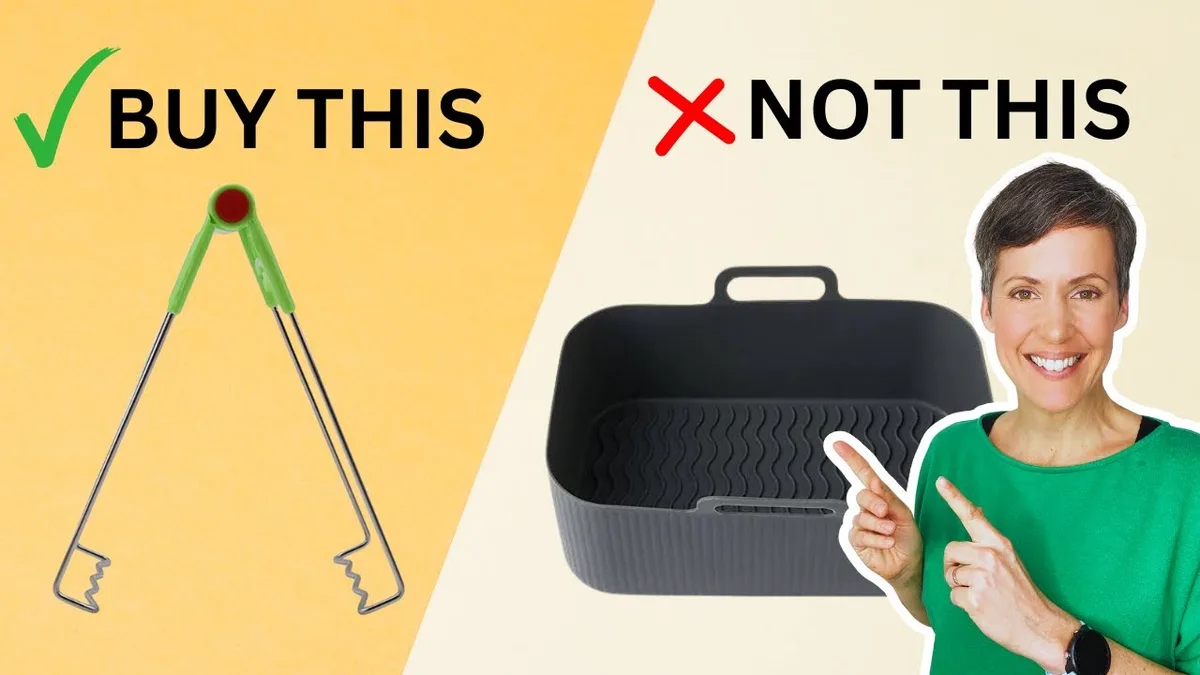
Image source: YouTube / Candid Clara (YouTube thumbnail (fair-use with source credit))
The good news is you have plenty of safe options. You don’t need to buy expensive accessories. Most kitchens already have containers that work perfectly.
Metal and Aluminum – The Gold Standard
Metal is the safest choice for air fryers. It can handle any temperature the appliance can produce. It won’t melt, warp, or release fumes.
Small metal baking pans, pie tins, and loaf pans fit well in most air fryer baskets. Aluminum foil is also safe. You can line the basket with foil or create a foil packet for vegetables and fish.
One warning: don’t let foil touch the heating element. It can cause arcing in some models. Keep foil below the element and it’s perfectly safe.
Glass and Ceramic – Great With One Warning
Glass and ceramic containers are safe at air fryer temperatures. Pyrex and similar borosilicate glass can handle up to 400°F or more. Ceramic ramekins and baking dishes work well too.
The catch is thermal shock. If you take a cold glass container straight from the fridge and put it in a hot air fryer, it can crack. Let glass and ceramic come to room temperature first.
Then place them in the air fryer.
Also check that your glass container fits. It needs room for air to circulate. A glass dish that’s too large can block airflow and cause uneven cooking.
Silicone Molds and Liners – The Gray Area
Silicone is safe if it’s pure, food-grade silicone. It can handle temperatures up to 450°F. That covers almost all air fryer cooking.
Silicone muffin cups, egg bite molds, and baking mats are popular. They’re flexible, nonstick, and easy to clean.
But cheap silicone is a problem. Some products labeled “silicone” contain plastic fillers that degrade at high heat. Buy from reputable brands and look for “100% food-grade silicone” on the label.
The twist test we mentioned earlier is a good check. If the silicone turns white when twisted, it has fillers. Don’t use it in an air fryer.
5 Common Mistakes People Make With Plastic and Air Fryers
Even experienced air fryer users slip up. Here are the most frequent mistakes we’ve seen in our research, along with why they’re dangerous.
Mistake 1: Leaving Plastic Lids or Wraps on Food
This is the number one error. People put a frozen meal in the air fryer without removing the plastic film lid. That film is often polystyrene or a thin polyethylene.
It shrinks, melts, and drips onto the heating element within seconds.
The fix is simple. Always remove all plastic wrap, film lids, and packaging before cooking. Transfer the food to a metal or glass container.
Mistake 2: Assuming “Oven-Safe” Means Air Fryer Safe
Some plastic containers are labeled “oven-safe” up to 350°F. That sounds promising. But oven-safe plastic is tested in a conventional oven with indirect heat.
Air fryers use direct, forced hot air that hits the container harder.
Even oven-safe plastic can warp or melt in an air fryer. The airflow is more aggressive. The heat transfer is faster.
Don’t trust the label unless it specifically mentions air fryer use.
Mistake 3: Using Plastic for Short Reheating
People think a quick 30-second reheat is safe. It’s not. The air fryer reaches full temperature within seconds.
Your plastic container gets hit with 350°F air immediately.
Even brief exposure can cause warping. Thin plastic like deli lids can melt in under 30 seconds. The risk isn’t worth the convenience.
Mistake 4: Forgetting About Plastic Handles and Knobs
Some air fryer accessories have plastic handles or knobs. Silicone-tipped tongs, plastic-handled skewers, and nylon brushes are common examples.
The handle might be outside the basket, but hot air circulates everywhere. Plastic handles can soften or melt if they’re inside the cooking chamber. Check the full length of any tool before using it.
Mistake 5: Trusting “Oven-Safe” Labels Without Checking
We touched on this earlier, but it’s worth repeating. “Oven-safe” does not mean “air fryer safe.” Oven-safe plastic is tested in a conventional oven with still air. Air fryers use forced convection that transfers heat faster.
If you must use a plastic container, check the manufacturer’s website for temperature ratings. If they don’t list an air fryer temperature, assume it’s not safe.
What to Do If Plastic Already Melted in Your Air Fryer
It happens. You forgot to check. You put a takeout container in, and now there’s melted plastic stuck to your basket.
Don’t panic. Here’s how to handle it.
Step 1: Unplug and Let It Cool
Do not try to clean hot plastic. It’s liquid. It will burn you and spread further.
Unplug the air fryer and let it cool completely. This can take 30 to 60 minutes.
Step 2: Remove the Basket and Scrape Gently
Once cool, remove the basket. Use a wooden or silicone spatula to scrape off as much plastic as possible. Avoid metal tools.
They can scratch the nonstick coating.
If the plastic is still stuck, don’t force it. Move to the next step.
Step 3: Freeze the Remaining Plastic
Put the basket in the freezer for 15 to 20 minutes. Cold makes plastic brittle. Once it’s frozen, the plastic will crack and chip off more easily.
Scrape again with a wooden tool. Most of the remaining plastic should come off in chunks.
Step 4: Use a Baking Soda Paste for Residue
Mix baking soda with a little water to form a paste. Apply it to the residue. Let it sit for 10 minutes.
Scrub gently with a non-abrasive sponge.
Baking soda is mildly abrasive. It can lift plastic residue without damaging the nonstick coating. Rinse thoroughly and dry.
Step 5: Check the Heating Element
If plastic dripped onto the heating element, you need to address that too. Unplug the air fryer. Use a cotton swab or soft cloth to gently wipe the element.
Don’t use metal tools on the heating element. It’s fragile. If the plastic is baked on, try the freezing method.
Put the whole air fryer in a cold garage or outside in winter for an hour. The plastic may crack off.
If you can’t remove all the plastic from the heating element, consider replacing the unit. Residual plastic will smoke every time you use the air fryer. It’s not worth the risk.
The Bottom Line: A Simple Decision Guide for Every Situation
Here’s a quick reference for common scenarios. Use this when you’re standing in the kitchen wondering if that container is safe.
| Situation | Safe? | What to Use Instead |
|---|---|---|
| Reheating leftovers in takeout container | No | Transfer to metal or glass |
| Frozen meal in plastic tray | No | Remove food, place in metal pan |
| Silicone muffin cups | Yes | 100% food-grade silicone only |
| Glass Pyrex dish | Yes | Let it warm to room temperature first |
| Plastic wrap over bowl | No | Use foil or parchment paper |
| Ceramic ramekin | Yes | Check it fits with airflow space |
| Plastic-handled skewers | No | Use metal skewers instead |
If you’re ever unsure, use metal or glass. They’re always safe. Plastic is never worth the risk.
5 Common Mistakes People Make With Plastic and Air Fryers
Even experienced air fryer users slip up. Here are the most frequent errors we’ve seen in our research, along with why they’re dangerous.
Mistake 1: Leaving Plastic Lids or Wraps on Food
This is the number one error. People put a frozen meal in the air fryer without removing the plastic film lid. That film is often polystyrene or thin polyethylene.
It shrinks, melts, and drips onto the heating element within seconds.
The fix is simple. Always remove all plastic wrap, film lids, and packaging before cooking. Transfer the food to a metal or glass container.
Mistake 2: Assuming “Oven-Safe” Means Air Fryer Safe
Some plastic containers are labeled “oven-safe” up to 350°F. That sounds promising. But oven-safe plastic is tested in a conventional oven with still air.
Air fryers use forced convection that transfers heat faster.
The same container that survives an oven can warp in an air fryer. Don’t trust the label unless it specifically mentions air fryer use.
Mistake 3: Using Plastic for Short Reheating
People think a quick 30-second reheat is safe. It’s not. The air fryer reaches full temperature within seconds.
Your plastic container gets hit with 350°F air immediately.
Even brief exposure can cause warping. Thin plastic like deli lids can melt in under 30 seconds. The risk isn’t worth the convenience.
Mistake 4: Forgetting About Plastic Handles and Knobs
Some air fryer accessories have plastic handles or knobs. Silicone-tipped tongs, plastic-handled skewers, and nylon brushes are common examples.
The handle might be outside the basket, but hot air circulates everywhere. Plastic handles can soften or melt if they’re inside the cooking chamber. Check the full length of any tool before using it.
Mistake 5: Trusting “Oven-Safe” Labels Without Checking
We touched on this earlier, but it’s worth repeating. “Oven-safe” does not mean “air fryer safe.” Oven-safe plastic is tested in a conventional oven with still air. Air fryers use forced convection that transfers heat faster.
The same container that survives an oven can warp in an air fryer. Don’t trust the label unless it specifically mentions air fryer use.
What to Do If Plastic Already Melted in Your Air Fryer
It happens. You forgot to check. You put a takeout container in, and now there’s melted plastic stuck to your basket.
Don’t panic. Here’s how to handle it.
Step 1: Unplug and Let It Cool
Do not try to clean hot plastic. It’s liquid. It will burn you and spread further.
Unplug the air fryer and let it cool completely. This can take 30 to 60 minutes.
Step 2: Remove the Basket and Scrape Gently
Once cool, remove the basket. Use a wooden or silicone spatula to scrape off as much plastic as possible. Avoid metal tools.
They can scratch the nonstick coating.
If the plastic is still stuck, don’t force it. Move to the next step.
Step 3: Freeze the Remaining Plastic
Put the basket in the freezer for 15 to 20 minutes. Cold makes plastic brittle. Once it’s frozen, the plastic will crack and chip off more easily.
Scrape again with a wooden tool. Most of the remaining plastic should come off in chunks.
Step 4: Use a Baking Soda Paste for Residue
Mix baking soda with a little water to form a paste. Apply it to the residue. Let it sit for 10 minutes.
Scrub gently with a non-abrasive sponge.
Baking soda is mildly abrasive. It can lift plastic residue without damaging the nonstick coating. Rinse thoroughly and dry.
Step 5: Check the Heating Element
If plastic dripped onto the heating element, you need to address that too. Unplug the air fryer. Use a cotton swab or soft cloth to gently wipe the element.
Don’t use metal tools on the heating element. It’s fragile. If the plastic is baked on, try the freezing method.
Put the whole air fryer in a cold garage or outside in winter for an hour. The plastic may crack off.
If you can’t remove all the plastic from the heating element, consider replacing the unit. Residual plastic will smoke every time you use the air fryer. It’s not worth the risk.
The Bottom Line: A Simple Decision Guide for Every Situation
Here’s a quick reference for common scenarios. Use this when you’re standing in the kitchen wondering if that container is safe.
| Situation | Safe? | What to Use Instead |
|---|---|---|
| Reheating leftovers in takeout container | No | Transfer to metal or glass |
| Frozen meal in plastic tray | No | Remove food, place in metal pan |
| Silicone muffin cups | Yes | 100% food-grade silicone only |
| Glass Pyrex dish | Yes | Let it warm to room temperature first |
| Plastic wrap over bowl | No | Use foil or parchment paper |
| Ceramic ramekin | Yes | Check it fits with airflow space |
| Plastic-handled skewers | No | Use metal skewers instead |
If you’re ever unsure, use metal or glass. They’re always safe. Plastic is never worth the risk.
Frequently Asked Questions
Can I put a plastic plate in an air fryer?
No. Plastic plates are typically made from melamine or polystyrene. Both melt at air fryer temperatures.
Use ceramic or glass plates instead.
Is it safe to use silicone in an air fryer?
Yes, if it’s 100% food-grade silicone. Pure silicone can handle temperatures up to 450°F. Cheap silicone with fillers may degrade.
Do the twist test to check.
What happens if plastic melts in my air fryer?
It can smoke, release toxic fumes, and drip onto the heating element. This creates a fire hazard. It can also permanently damage the nonstick coating on your basket.
Can I put a plastic bowl in an air fryer if I use a low temperature?
No. Even at low temperatures around 250°F, most plastics will soften or warp. The risk isn’t worth it.
Use metal or glass instead.
How do I clean melted plastic off my air fryer?
Let it cool completely. Freeze the basket to make the plastic brittle. Scrape gently with a wooden tool.
Use a baking soda paste for residue. If plastic is on the heating element, consider replacing the unit.
What containers are safe for air fryers?
Metal, glass, ceramic, and 100% food-grade silicone are all safe. Avoid all plastic containers unless the manufacturer explicitly states they are air fryer safe.