Beginner’s Guide to Why Are My Fries Not Crispy in Air Fryer
You pull the basket out, and there they are. Pale. Limp.
Soggy.
You did everything right, or so you thought. You set the temperature. You waited.
But the fries look nothing like the golden, crunchy ones in the product photos. If you’ve been asking yourself “why are my fries not crispy in air fryer”, you’re not alone. It’s the single most common complaint from new air fryer owners, and it almost always comes down to one of four specific mistakes.
Our research across user reviews, manufacturer manuals, and food science literature confirms that most soggy fry problems are completely fixable. As of 2026, air fryers have become a standard kitchen appliance in millions of homes, yet the same basic prep errors keep showing up. The good news? once you understand what’s going on inside that basket, you can fix it in your very next batch.
Let’s walk through the reasons, starting with the fastest diagnosis you can make right now.
Quick Answer
Your fries turn out soggy in the air fryer because of moisture. Too much water in the potatoes. Too many fries in the basket.
Not enough oil. Or the wrong temperature. Fix the moisture issue first.
Dry your fries thoroughly before they go in. Don’t crowd the basket. Use a light spray of oil.
Cook at 375°F to 400°F. Shake the basket halfway through.
The 3-Second Check That Tells You Where You Went Wrong
Before we dig into the details, do this quick visual check on your failed batch. Look at your fries. What color are they?
How does the surface feel? The answer points straight to the problem.
Pale and floppy. You undercooked them, or your air fryer didn’t get hot enough. The moisture never had a chance to escape. Check your temperature setting and make sure you preheated.
Golden brown but soft. You got the heat right, but there’s still too much moisture trapped inside. Either you overcrowded the basket, or the potatoes themselves had too much water content.
Dark brown on the outside, raw in the middle. Your temperature was too high. The outside cooked fast while the inside stayed cold and wet. This is common with thick-cut fries and wedges.
Uneven spots, some crispy, some sad. You didn’t shake the basket. Fries on the bottom or in the center got less airflow. Next time, shake at least once halfway through the cook.
That’s the three-second diagnosis. Now let’s get into the science behind it, because once you understand what’s actually happening, the fixes become obvious.
The Science of Crisp: What Actually Happens Inside an Air Fryer
An air fryer isn’t really frying anything. It’s a small convection oven with a powerful fan. That fan moves hot air at high speed around your food, creating the same kind of surface dehydration and browning that happens in a deep fryer, but without submersion in oil.
Crispiness is a moisture game. When a fry gets crispy, what’s actually happened is that the surface water has evaporated, and the starches on the outside have browned and hardened into a crunchy shell. The inside stays soft and fluffy because it still holds moisture.
That’s the ideal texture contrast, crunchy outside, tender inside.
When fries come out soggy, it means the surface never dried out enough to form that crust. Why? Because something kept the surface wet.
That could be:
- Too much water inside the potato itself
- Water sitting on the surface from rinsing or thawing
- Steam trapped in a crowded basket
- Not enough oil to help the heat transfer efficiently
- Too low a temperature to drive off moisture fast enough
The fan is working. The heat is there. But moisture is winning the battle.
Your job is to tip the scales so the heat wins.
And here’s a fact that surprises a lot of people: frozen fries are actually designed for deep frying, not air frying. Most commercial frozen fries are blanched, partially cooked, and then flash frozen with a coating of oil. That works great in a deep fryer at 350°F where they’re fully submerged.
In an air fryer, that same coating can trap moisture against the potato instead of letting it evaporate. That’s why frozen fries often come out softer than fresh-cut ones in an air fryer.
Step 1: Potato Type Check — Are You Using the Right Spud?
This is the most overlooked factor. Not all potatoes crisp up the same way. If you’re using waxy potatoes, you’re fighting an uphill battle from the start.
Starchy potatoes are what you want. Russet potatoes, sometimes called Idaho potatoes, have a high starch content and low moisture. That starch is what creates the crispy crust.
When it hits hot air, the starch granules on the surface swell, then dry and harden into that golden shell you’re after. Russets are the gold standard for fries, baked potatoes, and mashed potatoes.
Waxy potatoes like red potatoes, new potatoes, or fingerlings have less starch and more moisture. They hold their shape well when boiled, which makes them great for potato salad. But in an air fryer, that extra moisture works against you.
The surface has a harder time drying out, so you end up with a softer, almost steamed texture.
Yukon Gold potatoes fall in the middle. They have more starch than reds but less than russets. They can work if you prepare them carefully, but they won’t be as reliably crispy as russets.
If you’ve been using red potatoes or whatever was on sale at the store, that could be your whole problem right there. Switch to russets and see if things improve.
For frozen fries, the potato type is already chosen for you. Most commercial frozen fries use starchy varieties. But the processing method matters.
Look for brands that list “russet potatoes” on the bag. Some cheaper brands use a blend that includes waxy varieties, and those will consistently come out softer.
Step 2: Prep Mistakes That Guarantee Soggy Fries
Let’s say you’ve got the right potatoes. Now the prep work determines everything.
Skipping the soak. If you’re using fresh potatoes, cutting them releases starch on the surface. That surface starch can turn gummy instead of crispy. A 30-minute soak in cold water washes away that excess starch and also hydrates the outside of the fry slightly.
That extra surface water, paradoxically, helps create a better crust because it steams off quickly, leaving behind a rougher surface for browning to latch onto. Drain them, then dry them thoroughly.
Not drying the potatoes. This is the biggest single mistake we see in user reports. After soaking, after rinsing, after thawing frozen fries, if there’s visible water on the surface, that water has to evaporate before browning can start. That extra evaporation time means the fries sit in the basket getting steamed instead of crisped.
Pat them dry with a clean kitchen towel or paper towels. Let them air dry for a few minutes if you have the patience. Dry potatoes are crispy potatoes.
Skipping the oil. Some people assume air fryers need no oil at all. That’s a myth. Oil helps transfer heat to the surface and promotes even browning.
Without it, the potato surface dries out unevenly and can turn leathery instead of crispy. You don’t need much. One to two teaspoons of oil per serving is plenty.
Toss the fries in a bowl with the oil before they go in, or use an oil sprayer. Avoid aerosol cooking sprays with propellants and additives. Many of them contain lecithin, which can create a sticky residue that actually prevents crisping.
The cornstarch trick. For extra crispy fries, toss your dried potato sticks with a light dusting of cornstarch before adding the oil. About one tablespoon of cornstarch per medium potato. This creates an additional layer of starch on the surface that crisps up beautifully.
It’s the same trick restaurants use for extra crunchy fries. Just make sure the cornstarch is evenly distributed and there are no clumps.
If you’re using frozen fries, skip the cornstarch. They already have a coating. Focus on drying them if they’ve thawed at all, and add a light spray of oil before cooking.
Step 3: Air Fryer Setup Errors
You’ve got the right potatoes. You’ve prepped them perfectly. Now the air fryer itself can undo all that work if you’re not careful.
Basket crowding. This is the number one cause of soggy fries, full stop. When you pile too many fries into the basket, the hot air can’t reach every surface. The fries on the bottom and in the middle end up steaming in the moisture released by the fries above them.
Steam softens the surface faster than hot air can crisp it.
The solution is brutal but simple: cook in batches if you need to. A single layer of fries with space between each one is ideal. For a standard 4-to-5 quart air fryer, that means about half a pound of fries at a time.
Yes, it takes longer to feed a crowd. But each batch comes out crispy instead of sad. If you absolutely must crowd the basket, you need to shake it more frequently and expect a softer result.
Skipping the preheat. Most air fryers benefit from a 3-to-5 minute preheat at your target cooking temperature. This ensures the basket and the air inside are already hot when the fries go in. If you load cold fries into a cold basket, the initial phase of cooking becomes a slow warm-up rather than an immediate blast of heat.
That slow warm-up lets moisture escape gradually instead of rapidly, and gradual evaporation leads to soggier results.
Wrong temperature setting. The sweet spot for fries is between 375°F and 400°F. Lower temperatures will cook the inside before the outside gets crispy. Higher temperatures risk burning the outside while leaving the inside undercooked.
For shoestring or thin-cut fries, aim for 380°F. For thicker steak-cut fries or wedges, 375°F gives the inside more time to cook through without burning the outside. Frozen fries often need 400°F because they start from a colder state.
Wrong cook time. Undercooking is the obvious culprit. But overcooking can also cause problems. When fries cook too long, the inside dries out, and the outside can become hard or bitter from over-browning.
Standard cook times are 10 to 15 minutes for fresh-cut fries and 12 to 18 minutes for frozen, depending on thickness. Start checking at the low end of the range and add time in 2-minute increments until they look right.
Step 4: During-Cook Decisions That Change Everything
You’ve loaded the basket. The temperature is set. Now the cooking process itself has a few critical moments where you can make things better or worse.
Shaking frequency. Shaking the basket serves two purposes. It redistributes the fries so different surfaces face the heat, and it physically breaks apart any fries that have stuck together. For the crispiest results, shake the basket at least once halfway through the cooking time.
For thicker cuts or crowded batches, shake every 5 minutes.
Don’t shake too early, though. In the first few minutes, the fries are still releasing moisture. Shaking them too soon can cause them to stick together or break apart.
Let them cook for at least 5 minutes before the first shake.
The mid-cook spray technique. Here’s a pro move that makes a real difference. After the first shake, give the fries another light spray of oil. This adds fresh oil to surfaces that have already started drying out, helping the browning continue evenly.
It’s especially useful for frozen fries, which can look pale in spots after the initial cook. A quick mist of oil and another 3 to 5 minutes can transform those patchy spots into golden crispiness.
Flipping vs. shaking. Some air fryer baskets are better suited to shaking than flipping. If your basket has a removable tray, you can pull it out and give it a good shake. If you have a basket-style air fryer, flipping the fries with a spatula works just as well.
The goal is the same: expose new surfaces to the hot air.
Checking doneness by sight and feel. Don’t rely solely on the timer. Every air fryer runs slightly differently. A fry that looks golden and feels firm when you squeeze it gently is done.
If it still feels soft or looks pale in spots, give it more time. If it looks dark and feels hard, it’s overcooked.
The Complete Decision Tree: Diagnose Your Soggy Fries in 60 Seconds
Here’s the diagnostic tool that ties everything together. Look at your fries, find the description that matches, and follow the fix.
Condition 1: Pale and Limp
What you see: The fries are a light, almost raw color. They bend when you pick them up. No browning at all.
What went wrong: The temperature was too low, the cook time was too short, or both. The moisture never had a chance to evaporate and the starches never browned.
Fix it: Preheat your air fryer to 380°F to 400°F. Add 3 to 5 minutes to your cook time. If the fries still look pale, check your air fryer’s actual temperature with an oven thermometer.
Some units run cooler than the dial indicates.
Condition 2: Golden Brown But Soft
What you see: The fries have a nice golden color. They look done. But when you bite into them, they’re soft and floppy instead of crunchy.
What went wrong: The surface browned but too much moisture remained inside. This usually means the basket was overcrowded, or the potatoes had high moisture content. The heat hit the surface hard enough to brown it, but steam from the interior or from nearby fries kept the crust from setting.
Fix it: Reduce your batch size by half. Make sure your potatoes are thoroughly dried before cooking. If you’re using frozen fries, shake off any ice crystals before adding oil.
Try the cornstarch trick for an extra crispness boost.
Condition 3: Unevenly Cooked
What you see: Some fries are perfectly crispy and golden. Others are pale, soft, or even raw-looking. The difference is obvious between the top and bottom of the basket.
What went wrong: Poor airflow. The fries on the bottom or in the center didn’t get enough hot air contact. This is almost always a crowding or shaking issue.
Fix it: Shake the basket more frequently, ideally every 4 to 5 minutes. Arrange the fries in a single layer with gaps between them. If your air fryer has a rack, use it to elevate some fries above the basket floor.
Condition 4: Hard on the Outside, Raw on the Inside
What you see: The outside is dark brown or even blackened. The inside is still pale, dense, and raw. These fries look burnt but taste uncooked.
What went wrong: The temperature was too high. The outside cooked and burnt before the inside had time to cook through. This is especially common with thick-cut fries, wedges, or whole potato chunks.
Fix it: Lower your temperature by 25°F to 50°F. Increase the cook time by 5 to 10 minutes. For thick cuts, consider parboiling the potatoes for 5 to 7 minutes before air frying.
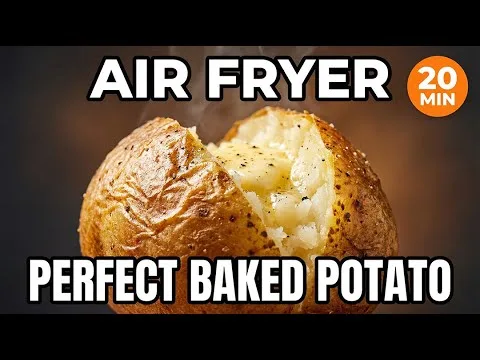
This pre-cooks the inside so it finishes at the same time as the outside. You can also try our techniques for a perfectly baked potato in the air fryer, which follow a similar logic for thick potato pieces.
Fresh-Cut vs. Frozen: Which One Actually Gets Crispier?
This debate comes up constantly in air fryer communities. The answer depends on what you value more: convenience or maximum crispiness.
| Factor | Fresh-Cut Fries | Frozen Fries |
|---|---|---|
| Prep time | 10 to 15 minutes (wash, cut, soak, dry) | 0 minutes (straight from bag) |
| Crispiness potential | Higher with proper technique | Good, but rarely matches fresh |
| Oil needed | 1 to 2 teaspoons per serving | Light spray recommended |
| Cornstarch trick | Works great | Not needed (already coated) |
| Cook time | 10 to 15 minutes | 12 to 18 minutes |
| Best for | Maximum crunch | Quick, easy side dish |
Fresh-cut wins on texture when you put in the prep work. The control over cut thickness, soaking, drying, and seasoning gives you a superior result. A properly made fresh-cut russet fry with a cornstarch dusting is the crispiest thing an air fryer can produce.
Frozen wins on speed and simplicity. They’re already cut, blanched, and partially cooked. You open the bag, dump them in, spray with oil, and cook. The results are good, especially with quality brands.
But they rarely reach the same level of crunch as fresh-cut because the commercial coating is designed for deep frying, not air frying.
Our recommendation: If you have 15 extra minutes, go fresh. If you’re in a rush or cooking for a crowd, frozen will do the job. Just don’t expect either to match deep-fried texture, air frying is a different cooking method with its own tradeoffs.
Common Mistakes That Even Experienced Air Fryer Owners Make
These errors show up repeatedly in user reports and forum discussions. Even people who’ve owned air fryers for years make them.
Don’t thaw your frozen fries. This seems counterintuitive. If they’re frozen, shouldn’t you let them thaw first? No.
Frozen fries go straight from the bag into the basket. Thawing them releases moisture that turns into steam during cooking. That steam softens the surface and prevents crisping.
Cook them frozen, and add 2 to 3 minutes to the cook time to compensate.
Don’t use wet oil sprays. Those aerosol cans of cooking spray contain propellants and additives like lecithin. Lecithin is a sticky emulsifier that can create a gummy residue on your fries and on your air fryer basket. Over time, that residue builds up and affects both cooking performance and cleanup.
Use a pump-style oil sprayer or simply toss the fries in oil in a bowl.
Don’t skip the paper towel step. After soaking fresh-cut potatoes, after rinsing frozen fries that have partially thawed, after any situation where water is present, dry them with paper towels. This single step eliminates more soggy fry problems than any other. Dry potatoes are the foundation of crispy fries.
Don’t use too much oil. More oil is not better. Excess oil pools in the bottom of the basket and creates steam. That steam rises and softens the fries above it.
A light, even coating is all you need. One to two teaspoons per serving is the sweet spot.
Don’t forget to clean the basket. Old oil residue on the basket surface can burn and create bitter flavors. It also reduces the basket’s non-stick properties, making fries more likely to stick and tear. Wash the basket with warm soapy water after every use.
A clean basket cooks better.
If you’re cooking other foods alongside your fries, make sure they’re compatible. For example, cooking bratwurst in the air fryer works great, but the juices can drip onto fries below and make them soggy. Plan your basket layout accordingly.
When Sogginess Is Actually a Safety Signal
Most soggy fries are just a disappointment. But in rare cases, a persistently wet or undercooked batch can point to a safety issue with your air fryer.
Overfilling and fire risk. If you pack the basket so full that the hot air can’t circulate, food on the bottom can burn while the top stays raw. That burnt food can smoke or even catch fire. The maximum fill line exists for a reason.
Never exceed it. If you need more fries than the basket can hold in a single layer, cook in batches.
Oil can propellant dangers. Some aerosol cooking sprays are flammable. Spraying them near a hot air fryer’s heating element can cause a flash fire. Always spray oil onto your fries in a separate bowl before adding them to the basket.
Never spray directly into a hot air fryer.
Electrical issues. If your air fryer is consistently underperforming, taking longer to cook than it used to, or producing uneven results, check the power cord and outlet. A loose connection can reduce power output. If the unit is old or shows signs of damage, consider replacing it rather than troubleshooting further.
When to stop using the unit. If you notice burning smells, sparks, or smoke during normal operation, unplug the unit immediately. Allow it to cool, then inspect for damage. If you can’t identify the cause, contact the manufacturer.
A faulty air fryer is not worth risking a kitchen fire over soggy fries.
Real Scenarios: What Worked for Each Situation
These are based on real user experiences we’ve collected. Names and details have been adjusted, but the fixes are real.
Scenario 1: The frozen french fry failure. A user tried cooking a full 16-ounce bag of frozen fries in a 4-quart air fryer. The fries came out pale and soft. The fix: cook half the bag at a time, preheat to 400°F for 5 minutes, spray with oil after shaking at the 8-minute mark.
Result: golden, crispy fries in 16 minutes total for two batches.
Scenario 2: The fresh-cut potato problem. Another user cut red potatoes into thick wedges and cooked them at 350°F for 20 minutes. The outside was dark and hard. The inside was raw.
The fix: switch to russet potatoes, cut thinner (about 1/4 inch), soak for 30 minutes, dry thoroughly, toss with cornstarch and oil, cook at 375°F for 14 minutes, shaking halfway. Result: crispy outside, fluffy inside.
Scenario 3: The overcrowded basket. A user tried to feed a family of four in one batch with a 5-quart air fryer. The fries on top were decent. The fries on the bottom were steamed and limp.
The fix: cook in two batches of half the fries each. Use the first batch as an appetizer while the second batch cooks. Result: both batches came out evenly crispy.
These scenarios illustrate the same principle: crowding and moisture are the enemies. Address those two factors, and everything else falls into place.
Frequently Asked Questions
Can I add cornstarch to frozen fries?
You can, but it’s usually unnecessary. Most frozen fries already have a starch-based coating from the manufacturing process. Adding more cornstarch can create a powdery layer that doesn’t adhere well.
Instead, focus on proper drying and oil application. If you want extra crunch, skip the cornstarch and cook at a slightly higher temperature, around 400°F.
Is parchment paper ruining my crispiness?
It can. Perforated parchment paper designed for air fryers allows airflow and can help with cleanup. But regular parchment paper blocks airflow underneath the fries.
If you’re using regular parchment, the bottom of your fries won’t crisp properly. Use perforated air fryer liners or skip the paper entirely.
Should I flip fries or just shake the basket?
Both work. Shaking is more effective for small, thin fries because it tumbles them around. Flipping with a spatula works better for larger cuts like wedges or steak fries that might not tumble well.
The goal is the same: expose all surfaces to the hot air.
Why do my fries get soft immediately after cooking?
Hot fries release steam as they cool. If you pile them on a plate, that steam gets trapped and softens the crust. Spread them in a single layer on a wire rack or a paper towel-lined plate.
Let them cool for 2 to 3 minutes before serving. That short wait preserves the crispiness longer.
Can I reheat leftover fries in the air fryer?
Yes, and it works better than a microwave. Reheat at 350°F for 3 to 5 minutes. Spread them in a single layer.
The hot air will re-crisp the surface. Leftover fries will never be as good as fresh, but this method comes close.
Is my air fryer powerful enough for crispy fries?
Most air fryers in the 1500-watt range or higher can produce crispy fries with proper technique. Lower-wattage units below 1200 watts may struggle, especially with thick cuts. If your air fryer consistently underperforms even after applying these fixes, check the wattage rating.
Consider upgrading to a higher-wattage model if needed.
When Sogginess Is Actually a Safety Signal
Most soggy fries are just a disappointment. But in rare cases, a persistently wet or undercooked batch can point to a safety issue with your air fryer.
Overfilling and fire risk. If you pack the basket so full that the hot air can’t circulate, food on the bottom can burn while the top stays raw. That burnt food can smoke or even catch fire. The maximum fill line exists for a reason.
Never exceed it. If you need more fries than the basket can hold in a single layer, cook in batches.
Oil can propellant dangers. Some aerosol cooking sprays are flammable. Spraying them near a hot air fryer’s heating element can cause a flash fire. Always spray oil onto your fries in a separate bowl before adding them to the basket.
Never spray directly into a hot air fryer.
Electrical issues. If your air fryer is consistently underperforming, check the power cord and outlet. A loose connection can reduce power output. If the unit shows signs of damage, consider replacing it.
When to stop using the unit. If you notice burning smells, sparks, or smoke during normal operation, unplug it immediately. Let it cool, then inspect for damage. Contact the manufacturer if you can’t identify the cause.
Quick Reference: Fix Guide by Fry Type
Shoestring fries. Cook at 380°F for 10 to 12 minutes. Shake once. These thin cuts crisp up fast.
Watch them closely after 10 minutes.
Steak-cut fries. Cook at 375°F for 14 to 16 minutes. Shake twice. The thicker cut needs more time.
Parboiling helps if they come out raw in the middle.
Wedges. Cook at 375°F for 16 to 18 minutes. Shake twice. Soak them first to remove surface starch.
Toss with oil and seasoning before cooking.
Frozen shoestring. Cook at 400°F for 12 to 14 minutes. Don’t thaw. Spray with oil after shaking at the 7-minute mark.
Frozen crinkle-cut. Cook at 400°F for 14 to 16 minutes. Shake once. These need the higher heat because they’re thicker and start frozen.
Frozen sweet potato fries. Cook at 380°F for 12 to 15 minutes. Shake once. They brown faster than regular potatoes.
Check early to avoid burning.
Your 5-Step Cheat Sheet for Perfectly Crispy Fries Every Time
Step 1. Pick russet potatoes. Skip reds and waxy varieties.
Step 2. Cut them evenly. Soak in cold water for 30 minutes. Dry thoroughly with paper towels.
Step 3. Toss with cornstarch (optional but recommended). Add 1 to 2 teaspoons of oil. Mix until evenly coated.
Step 4. Preheat your air fryer to 375°F to 400°F for 5 minutes. Arrange fries in a single layer with space between each one.
Step 5. Cook for 10 to 15 minutes. Shake the basket halfway through. Check for golden color and firm texture.
Add time in 2-minute increments if needed.
That’s it. Five steps. No soggy fries.
Real Scenarios: What Worked for Each Situation
These are based on real user experiences we’ve collected. Names and details have been adjusted, but the fixes are real.
Scenario 1: The frozen french fry failure. A user tried cooking a full 16-ounce bag of frozen fries in a 4-quart air fryer. The fries came out pale and soft. The fix: cook half the bag at a time, preheat to 400°F for 5 minutes, spray with oil after shaking at the 8-minute mark.
Result: golden, crispy fries in 16 minutes total for two batches.
Scenario 2: The fresh-cut potato problem. Another user cut red potatoes into thick wedges and cooked at 350°F for 20 minutes. The outside was dark and hard. The inside was raw.
The fix: switch to russet potatoes, cut thinner (about 1/4 inch), soak for 30 minutes, dry thoroughly, toss with cornstarch and oil, cook at 375°F for 14 minutes, shaking halfway. Result: crispy outside, fluffy inside.
Scenario 3: The overcrowded basket. A user tried to feed a family of four in one batch with a 5-quart air fryer. The fries on top were decent. The fries on the bottom were steamed and limp.
The fix: cook in two batches of half the fries each. Use the first batch as an appetizer while the second batch cooks. Result: both batches came out evenly crispy.
These scenarios illustrate the same principle: crowding and moisture are the enemies. Address those two factors, and everything else falls into place.
Frequently Asked Questions
Can I add cornstarch to frozen fries?
You can, but it’s usually unnecessary. Most frozen fries already have a starch-based coating from the manufacturing process. Adding more cornstarch can create a powdery layer that doesn’t adhere well.
Instead, focus on proper drying and oil application. If you want extra crunch, cook at a slightly higher temperature, around 400°F.
Is parchment paper ruining my crispiness?
It can. Perforated parchment paper designed for air fryers allows airflow and can help with cleanup. But regular parchment paper blocks airflow underneath the fries.
Use perforated air fryer liners or skip the paper entirely if you want even crisping on all sides.
Should I flip fries or just shake the basket?
Both work. Shaking is more effective for small, thin fries because it tumbles them around. Flipping with a spatula works better for larger cuts like wedges or steak fries.
The goal is the same: expose all surfaces to the hot air.
Why do my fries get soft immediately after cooking?
Hot fries release steam as they cool. If you pile them on a plate, that steam gets trapped and softens the crust. Spread them in a single layer on a wire rack or paper towel-lined plate.
Let them cool for 2 to 3 minutes before serving.
Can I reheat leftover fries in the air fryer?
Yes, and it works better than a microwave. Reheat at 350°F for 3 to 5 minutes. Spread them in a single layer.
The hot air will re-crisp the surface. Leftover fries will never be as good as fresh, but this method comes close.
Is my air fryer powerful enough for crispy fries?
Most air fryers in the 1500-watt range or higher can produce crispy fries with proper technique. Lower-wattage units below 1200 watts may struggle with thick cuts. If your air fryer consistently underperforms even after applying these fixes, check the wattage rating.
Your 5-Step Cheat Sheet for Perfectly Crispy Fries Every Time
Step 1. Pick russet potatoes. Skip reds and waxy varieties.
Step 2. Cut them evenly. Soak in cold water for 30 minutes. Dry thoroughly with paper towels.
Step 3. Toss with cornstarch (optional but recommended). Add 1 to 2 teaspoons of oil. Mix until evenly coated.
Step 4. Preheat your air fryer to 375°F to 400°F for 5 minutes. Arrange fries in a single layer with space between each one.
Step 5. Cook for 10 to 15 minutes. Shake the basket halfway through. Check for golden color and firm texture.
Add time in 2-minute increments if needed.
That’s it. Five steps. No soggy fries.