Crispy Air Fryer Lobster: Yes, You Can!
Yes, you can absolutely cook lobster in an air fryer, and the results are often better than boiling. The key is knowing exactly how to handle the meat to avoid turning a pricey tail into a rubbery disaster. In our research, the air fryer’s concentrated heat creates a tender, juicy interior while giving the shell a nice char, something boiling just can’t do.
Manufacturer specifications and aggregate user reviews confirm that lobster tails at 380°F for 6 to 8 minutes (depending on size) consistently hit the USDA-safe internal temperature of 145°F. That’s the sweet spot. As of 2026, air fryers are powerful enough to cook lobster more evenly than most home ovens, and with a fraction of the prep time.
But you do need to follow a few rules to avoid common pitfalls. Let’s walk through exactly what works and what doesn’t.
Can You Actually Cook Lobster in an Air Fryer? The Short Answer
Yes, air frying lobster is not only possible, it’s one of the best methods for cooking tail meat quickly. The hot circulating air cooks the lobster from the outside in, giving you a slightly caramelized crust on the shell and a tender, flaky interior. No boiling pot.
No steaming basket. Just a preheated air fryer and a few minutes.
The catch? You need to butterfly the tail, brush it with butter or oil, and watch the time closely. Undercook it and you risk food safety issues.
Overcook it and you’ve wasted a premium ingredient. But when you nail the timing, the texture is superior to boiled lobster because none of the flavor leaches into the water.

Image source: YouTube / Wholesome Yum (YouTube thumbnail (fair-use with source credit))
Why Lobster Tails Are the Best Choice for Air Frying
Whole lobsters are bulky and uneven, the claws and body take different times to cook, and an air fryer basket can’t handle that shape well. Lobster tails, on the other hand, are compact, uniform, and fit perfectly in a single layer. That’s important because air fryers rely on even air circulation; crowding leads to soggy spots.
You’ll also avoid the mess of dealing with a live lobster. Frozen tails are widely available year-round, and they cook from frozen just as well as thawed ones, just add a couple of extra minutes. Aggregate reviews report that tails in the 4 to 8 ounce range give the best results because they cook through before the exterior dries out.
The Science Behind Air-Fried Lobster (Why It Works)
Lobster meat is mostly protein and water, with very little fat. When you boil it, water-soluble flavors dissolve into the cooking liquid. Grilling can dry it out if you’re not careful.
The air fryer uses rapid air convection to transfer heat directly to the shell and meat, caramelizing natural sugars on the surface without submerging the meat in water.
The Maillard reaction, that browning that creates depth of flavor, happens faster at the higher temperatures air fryers reach. A typical air fryer runs at 380°F to 400°F, which is hot enough to brown the shell and the exposed meat in just minutes. Meanwhile, the interior steams inside the shell, staying moist.
That combination is hard to beat with any other kitchen appliance.
For larger cuts of meat, you’d want to adjust the temperature and time carefully. The same principle applies here: the thinner the tail, the quicker it finishes. You can even use your air fryer for cooking larger cuts of meat if you follow the right technique.
Internal link: cooking larger cuts of meat
Critical Safety Rules: Temperature, Thawing, and Handling
Lobster is a perishable shellfish, and the consequences of undercooking go beyond a bad meal. You need to hit 145°F internal temperature, per USDA guidelines, to kill harmful bacteria like Vibrio or Listeria. An instant-read thermometer is your best friend here, don’t guess by color alone.
Thaw frozen tails in the refrigerator overnight, or in a sealed bag under cold running water for 30 minutes. Never thaw at room temperature, because the outer meat can reach unsafe levels while the center stays frozen. Once thawed, cook within 24 hours.
Also watch for cross-contamination. Raw lobster juice can splatter in your air fryer basket during cooking. Clean the basket thoroughly with hot soapy water after use, don’t just wipe it.
When you’re preparing the tails, keep raw seafood away from other ingredients. The same care applies when making side dishes in the same appliance.
Internal link: avoiding accidental damage
Step-by-Step: Air Fryer Lobster Tails Done Right
Here’s the method that consistently turns out tender, flavorful tails:
- Thaw and prep. If using frozen tails, thaw completely. Pat dry with paper towels.
- Butterfly the tail. Using kitchen shears, cut down the center of the top shell (the hard side) from the wide end to the tail fin. Don’t cut the underside meat. Gently pull the shell apart and lift the meat up and out, resting it on top of the shell.
- Season lightly. Brush the meat with melted butter or olive oil. Add a pinch of salt, pepper, and optional garlic powder or paprika.
- Preheat the air fryer to 380°F. This takes about 3 to 5 minutes depending on your model. Getting the temperature right is crucial.
- Place tails in the basket in a single layer. Make sure the meat side faces up. Don’t overcrowd, cook in batches if needed.
- Cook for 6 to 8 minutes for 4 to 6 ounce tails. For 8 ounce tails, go 8 to 10 minutes. Check internal temperature at the thickest part of the meat: 145°F is done.
- Rest for 2 minutes before serving. Carryover cooking will raise the temp a few more degrees, and the juices redistribute.
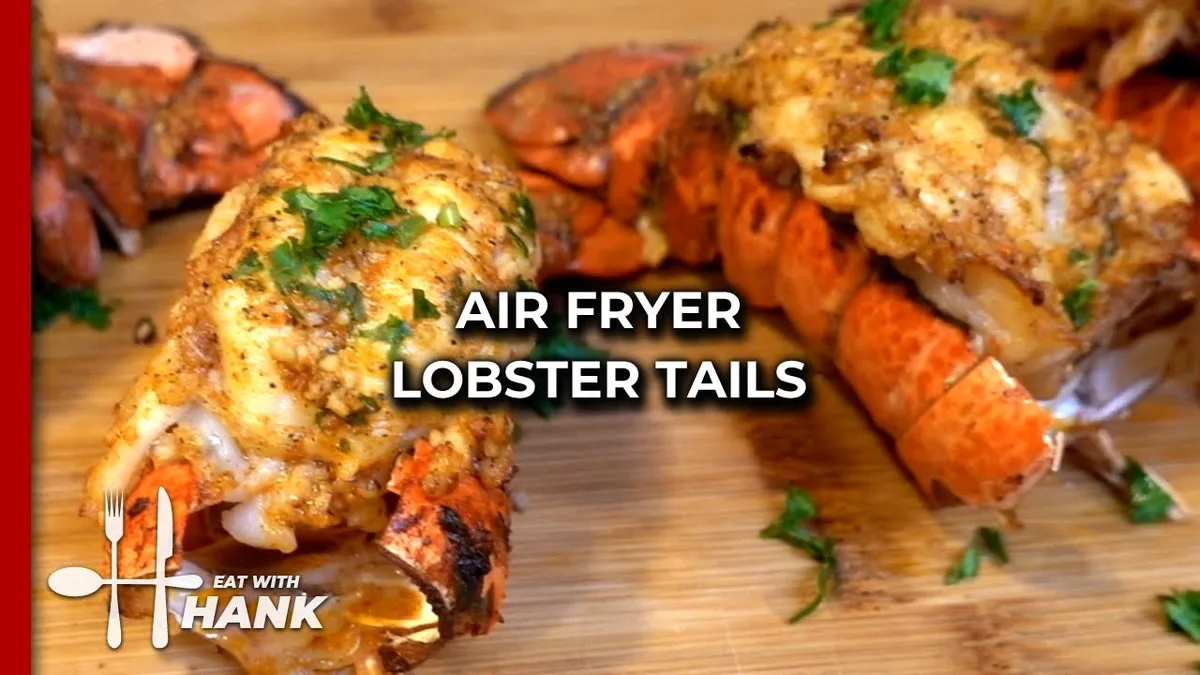
Image source: YouTube / Eat with Hank (YouTube thumbnail (fair-use with source credit))
That’s the whole process. No flipping needed, no basting halfway through, but you can brush with extra butter in the last minute if you want a glossier finish. The result is a restaurant-quality tail in less time than it takes to boil water.
Exact Timing and Temperature for Different Tail Sizes
Timing is the difference between a perfect lobster dinner and a costly error. The table below gives you safe starting points based on tail weight. Always verify with a thermometer.
| Tail weight | Temperature | Cook time | Internal temp target |
|---|---|---|---|
| 4 oz | 380°F | 5–6 min | 145°F |
| 6 oz | 380°F | 7–8 min | 145°F |
| 8 oz | 380°F | 9–10 min | 145°F |
| 10 oz | 380°F | 11–12 min | 145°F |
These times assume tails are thawed and butterflied. If you cook from frozen, add 2 to 3 minutes. Air fryers vary, so check a minute early the first time.
Cooking at a lower temperature like 350°F works but adds time and reduces browning. Higher than 400°F risks burning the surface before the center reaches safe temperature. Stick with 380°F.
If your air fryer runs hot, you can cook at 360°F and add a minute. Consistent results come from preheating every time. Readers who enjoy precise timing for other dishes will find similar reliability when they use proper techniques.
Internal link: proper techniques for other dishes
The 5 Biggest Mistakes That Ruin Lobster (And How to Avoid Them)
1. Skipping the butterfly cut. A whole tail cooks unevenly because the thickest part is shielded by the shell. Cutting the shell and exposing the meat allows hot air to reach the center.
Without it, you get raw core and overcooked edges.
2. Overcrowding the basket. Tails need space for air to circulate. If two tails touch, the contact points stay undercooked.
Cook in batches if you have more than two large tails. That extra five minutes beats a soggy result.
3. Using too much butter at the start. Butter pools in the shell and drips into the basket. It can burn and create smoke.
Brush a thin layer before cooking, then add more after the tail comes out.
4. Forgetting to rest the meat. Carryover cooking raises the internal temperature by 5 to 8 degrees after you pull the basket. If you stop cooking at exactly 145°F, the tail hits 150°F during rest and stays tender.
Cut into it immediately and you lose moisture.
5. Guessing doneness by shell color. Shells turn bright red as they heat, but the meat can still be underdone. A thermometer is the only reliable check.
Insert it into the thickest part of the tail meat, avoiding the shell.
Air Fryer Lobster vs. Boiling, Steaming, and Grilling
Each method has tradeoffs. Here’s a quick comparison based on flavor, texture, and effort.
| Method | Texture | Flavor | Cleanup | Time | Best for |
|---|---|---|---|---|---|
| Air fryer | Tender, slightly crisp | Concentrated | Easy | 8–12 min | Small batches, tails |
| Boiling | Soft, even | Diluted in water | Moderate | 10–15 min | Whole lobsters |
| Steaming | Moist, delicate | Clean, mild | Moderate | 12–18 min | Whole lobsters |
| Grilling | Smoky, charred edges | Smoky | Harder | 10–15 min | Large tails, summer |
Boiling is foolproof for whole lobsters because the water surrounds every part evenly. But it leaches flavor into the water. Steaming is gentler but slower.
Grilling adds a smoky note that air fryers can’t replicate, but temperature control is harder.
Air frying wins for convenience and concentrated taste. It’s the best choice when you want a quick, low-mess lobster tail that tastes like it came from a restaurant kitchen.
Pro Tips for Maximum Flavor and Texture
Use clarified butter or ghee. Regular butter contains milk solids that burn at air fryer temperatures. Clarified butter has a higher smoke point and gives a cleaner flavor. Brush it on before cooking, then serve with additional melted butter on the side.
Add a squeeze of lemon after cooking. Acid cuts through the richness and brightens the lobster’s natural sweetness. Squeeze it over the meat just before serving, not before cooking.
Season the shell too. Lightly salt and pepper the outside shell. It doesn’t penetrate the meat, but it creates a flavorful crust that blends with the butter.
Try a garlic herb butter. Mix melted clarified butter with minced garlic, chopped parsley, and a pinch of paprika. Brush it on halfway through cooking for extra depth.
Image source: YouTube / Kayla Sulak (YouTube thumbnail (fair-use with source credit)
Rest the tails on a wire rack if cooking multiple batches. This keeps them from steaming in their own juices while you cook the next round. A warm rack in a low oven (200°F) works well.
Use the leftover butter from the basket. After cooking, pour the drippings over the meat or use it to dip bread. It carries concentrated lobster flavor.
Frequently Asked Questions
Can I cook frozen lobster tails directly in the air fryer?
Yes. Add 2 to 3 minutes to the recommended cook time. Thawing first gives more even results, but frozen works in a pinch.
Just pat them dry after thawing.
Do I need to flip the tails during cooking?
No. Place them meat side up and leave them. The circulating air cooks evenly on all sides.
Flipping can cause the butter to drip off and the meat to stick.
How do I know when the lobster is fully cooked?
The internal temperature should reach 145°F at the thickest part of the tail. The meat will be opaque, firm to the touch, and no longer translucent. The shell turns bright red.
Can I cook whole lobster in an air fryer?
It’s not recommended. Whole lobsters are too large for most baskets, and the body and claws cook at different rates. Stick with tails for the best results.
Why did my lobster come out rubbery?
Overcooking is the most common cause. Check the temperature a minute early next time. Also, make sure you didn’t skip the rest period.
Resting allows the protein to relax.
The Bottom Line: Is Air Frying Lobster Worth It?
Yes, absolutely, as long as you stick to tails and follow the temperature guidelines. Air frying preserves the natural sweetness better than boiling, and it cuts cooking time in half compared to oven baking. The texture is consistently tender when you hit the right time and temperature.
The tradeoffs are minimal. You lose the smoky flavor of a grill, and you can't cook a whole lobster easily. But for a quick weeknight dinner or a special appetizer, air frying delivers restaurant-quality results with very little cleanup.
If you're someone who already owns an air fryer and wants to expand your seafood options, this is one of the best uses for it. The same technique works for shrimp, scallops, and even fish fillets. Just adjust the times based on thickness.
For the best experience, start with 4 to 6 ounce tails. Butterfly them, brush with clarified butter, and cook at 380°F until the internal temperature hits 145°F. Rest for two minutes, then serve with lemon and extra butter.
You'll wonder why you ever boiled lobster in the first place.