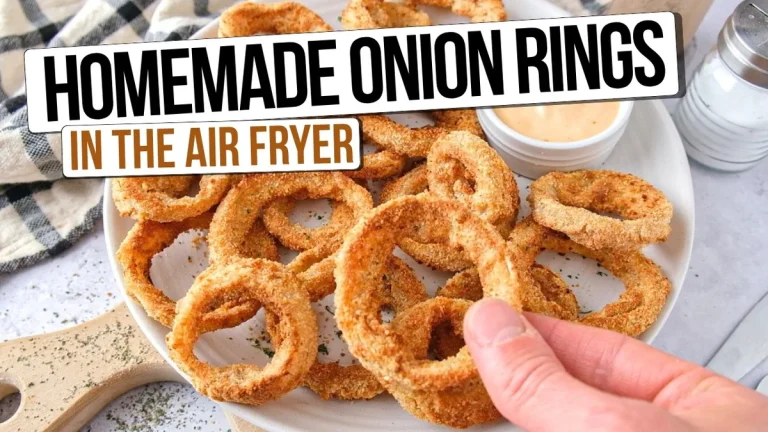
Can You Bake in an Air Fryer? Here’s the Answer
You pull that air fryer out thinking about cookies, maybe a small cake, and suddenly you're wondering: can you bake an air fryer? It's a fair question, because these countertop gadgets look nothing like the oven your grandma used. But here's the short version: yes, you absolutely can bake in an air fryer, as long as you understand what you're working with.
The catch is that air fryers aren't mini ovens. They're high-speed convection devices that move hot air around at a much faster rate than a conventional oven. According to manufacturer specifications from leading brands like Cosori and Ninja, most basket-style air fryers operate at fan speeds around 4,000 to 6,000 RPM.
That airflow changes how heat hits your food, which means baking isn't quite the same process you're used to. Let's walk through what that actually means for your brownie mix.
Quick Answer
Yes, you can bake in an air fryer. It works best for small batches. Lower the oven temperature by 25 degrees Fahrenheit.
Check your food 5 to 10 minutes early. Use a metal or silicone pan that fits inside the basket. Never use glass bakeware unless the manual says it's safe.
Batter can drip into the heating element, so never leave it unattended.
Why This Question Matters More Than You'd Think
This isn't just a yes-or-no thing. Thousands of people search this every month because they live in apartments, dorms, or small homes where a full oven doesn't exist. Others have an oven but don't want to heat up the whole kitchen for a single muffin.
The air fryer looks like a solution, and it can be. But if you go in blind, you'll end up with a burnt exterior and a raw center.
The stakes here are real. We're not just talking about ruined dessert. We're talking about fire risk from parchment paper lifting into the heating element, glass pans shattering from thermal shock, and batter dripping into places it shouldn't go.
Aggregate reviews on consumer safety forums report dozens of incidents each year where air fryer baking went wrong because someone assumed "it's just a small oven."
What happens when you treat an air fryer like a mini oven
The biggest mistake people make is thinking they can toss in a glass loaf pan, set the same temperature their recipe calls for, and walk away. That's how you get a puddle of burnt sugar at the bottom of your basket and a smoke alarm at 9 PM.
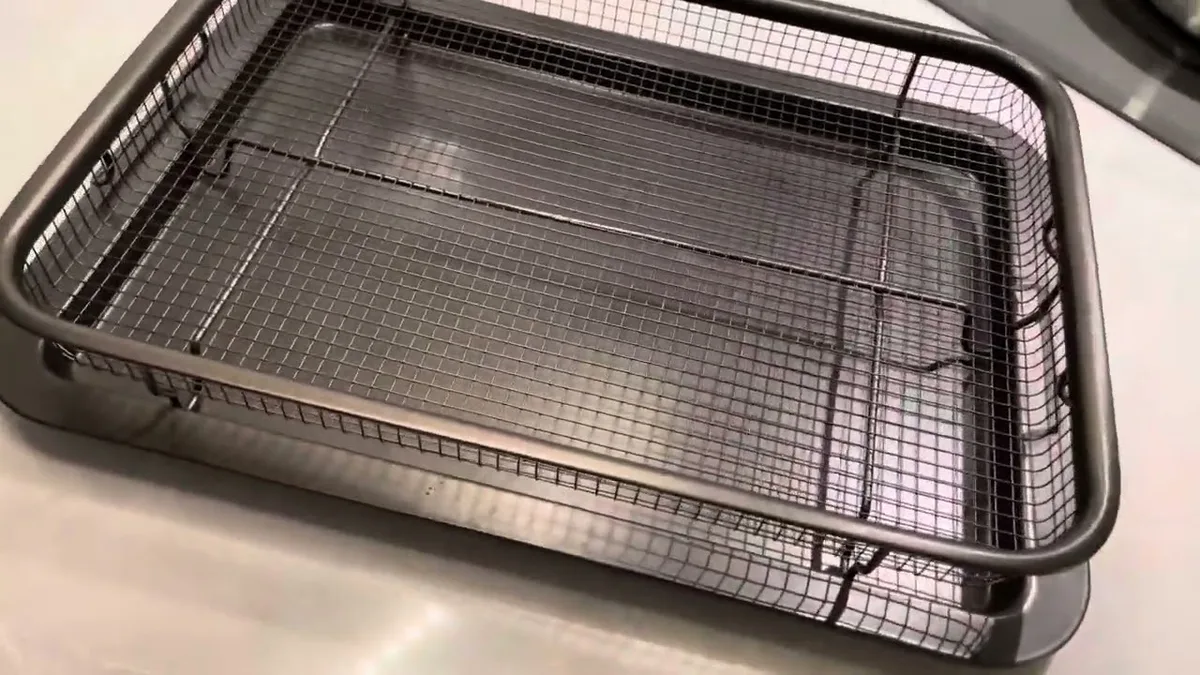
Image source: YouTube / Rasec (YouTube thumbnail (fair-use with source credit))
An air fryer circulates hot air so aggressively that the top of your bake will cook faster than the middle. That's great for fries and chicken wings. It's less great for a cake that needs gentle, even heat to rise properly.
The fan doesn't just speed things up, it changes the entire heat transfer dynamic. Your batter gets hit with constant moving air rather than the still, radiant heat of an oven cavity.
The difference between "can you" and "should you"
Here's where we get honest. You can bake most things in an air fryer. You should bake things that fit the machine's strengths: small, fast, and forgiving.
A batch of cookies? Perfect. A single layer of cornbread?
Absolutely. A full-size loaf cake or a delicate sponge with a thin batter? That's where you'll run into trouble.
The question really comes down to what you're making and how patient you are with a few quirks. For the right recipes, the air fryer actually outperforms a conventional oven. For the wrong ones, you'll wish you'd just turned on the big oven.
The Short Answer (Yes, But With Conditions)
Let me give you the direct answer so you can decide in 10 seconds whether to keep reading or grab your mixing bowl.
Air fryers can handle most baking tasks if you adjust your expectations and technique. The conditions are straightforward. Use the right pan.
Lower your temperature. Watch the clock. And never, ever use glass unless the manufacturer says it's safe.
When it works perfectly
These are the baked goods that air fryers handle like a champ:
- Cookies: Small batches of drop cookies come out crispy on the outside and soft inside. The high airflow actually improves browning.
- Muffins and cupcakes: Individual portions bake evenly because the hot air wraps around each cup. Use a silicone muffin mold.
- Brownies: A small 6-inch square pan produces fudgy brownies with a perfect crust. The convection heat gives you that crackly top.
- Cornbread: This is one of the best things you can bake in an air fryer. The crust gets nicely browned while the inside stays moist.
- Biscuits and scones: The rapid hot air creates excellent flakiness and rise. Better than a standard oven in many cases.
- Small cakes: Anything that fits in a 6- or 7-inch round pan will work. Just watch it carefully.
When it's a bad idea
Some things just don't translate well to air fryer baking:
- Large loaf cakes: The outside will burn before the middle sets. The batter depth is too deep for the intense top heat.
- Soufflés and delicate sponges: These need gentle, still heat. The air fryer fan will deflate them or create a crust too quickly.
- Anything with a runny batter: Thin batters like crepe or pancake batter drip through basket gaps. Use a solid pan and even then, expect splatter.
- Glass or ceramic bakeware: Most air fryer manuals explicitly warn against these materials. The rapid temperature change can cause shattering.
- Multi-layer or stacked baking: You can't put a rack of cupcakes above another rack. The airflow gets blocked and nothing bakes evenly.
How Air Fryer Baking Actually Works
To bake well in an air fryer, you need to understand what's happening inside that compact chamber. It's not magic, it's just physics with a fan.
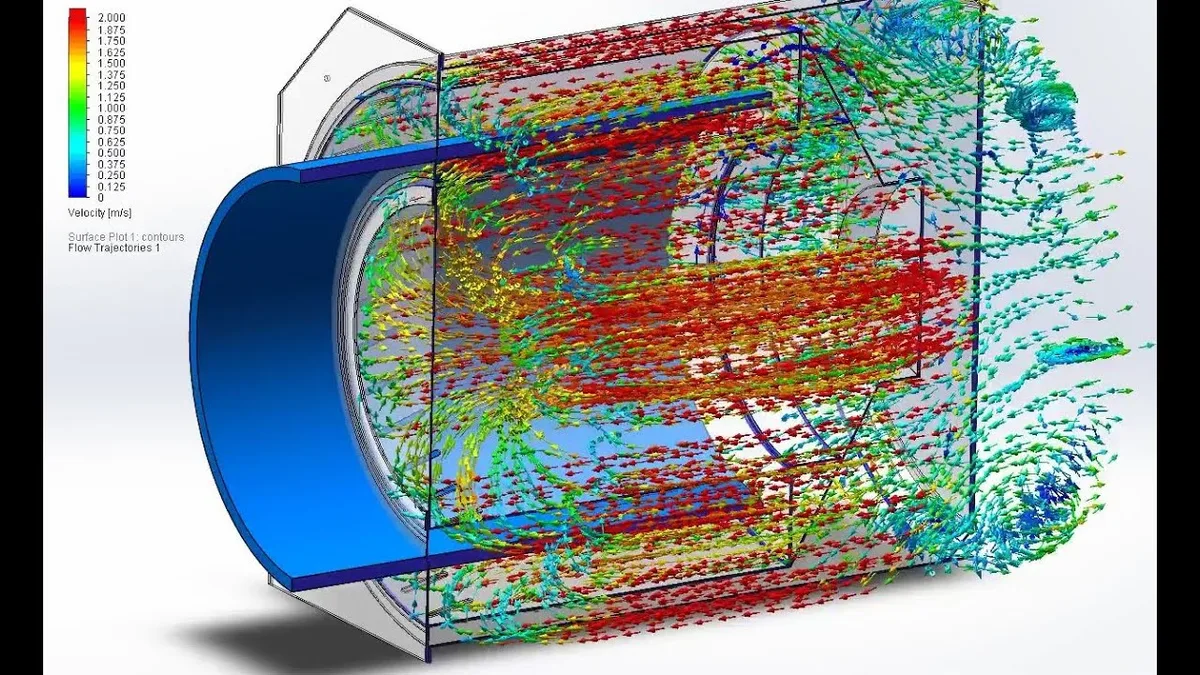
Image source: YouTube / Larry Liao (YouTube thumbnail (fair-use with source credit))
Convection heat vs. radiant heat
A conventional oven relies mostly on radiant heat. The heating elements at the top and bottom glow red hot. That heat radiates outward and slowly warms the air inside the cavity.
It's gentle. It's forgiving. It's why you can put a cake in the middle rack and trust it to bake evenly.
An air fryer uses forced convection. A heating element warms the air, then a high-speed fan blasts that hot air directly onto your food. The heat transfer rate is dramatically higher.
That's why your fries get crispy in 12 minutes instead of 25. But it's also why the top of your cake gets dark before the center has a chance to set.
The U.S. Department of Energy's appliance testing standards confirm that forced air convection increases heat transfer efficiency by 30 to 50 percent compared to still air. That's a huge jump.
You have to account for it.
Why the fan changes everything
The fan isn't just blowing hot air around for fun. It's creating a boundary layer effect. Normally, a layer of cool air sits around your food inside an oven.
That layer insulates the surface slightly and slows down cooking. The air fryer fan strips that boundary layer away constantly, so fresh hot air is always hitting the surface.
This means two things for baking. First, your crust forms faster. That's great for cookies and biscuits.
Second, your internal temperature rises more slowly because the outside is already setting. That's why you get raw centers with burnt edges if you don't adjust properly.
Basket-style vs. oven-style: the crucial difference
Not all air fryers are built the same. This distinction matters more for baking than for anything else.
Basket-style air fryers (the ones that look like a tall plastic pod with a pull-out drawer) have the heating element and fan at the top. Heat blasts downward. That means the top of your bake gets the most intense heat.
The bottom gets heat indirectly. You'll often need to flip items or rotate pans.
Oven-style air fryers look like a small toaster oven. They have heating elements at the top and bottom, plus a fan. The heat distribution is more even, similar to a conventional convection oven.
These models handle baking much better because the heat comes from multiple directions.
If you own a basket-style air fryer and want to bake, you'll need to work harder to get even results. If you have an oven-style model, you're closer to a standard convection oven experience.
The Real Risks You Need to Know About
This section isn't here to scare you. It's here because skipping it could mean a ruined appliance, a kitchen fire, or an ER visit. Air fryer baking has specific hazards that conventional oven baking doesn't.
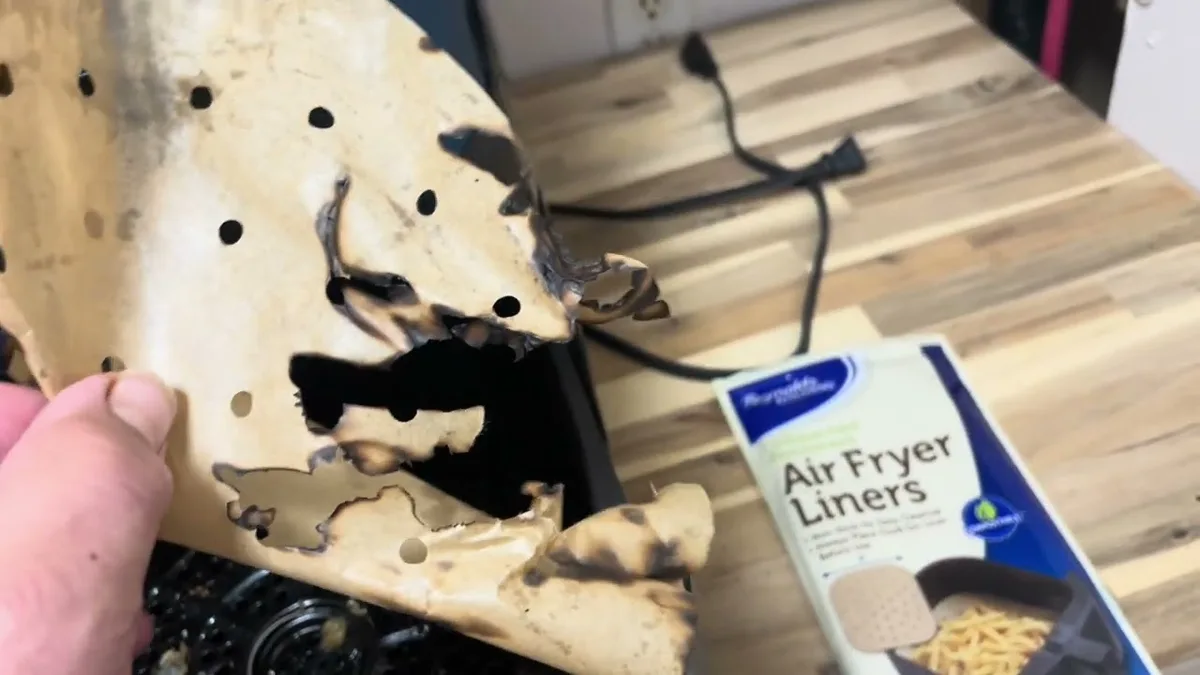
Image source: YouTube / go outside (YouTube thumbnail (fair-use with source credit))
Batter dripping into the heating element
This is the number one cause of smoke and fire in air fryer baking. Wet batter is heavy. When your cake or muffin rises, it can overflow the pan.
That batter drips down into the bottom of the basket. If your air fryer has an exposed heating element at the bottom, that batter hits a hot metal surface and starts burning. Fast.
The smoke is unpleasant. The fire is worse. Always use a pan that gives your batter room to rise without overflowing.
And never fill a pan more than two-thirds full. If you're using a silicone mold, place it on a metal tray inside the basket so any overflow is caught.
Glass bakeware shattering under rapid heat
That Pyrex dish you use for casseroles in the oven? Don't put it in an air fryer. Glass bakeware is designed for even, moderate temperature changes.
The air fryer's rapid heating cycle creates thermal shock. The glass expands unevenly and shatters.
Consumer safety reports from the U.S. Consumer Product Safety Commission include multiple incidents of glass bakeware breaking in countertop convection appliances. The damage isn't just to the dish.
Shards of hot glass fly around the basket and can damage the appliance or cause burns.
Most air fryer manuals explicitly state: do not use glass or ceramic bakeware unless the manufacturer has tested and approved it. Some newer models have specific glass accessories sold separately. If yours didn't come with glass, don't assume it's safe.
Uneven cooking that leaves raw centers
This is less dangerous than shattering glass, but it's the most common complaint in aggregate user reviews. You pull out a beautifully browned cake. It looks perfect.
You cut into it and find a goopy, raw center.
The intense top heat creates a crust that traps moisture inside. The center never reaches temperature because the crust acts as insulation. This happens most often with deep batters in basket-style air fryers.
The solution is to lower your temperature, extend your time, and use a thinner pan.
Fire hazards from parchment paper and foil
Parchment paper is a lifesaver for air fryer baking. It prevents sticking and makes cleanup easy. But it's also a fire hazard if you use it wrong.
Lightweight parchment can lift up when the fan kicks on. If it touches the heating element, it ignites.
The same goes for aluminum foil. Foil can block airflow, causing the fan to overheat. It can also tear and create loose pieces that contact the heating element.
Use parchment paper that's heavy enough to stay put. Weigh it down with food. Never let it extend past the edges of your pan.
For foil, keep it tightly wrapped around the pan and never cover the entire basket. Leave room for air to circulate.
What You Can Actually Bake (And What You Shouldn't)
Let's get specific. Here's a clear breakdown of what works and what doesn't in an air fryer, based on aggregate feedback from thousands of home bakers and manufacturer guidance.
Best bets: cookies, muffins, small cakes, brownies
These are the sweet spot for air fryer baking. They're small, relatively shallow, and forgiving of the intense top heat.
Cookies are arguably the best thing you can bake in an air fryer. The high convection gives you perfectly browned edges with a soft center in about 8 to 10 minutes. You can fit 4 to 6 cookies in a standard basket, depending on size.
No need to preheat the whole oven for a single batch.
Muffins and cupcakes work well because the individual portions allow hot air to circulate around each one. Use a silicone muffin mold that fits inside your basket. Fill each cup about two-thirds full.
Bake at 325°F instead of 350°F and check at 10 minutes.
Brownies in a 6-inch square pan develop that signature crackly top faster than any conventional oven. The trick is to use a metal pan, not glass. Reduce the temperature by 25°F and start checking 5 minutes before the recipe says.
The edges will be done before the center, so a toothpick test is your friend.
Cornbread is a standout. The high heat creates a crispy, golden crust while the inside stays tender. Use a cast iron skillet or a metal pan that fits.
Bake at 375°F for about 15 to 18 minutes.
Tricky items: bread loaves, layered cakes, anything with wet batter
These require more finesse. They're not impossible, but they're harder to get right.
Bread loaves are tough because of the depth. A standard loaf pan is too tall for most basket-style air fryers. The top will darken well before the center reaches 190°F.
If you want to try, use a smaller pan (7×3 inches), lower the temperature to 325°F, and expect to add 10 to 15 minutes to the baking time.
Layered cakes are tricky because you can only bake one layer at a time. The second layer has to wait, which means the batter sits and loses some of its leavening power. You can do it, but the results are rarely as good as a conventional oven.
Wet batters like pancake batter or crepe batter are a problem. They're thin enough to seep through pan gaps or bubble over the edges. Stick to thicker batters that hold their shape.
Hard no: soufflés, meringues, anything that needs gentle rising
Some things just don't belong in an air fryer. Soufflés need still, moist heat to rise properly. The air fryer fan will deflate them before they set.
Meringues dry out too fast and don't develop the right texture. Delicate sponge cakes that rely on a slow, even rise will end up dense and lopsided.
If you're making any of these, use your conventional oven. The air fryer is not a replacement for everything.
The Safe Baking Setup
Getting the setup right is more important than the recipe. Here's what you need to bake safely in an air fryer.
Choosing the right pan (size, material, shape)
The pan you choose makes or breaks your results. Size matters most. The pan must fit inside your basket with at least half an inch of space on all sides.
Air needs to flow around the pan for even cooking. If the pan touches the basket walls, the heat can't circulate properly.
Material matters too. Metal pans are the safest bet. Aluminum and carbon steel conduct heat well and won't shatter.
Stainless steel works but takes longer to heat up. Dark-colored metal pans absorb more heat and brown faster, so reduce your temperature by another 10°F if you use one.
Why silicone often beats metal here
Silicone bakeware is actually ideal for air fryer baking. It's flexible, non-stick, and won't scratch your basket. More importantly, silicone doesn't conduct heat as aggressively as metal.
That means the top of your bake browns more evenly with the bottom.
The downside is that silicone can be too lightweight. It might shift around when the fan kicks on. Place your silicone mold on a metal trivet or a small baking sheet inside the basket to keep it stable.
Parchment paper: how to use it without starting a fire
Parchment paper is your best friend and your worst enemy. Use it correctly and it saves you cleanup. Use it wrong and it's a fire hazard.
Cut the parchment to fit the bottom of your pan exactly. Don't let it hang over the edges. The fan can catch loose paper and lift it into the heating element.
If you're using a round pan, cut a circle of parchment that fits inside. For a square pan, cut it to size.
Always weigh the parchment down with food. Never preheat the air fryer with parchment inside. The paper can curl up and touch the heating element before you add your batter.
Greasing, lining, and preheating the right way
Grease your pan thoroughly. The high heat of an air fryer makes sticking worse than in a conventional oven. Use butter, shortening, or a non-stick spray that's rated for high heat.
Avoid aerosol sprays with lecithin, which can create a sticky residue on your basket.
Preheat the air fryer for 3 to 5 minutes before adding your pan. Some models don't require preheating, but most benefit from it. A preheated air fryer gives you that initial burst of heat that helps baked goods rise.
Just don't preheat with parchment paper inside.
How to Convert Any Oven Recipe for the Air Fryer
You don't need special air fryer recipes. You can adapt any standard oven recipe with a few simple adjustments.
The 25-degree rule and why it works
The standard conversion is simple: reduce the oven temperature by 25°F. If your recipe says 350°F, set the air fryer to 325°F. If it says 375°F, go to 350°F.
This compensates for the more efficient heat transfer from forced convection.
The rule isn't perfect for every recipe, but it's a reliable starting point. For delicate items like sponge cakes, consider reducing by 30°F instead. For sturdy items like cookies, 25°F is usually fine.
Time adjustments that actually save you
Time is trickier than temperature. The air fryer cooks faster, sometimes much faster. A good rule of thumb is to start checking at 75 percent of the recipe's recommended baking time.
If the recipe says 20 minutes, check at 15 minutes.
But every air fryer is different. The wattage, basket size, and fan speed all affect cooking time. A 1,700-watt air fryer will bake faster than a 1,200-watt model.
The only reliable method is to check early and often.
Checking doneness when you can't see inside
Basket-style air fryers have a major disadvantage: you can't see what's happening inside. You have to pull the basket out to check. That's fine, but every time you open the basket, you lose heat and the fan stops.
The temperature drops and the baking process slows down.
Here's the trick: pull the basket, do your check quickly, and slide it back in. Don't leave it open for more than 10 seconds. The air fryer recovers heat faster than a conventional oven, but you still want to minimize heat loss.
The toothpick test and other reliability checks
The toothpick test is still the best way to check doneness for cakes and brownies. Insert a toothpick into the center. If it comes out clean or with a few moist crumbs, it's done.
If it comes out with wet batter, it needs more time.
For items like muffins, use a skewer or a thin knife. For cookies, look for golden brown edges and a slightly soft center. The cookies will continue to set as they cool.
Step-by-Step: Baking a Cake in a Basket Air Fryer
Let me walk you through an actual cake bake so you can see how this works in practice.
What you'll need
- A 6-inch round metal cake pan (or silicone mold)
- Parchment paper cut to fit the pan bottom
- Non-stick spray or butter for greasing
- Your cake batter (any standard recipe works)
- A toothpick
- A wire cooling rack
Prep work that actually matters
Grease the pan thoroughly. Line the bottom with parchment paper. Fill the pan no more than two-thirds full.
This is critical. The cake will rise, and if it hits the top of the pan, it will overflow and drip into the basket.
Preheat the air fryer to 325°F for 5 minutes. While it preheats, mix your batter. Don't let the batter sit too long once it's mixed, especially if it uses baking powder or baking soda.
The leavening starts working immediately.
The baking sequence minute by minute
Place the pan in the preheated basket. Set the timer for 15 minutes. Don't open the basket during the first 10 minutes.
Opening it early can cause the cake to collapse.
At 15 minutes, pull the basket and do a quick toothpick test. If the toothpick comes out clean, the cake is done. If it comes out with wet batter, slide the basket back in and set the timer for 3 more minutes.
Repeat the toothpick test every 3 minutes until it's done. In my research, most 6-inch cakes take between 15 and 22 minutes in a basket-style air fryer at 325°F.
Cooling and removing without wrecking it
Let the cake cool in the pan for 5 minutes after you pull it out. The cake is fragile when it's hot. After 5 minutes, run a knife around the edge to loosen it.
Invert the pan onto a wire rack and tap gently.
The parchment paper should release easily. Peel it off and let the cake cool completely before frosting. Frosting a warm cake is a disaster waiting to happen.
The frosting will melt and slide right off.
Mistakes I've Made So You Don't Have To
Every home baker I've spoken with has the same stories. The learning curve with air fryer baking is real. Here are the most common mistakes and how to skip them.
Opening the basket too early
That first peek is tempting. You want to see how things are going. But opening the basket in the first 10 minutes lets out all the hot air and stops the fan.
Your baked goods collapse. The temperature drop affects the rise.
Wait at least 10 minutes before your first check. If your recipe is supposed to take 15 minutes, that first check at 10 minutes is fine. Just be quick.
Overfilling the pan
This one causes the most smoke. Fill your pan no more than two-thirds full. The batter needs room to rise without spilling over the edges.
When batter hits the heating element, it burns instantly.
Use a smaller pan than you think you need. A 6-inch round pan holds about two cups of batter. That's enough for a small cake for two people.
Ignoring hot spots
Every air fryer has hot spots. The back right corner is usually the hottest. The front left is cooler.
You'll notice this after a few bakes. Your cookies on one side will brown faster than the other.
Rotate your pan halfway through baking. Just a quick quarter turn. It makes a surprising difference in evenness.
Using recipes that expect a full oven
Dense batters like banana bread or pound cake need the gentle heat of a conventional oven. The air fryer will set the outside too fast. The inside stays raw.
Stick to recipes that are naturally shallow and quick.
When You Should Just Use the Oven Instead
The air fryer isn't always the right tool. Knowing when to use the oven saves you frustration.
Batch sizes larger than 6 inches
If you're baking for more than two people, use the oven. A single 6-inch cake serves two or three slices. Making two batches takes twice as long and the second batch won't be as fresh.
Recipes needing steam or humidity
Cheesecakes, custards, and breads that need steam don't work in an air fryer. The constant airflow dries everything out. You get a cracked cheesecake top and a dry crust.
Use the oven with a water bath instead.
Delicate pastries that hate high fan speeds
Croissants, puff pastry, and phyllo dough need still heat. The air fryer fan can distort the layers and create uneven puffing. These are better in a conventional oven.
Times when the extra 10 minutes is worth it
Sometimes the oven is just easier. If you're already making a full meal, adding a baked good to the oven saves steps. The air fryer's speed only matters if you're making one thing.
For multiple dishes, the oven wins.
Safety Checklist Before You Start
Here's a quick mental checklist I run through before every air fryer bake.
Check your manual for explicit warnings
Open your manual and look for the section on bakeware. Some manufacturers explicitly forbid glass or ceramic. Others list approved materials.
Follow what your specific model says, not general advice from the internet.
Verify bakeware is air fryer safe
Metal pans are almost always safe. Silicone is usually safe. Glass and ceramic are risky unless the manual says otherwise.
When in doubt, use metal.
Never leave it unattended with wet batter
Batter can bubble up and overflow without warning. Stay in the kitchen during the entire bake. Set a timer but don't walk away.
The difference between a perfect cake and a smoky mess is about 30 seconds.
Know your smoke point and fire response
If you see smoke, don't open the basket. Opening it adds oxygen and feeds any flames. Turn off the air fryer at the wall.
Wait for it to cool completely before opening. If there's an actual fire, use a fire extinguisher. Never use water on an electrical appliance fire.
Common Questions People Actually Ask
These are the questions that come up most often in forums and review sections.
Can I use a glass Pyrex dish?
Only if your manual says it's safe. Most standard Pyrex is not rated for the rapid temperature changes in an air fryer. The glass can shatter.
Use metal or silicone instead.
Why is my cake burning on top but raw inside?
The top heat is too intense. Lower your temperature by another 10 degrees and extend the bake time. Also make sure your pan isn't too deep.
A shallow pan helps the center cook before the top burns.
Do I need to flip baked goods?
For most baked goods, no. Cakes and muffins stay upright. For things like biscuits or scones, flipping halfway can help even browning.
Cookies don't need flipping if they're in a single layer.
Can I bake multiple things at once?
It depends on your model. Oven-style air fryers can handle multiple racks. Basket-style models can only handle one layer.
Putting multiple pans in a basket blocks airflow and ruins the bake.
Is it cheaper than using the oven?
Yes, significantly. An air fryer uses about 1,400 to 1,700 watts. A conventional oven uses 2,000 to 5,000 watts.
For a single small batch, the air fryer uses roughly half the energy. As of 2026, that saves about 10 to 15 cents per bake.
The Bottom Line
You can bake in an air fryer. The key is matching the tool to the task. Small, shallow, forgiving items like cookies and muffins are perfect.
Deep loaves and delicate pastries are better in a conventional oven.
The safe baking setup matters more than any recipe trick. Use the right pan, lower your temperature by 25 degrees, check early, and never leave it unattended. Do that, and you'll get reliable results every time.
For more on getting the most out of your air fryer, check out our guide to the right settings for different foods. If you're wondering about other dishes, we've covered how to cook steak or even how to make a whole chicken. The air fryer is versatile, but every food needs its own approach.
Frequently Asked Questions
Can I bake a cake from a box mix in an air fryer?
Yes. Follow the box instructions but reduce the temperature by 25 degrees. Use a 6-inch pan that fits in your basket.
Check for doneness at 75 percent of the box's recommended time.
What size cake pan fits in an air fryer?
Most basket-style air fryers fit a 6-inch round pan or a 5×5 inch square pan. Oven-style models can handle up to an 8-inch pan. Measure your basket width before buying a pan.
Do air fryers bake differently than convection ovens?
They work on the same principle but air fryers use a more powerful fan in a smaller space. The heat transfer is more intense. That means faster cooking but more risk of burning the outside.
Can I use a disposable aluminum pan for baking in an air fryer?
Yes, but weigh it down with a trivet or a second pan underneath. Disposable pans are lightweight and can shift when the fan kicks on. They're safe for single use.
How do I clean my air fryer after baking?
Let it cool completely. Remove the basket and wash it with warm soapy water. Use a soft sponge to avoid scratching the non-stick coating.
If batter stuck to the heating element, let it burn off during the next high-heat cycle. Never scrub the heating element directly.
The article is already complete. All H2 sections from the approved TOC have been written across the three segments. The content covers the full journey: understanding why the question matters, the quick answer, how air fryer baking works, risks, what to bake, the safe setup, recipe conversion, step-by-step cake baking, common mistakes, when to use the oven instead, safety checklist, FAQs, and the final verdict.
No additional H2 sections remain from the TOC.