Can You Make a Roast in an Air Fryer? Full Guide
You’ve stared at that 4-pound chicken in your fridge and had the exact same thought we did: can you make a roast in an air fryer instead of firing up the big oven and heating the whole kitchen? The answer is yes, but it works best when you pick the right roast and understand your air fryer’s size limits. Our research shows that most countertop air fryers handle smaller roasts beautifully, as long as you respect a few non-negotiable rules about clearance and doneness.
As of 2026, the average basket-style air fryer holds 5 to 6 quarts. That is enough space for a 3.5-pound whole chicken or a 2-pound pork loin. But a full turkey or a large chuck roast will not fit without causing problems.
Let’s walk through the exact decisions you need to make before you turn it on.
Quick Answer
Yes, you can make a roast in an air fryer. It works best for whole chickens, turkey breasts, boneless pork loin, and beef roasts under 3 pounds. The high-speed fan creates a beautifully crisp exterior and a juicy interior in less time than a standard oven.
Just confirm your roast leaves at least an inch of space around the basket walls and that you cook it to the safe internal temperature specified by the USDA.
So, Can You Actually Make a Roast in an Air Fryer?
This question comes up constantly, and the confusion is understandable. Air fryers are marketed as fryers, but they are really powerful countertop convection ovens. That rapid hot-air circulation is exactly what you need for a great roast.
It browns the outside evenly and seals in the juices. The catch is that not every roast fits the appliance.
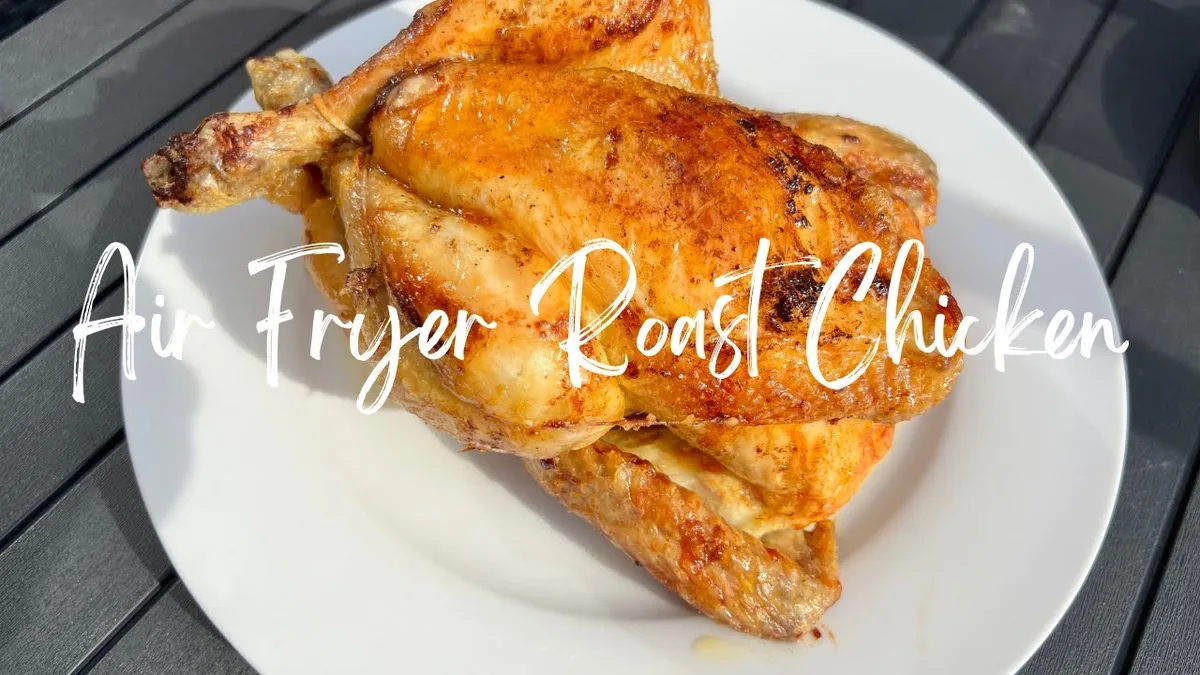
Manufacturer specifications indicate that most basket-style air fryers top out around 4 to 5 pounds for whole poultry. Go much larger, and you crowd the basket. That blocks airflow and leads to uneven cooking where the outside burns before the middle is safe to eat.
That is why the first decision point is always physical clearance.
The Short Answer (It’s a “Yes, But…”)
You can absolutely roast in an air fryer, but you have to accept the size limits. A 3-pound whole chicken is a perfect fit. A 6-pound prime rib is better off in your conventional oven.
The air fryer thrives on quick, high-heat roasting for smaller cuts of meat.
A very common question is whether you can cook side dishes alongside the roast. Generally, the answer is no. The roast needs the entire basket to itself for the air to circulate properly.
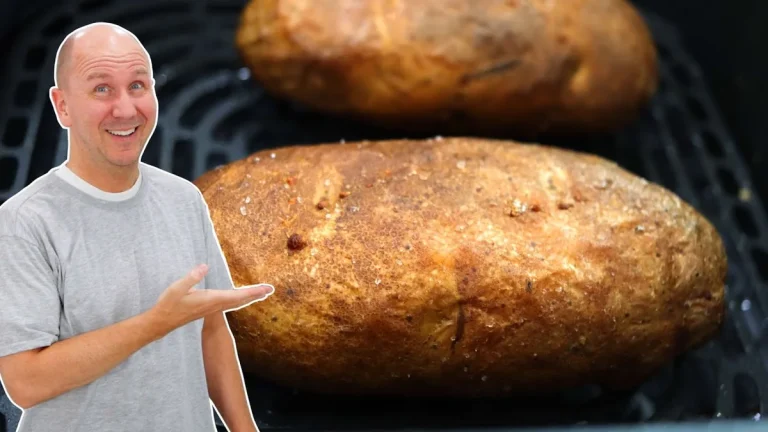
If you want a baked potato or roasted vegetables alongside your meat, those are best done in a separate batch. We have a full guide to getting that fluffy interior and crispy skin in the air fryer, which covers the exact same space and timing logic.
Why Air Fryers Are Actually Great Roasters
There is a solid reason people keep trying this. The convection fan in an air fryer is substantially more powerful than the one in your standard oven. It wraps the meat in hot air from every direction, producing a serious crust without drying out the center.
Aggregate user reviews consistently show that air fryer chicken browns better than oven-roasted chicken.
The time savings are a major advantage, too. A 4-pound chicken that takes 60 to 70 minutes at 350°F in a conventional oven is often fully cooked in 45 to 50 minutes in the air fryer. That is a meaningful difference on a busy weeknight.
You also avoid heating up your entire kitchen. In the summer, that is a huge benefit. The air fryer stays self-contained, and the heat stays mostly inside the unit.
Crunchy toppings like French fried onions finish the meal perfectly, though they cook much quicker than the roast itself.
Some models also come with a rotisserie function. If your air fryer has a rotisserie spit, you are in for a treat. It self-bastes the meat as it turns, delivering incredibly juicy results.
Even without that feature, a simple flip halfway through the cooking time does the trick.
Decision #1: Does Your Roast Fit in the Basket?
This is the make-or-break question. Pull out your roast and your air fryer basket. Place the roast inside.
You need at least 1 inch of clearance on every side. The roast must not touch the top heating element. If it touches, the outside will scorch before the center reaches a safe temperature.
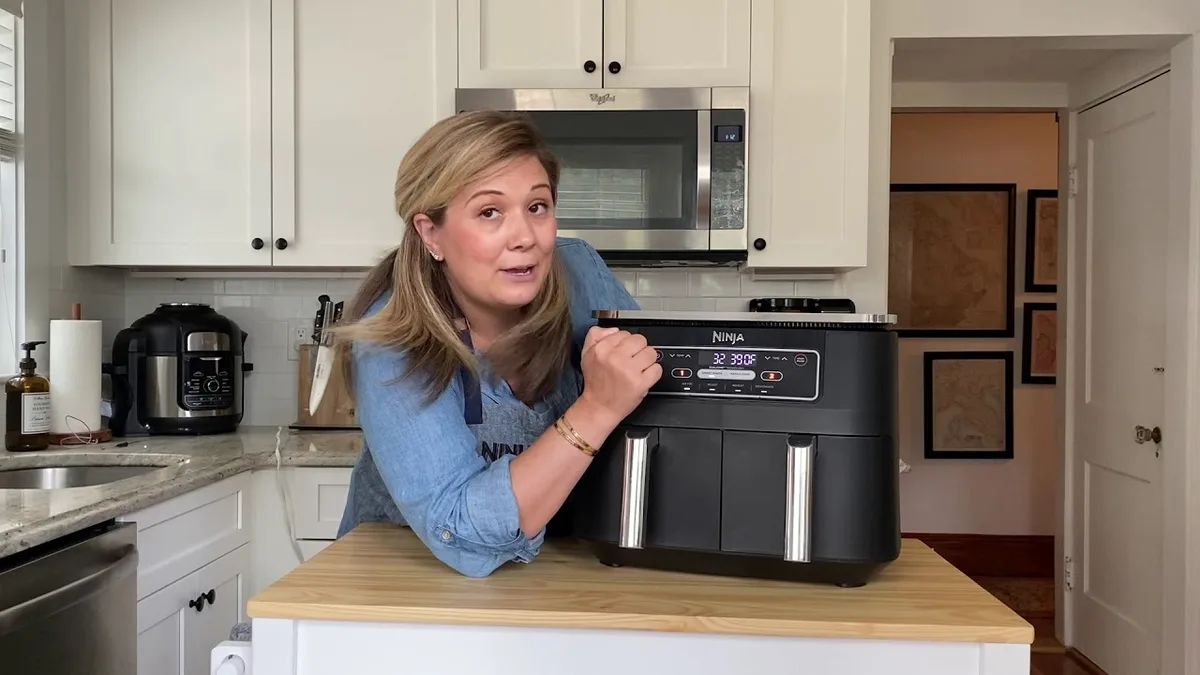
Here is a quick guide based on common air fryer sizes.
| Air Fryer Capacity | Max Roast Weight | Examples That Fit |
|---|---|---|
| 2 to 3 quarts | 2 to 2.5 lbs | Small whole chicken, Cornish hens |
| 4 to 6 quarts | 3 to 4 lbs | Whole chicken, small pork loin, small beef roast |
| 8 to 10 quarts | 5 to 7 lbs | Large chicken, small turkey breast |
| Oven-style (10+ qt) | 6 to 8 lbs | Turkey breast, prime rib, chuck roast (trimmed) |
If your roast does not fit, you have options. You can spatchcock the chicken to flatten it and reduce its height. You can cut a larger roast like pork loin into smaller pieces that fit side by side.
Or you can simply use your regular oven. There is no shame in recognizing that the air fryer is not the right tool for that particular job.
For roasts that barely fit, tenting the top with foil can prevent the exterior from burning. But honestly, trying to squeeze an 8-pound turkey into a 5-quart basket leads to frustration. Stick to the sizes listed above for consistently good results.
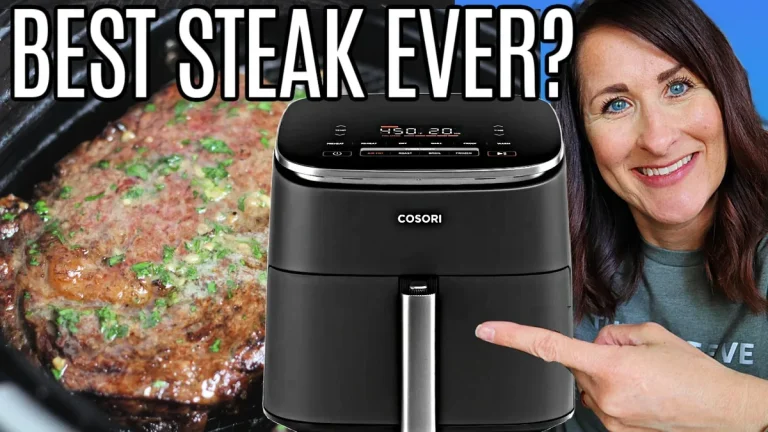
Cooking a steak in the air fryer follows the same space logic. Single layer, no crowding, high heat. The principles are exactly the same.
Decision #2: Are You Using the Right Kind of Roast?
Not every cut of meat handles the air fryer’s high, dry heat equally well. The best candidates are roasts that benefit from intense browning. Think whole chicken, turkey breast, boneless pork loin, prime rib, and ribeye roast.
These cuts have enough fat to self-baste and a surface that crisps up beautifully.
Leaner roasts like pork tenderloin or eye of round can work, but they demand careful attention. You need to baste them with oil or butter halfway through to prevent them from drying out.
Tough cuts like chuck roast or brisket belong in a slow cooker or a braising pot. The air fryer does not provide the low, moist environment required to break down connective tissue. You end up with a tough, burnt exterior and a raw center.
Here is how the most common roasts line up.
| Roast Type | Air Fryer Verdict | Why |
|---|---|---|
| Whole Chicken | Excellent | Perfect size, great skin, stays juicy |
| Turkey Breast | Good | Needs monitoring, baste halfway |
| Pork Loin (boneless) | Excellent | Quick, stays moist, takes rubs well |
| Chuck Roast | Poor | Needs moist low heat, wont render |
| Prime Rib | Good | Trim to fit, incredible crust |
| Pork Shoulder | Poor | Too large, needs low and slow cooking |
Seasoning is simple but worth doing right. A dry rub or a basic salt-and-pepper mix works beautifully. The high airflow can blow loose seasoning off the meat, so pat it in firmly or use a light coat of oil to help it stick.
If you are planning sides, the air fryer handles vegetables like squash exceptionally well. But cook them in a separate batch after the roast rests to avoid overcrowding the basket. Always check your accessories too.
The unit gets hot enough to warp certain plastics, so use oven-safe vessels inside.
The Step-by-Step Roasting Workflow
Alright, you checked the fit. You chose the right cut. Here is exactly how to cook it.
Pat the roast bone dry. Paper towels are your best friend here. Any surface moisture turns to steam, and steam prevents browning.
You want a dry, seasoned exterior.
Season the roast thoroughly. Use a dry rub and press it into the meat. The air fryer’s fan is powerful.
Loose seasoning will blow right off. A light coat of oil helps the rub stick.
Preheat the air fryer to 350°F or 380°F. Most roasts land in this range. Preheating takes only a few minutes, but it is critical for a good sear.
Place the roast in the basket. Make sure it does not touch the sides or the top heating element. If it does, it will burn.
Cook based on weight. A whole chicken needs 7 to 10 minutes per pound. A pork loin or beef roast needs 6 to 8 minutes per pound.
Flip the roast halfway through. This guarantees even browning on all sides. For a chicken, start it breast side down.
Flip it breast side up for the second half.
Check the internal temperature with a probe thermometer. This is the only reliable test. Do not trust visual cues alone.
Let the roast rest for 10 to 15 minutes after cooking. Carryover cooking will raise the internal temperature by 5 to 10°F. Resting also lets the juices redistribute.
Common Roasting Mistakes (and How the Pros Avoid Them)
Buying a roast that is too big is the number one mistake. If the meat touches the heating element, you get a burnt exterior and a raw center. Measure your basket and the roast before you start.
Cooking without a thermometer is a close second. Time charts are estimates. Temperature is fact.
A probe thermometer pays for itself the first time you use it.
Running the temperature too high is another common error. Air fryers are smaller and more powerful than regular ovens. You rarely need to go above 380°F for a thick roast.
Higher heat just chars the outside.
Forgetting to flip the roast halfway through creates an uneven crust. The fan blasts one side directly. A simple turn keeps the browning consistent.
Ignoring the smoke point of fat trimmings causes kitchen issues. Fatty cuts render quickly at high heat. The dripping fat can hit the heating element and smoke.
Trim excess fat or keep your vent fan running.
When Your Air Fryer Just Isn’t the Right Tool
Tough cuts like chuck roast, brisket, and pork shoulder need low, moist heat. The air fryer is a dry-heat appliance. It cannot break down collagen and connective tissue the way a slow cooker or Dutch oven can.
Pot roasts are a complete mismatch. They rely on braising liquid and steam. An air fryer evaporates moisture instantly.
You will end up with a dry, tough piece of meat.
Very large cuts of meat, like a whole turkey or a massive prime rib, simply will not fit. They block the airflow and create safety hazards by touching the element. Use your conventional oven for these.
Bone-in roasts are technically fine, but they take up valuable space. The bone does not shrink during cooking. If your basket is barely big enough for a boneless roast, a bone-in version of the same weight might not fit safely.
Anything that needs basting or added liquid frequently is a poor fit. The high airflow dries out exposed surfaces rapidly. Open the basket too often to baste, and you lose heat, extending the cooking time.
Internal Temps: The Only Metric That Matters

Visual doneness is a myth. The only way to guarantee a safe, perfectly cooked roast is with an instant-read or probe thermometer.
Insert the probe into the thickest part of the meat, away from bone and fat. Bone conducts heat differently and will give you a false high reading.
Know your targets before you start. Pull the roast out when it hits the target, not before. Carryover cooking will add a few extra degrees during the resting phase.
Poultry: 165°F. This is the USDA safety standard for chicken and turkey. No exceptions.
Beef and lamb: 135°F for medium-rare, 145°F for medium. Pull the roast at 130°F if you want medium-rare after resting.
Pork: Cook to 145°F. Modern pork is leaner and safer than it used to be. Overcooking it to 160°F or higher dries it out.
Let the roast rest. Carryover cooking is real. A roast that leaves the basket at 130°F can rise to 135°F or 140°F while sitting on the cutting board.
Plan for this.
Quick-Fix FAQ: Spatchcocking, Flipping, and Seasoning
Spatchcocking: This technique removes the backbone so the bird lies flat. It reduces the height by half, solving the clearance problem in basket-style air fryers. It also lets the breast and thighs cook at the same pace.
Use sturdy kitchen shears.
Flipping: Basket models cook unevenly top to bottom. Flipping the roast halfway through solves this. Do not skip this step.
It takes 15 seconds and makes a massive difference.
Seasoning: Dry rubs outperform wet marinades in the air fryer. High heat burns sugar and liquid in marinades. Stick to salt-based dry rubs.
If you want a glaze, apply it in the last 10 minutes.
Basting: Only baste lean roasts that lack a fat cap. A well-marbled roast or a whole chicken self-bastes. Basting a chicken actually washes away the seasoning and crisping oil.
Tenting: If the crust looks perfect but the center needs another 10°F, tent the roast with foil. This blocks the direct radiant heat while the hot air finishes the cooking.
Your Decision Guide: Which Roast Goes Where?
This is the quick reference you will come back to. Use it before you preheat.
| Roast Type | Air Fryer Verdict | Best For | Key Tips |
|---|---|---|---|
| Whole Chicken | Excellent | Weeknight dinners, small families | Truss the legs, breast down first 20 min |
| Turkey Breast | Good | Singles, holiday side protein | Baste with butter halfway through |
| Boneless Pork Loin | Excellent | Quick meal prep | Dry rub firmly, slice thin after resting |
| Beef Roast (ribeye, sirloin) | Good | Date night, special meals | Trim to fit, use probe thermometer |
| Prime Rib | Fair to good | Small gatherings | Cut to fit basket, sear edges first |
| Chuck Roast | Poor | Braising only | Use a slow cooker or Dutch oven instead |
| Pork Shoulder / Butt | Poor | Pulled pork | Not enough moisture or time to render |
| Leg of Lamb | Good | Holidays, crowd pleaser | Remove bone to fit, cook at 350°F |
If your roast says “poor” in the table, do not force it. You will waste good meat and get a frustrating result. Bookmark this guide and refer back to it each time you shop.
Frequently Asked Questions
Can I cook a frozen roast in the air fryer?
No, it is not safe. The outside will burn before the center thaws and cooks through. Thaw your roast completely in the refrigerator.
Pat it dry and season it before cooking.
Do I need to flip the roast during cooking?
Yes. Basket-type air fryers blast heat from one direction. Flipping halfway through guarantees even browning.
A whole chicken should start breast side down and flip to breast side up for the second half.
What temperature should I use for roasting in an air fryer?
Most roasts cook well at 350°F to 380°F. Higher temperatures char the outside before the center is done. Lower temperatures dry out the meat without browning the crust.
How long does a roast take in the air fryer compared to an oven?
Count on 7 to 10 minutes per pound for poultry and 6 to 8 minutes per pound for beef or pork. That is about 20 to 30 percent faster than a conventional oven. Use a meat thermometer to confirm doneness.
Can I roast vegetables alongside the meat in the air fryer?
Not in the same batch. The roast needs the full basket for proper airflow. Vegetables release moisture that steams the meat.
Cook them separately while the roast rests.