Perfect Air Fryer Cod: Crispy & Flaky Results
Yes, you can absolutely cook cod in an air fryer. In fact, it's one of the best ways to cook this fish. The hot circulating air gives you flaky, tender results in about 7 to 12 minutes with almost no oil.
No preheating a big oven. No fishy smell lingering for hours. No standing over a hot skillet.
The trick is that cod is a lean fish. It has very little fat to keep it moist during cooking. That means timing matters more here than with something like salmon or mackerel.
USDA guidelines recommend an internal temperature of 145°F for cooked fish. Hit that number and you're golden. Go much past it and you're eating dry, rubbery protein.
As of 2026, air fryers have become a standard kitchen appliance in millions of homes, and learning the right technique for delicate fish like cod is what separates a great meal from a disappointing one.
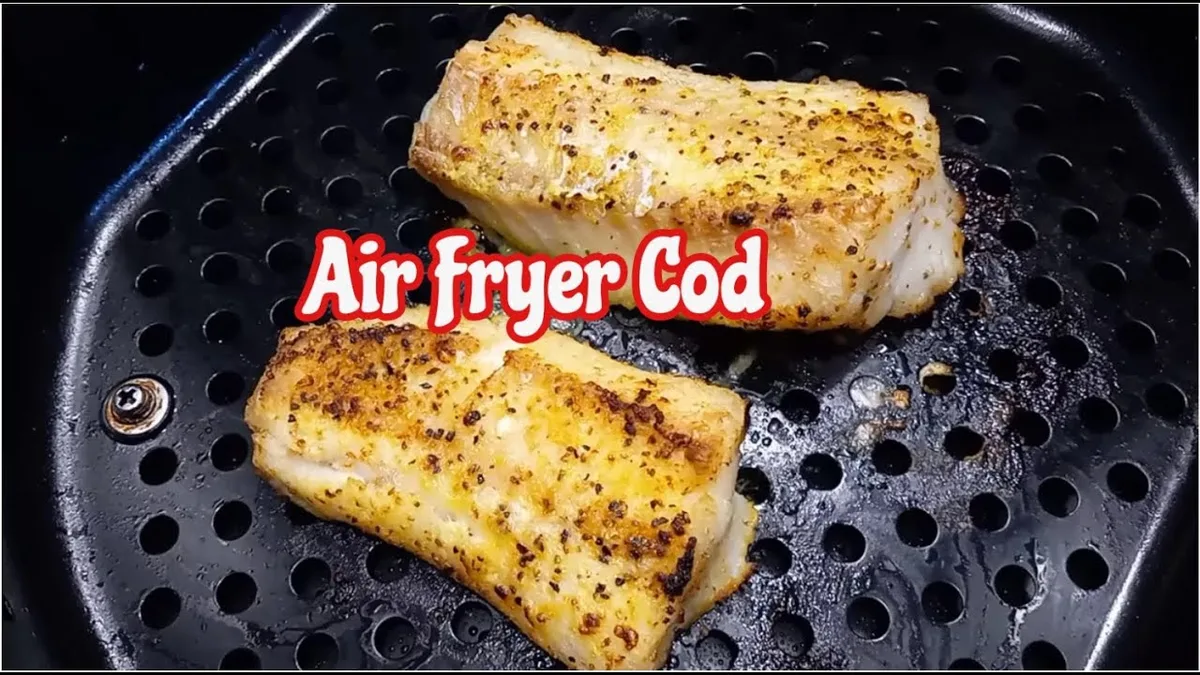
Image source: YouTube / Jojo Seufert (YouTube thumbnail (fair-use with source credit))
Quick Answer
Yes, you can cook cod in an air fryer. Cook fresh fillets at 375°F for 8 to 12 minutes. Cook frozen fillets at 375°F for 12 to 15 minutes.
Always check the internal temperature hits 145°F. No thawing required for frozen cod. No breading needed either.
The Problem: Why Cod Can Be Tricky in an Air Fryer
Cod has a well-deserved reputation for being easy to overcook. It's a lean white fish with a delicate flake structure. That flakiness is what makes it so pleasant to eat when it's done right.
But it also means the window between perfectly cooked and tragically dry is narrow.
Here's what typically goes wrong.
The fillet thickness varies. A cod loin near the head can be two inches thick. The tail end might be half an inch.
Those two pieces need very different cook times, but most people throw them in together and hope for the best. The thin end dries out while the thick end finishes cooking.
Another common issue is moisture. Cod holds a fair amount of water. When that water hits the hot air in the fryer, it steams off.
That's normal. But if you crowd the basket, the steam can't escape. You end up braising the fish instead of air frying it.
The texture turns soft and sad instead of firm and flaky.
And then there's the sticking problem. White fish like cod loves to glue itself to the basket surface. You flip it halfway through and half the fish stays behind.
We have a full guide on keeping your air fryer in good shape that covers basket care, but the short version is this: use a light spray of oil and don't skip it.
How Air Frying Cod Works (The Simple Science)
An air fryer is basically a small convection oven. A heating element warms the air, and a fan blasts that hot air around the food at high speed. That rapid air movement transfers heat faster than still air in a regular oven.
It also pushes moisture away from the surface, which helps create a light crust.
For cod, this is both good and bad.
The good part is speed. You get cooked fish in under 15 minutes with no preheat time. The good part is also texture.
The fast air circulation firms up the exterior while the inside stays tender. That's a real win for a delicate fish.
The bad part is the margin for error is smaller. Because heat transfers faster, you can overshoot the target temperature in a minute or two. That's why the right temperature setting matters.
Most sources agree that 375°F is the sweet spot for cod. It's hot enough to cook through quickly but not so hot that the outside dries before the inside is done.
If you've ever made perfectly crispy fries in your air fryer, you already understand the principle. The same fast, even heat that turns potatoes golden also works beautifully on fish. You just need to adjust for the protein's lower tolerance for overcooking.
Fresh vs. Frozen Cod: The First Big Decision
This is the most important fork in the road. Your approach changes completely depending on whether your cod is fresh or frozen.
Image source: YouTube / Claudio Campos (YouTube thumbnail (fair-use with source credit))
If Your Cod Is Fresh or Thawed
Fresh cod gives you the most control. You can season it exactly how you want. You can pat it dry to remove surface moisture.
You can monitor the thickness and adjust timing accordingly.
Start by patting the fillet dry with paper towels. This step is not optional. Excess surface moisture creates steam, and steam prevents browning.
A dry surface also helps your seasoning stick better.
Lightly brush or spray both sides with a high smoke point oil. Avocado oil, grapeseed oil, or light olive oil all work well. You only need a thin coating.
Too much oil and the fish will fry rather than air fry, which changes the texture.
Season simply. Salt and pepper are enough. Lemon pepper, garlic powder, paprika, or dried dill are great additions.
Keep it light. You want to taste the cod, not bury it.
Preheat your air fryer to 375°F for about three minutes. Place the cod in the basket in a single layer. Leave space between pieces.
Crowding creates steam. Cook for 8 to 12 minutes depending on thickness. Flip gently at the halfway mark if your fillets are over one inch thick.
If Your Cod Is Still Frozen
Frozen cod is where most people get nervous. It's also where the air fryer really shines. You do not need to thaw it first.
In fact, thawing can make the texture worse because it releases more moisture.
Place the frozen fillets directly in the air fryer basket. Do not rinse them. Do not thaw them.
Just open the bag and put them in. The exception is if the fillets have a thick layer of ice glaze. If they feel overly icy, pat them dry with a paper towel first.
Cook at 375°F for 12 to 15 minutes. Flip halfway through. The exact time depends on thickness.
Thin fillets from the tail section might be done at 10 minutes. Thick loins might need 16 or 17 minutes.
The key difference with frozen cod is that it releases more water during cooking. That's fine. Just expect a bit more moisture in the bottom of the basket.
Some people prefer to cook frozen cod at 370°F instead of 375°F to give the heat more time to penetrate without overdoing the surface.
Thicker vs. Thinner Fillets: The Second Decision Point
Thickness is the variable most home cooks ignore. It's also the variable that makes or breaks your results.
For Thick Fillets (Cod Loins, Over 1 Inch)
Thick fillets need a gentler approach. The heat has to travel further to reach the center. If you cook at high heat, the outside will be done and the inside will still be cold and translucent.
The fix is simple. Cook at 370°F rather than 375°F. Add two to three extra minutes to the cook time.
Flip the fillet at the halfway mark so both sides get equal exposure.
You can also let the fillet rest in the basket for two minutes after cooking. The residual heat continues to cook the center without drying the exterior. This is the same principle as resting a steak.
For Thin Fillets (Cod Tails, Under ¾ Inch)
Thin fillets cook fast. We are talking six to eight minutes at most. Check them early.
By the time you think about checking, they might already be overdone.
Do not flip thin fillets. They are delicate enough that flipping can break them apart. The air fryer circulates heat well enough to cook both sides without manual intervention.
If you are cooking a mix of thick and thin fillets together, cut the thick ones in half lengthwise to even out the thickness. Or cook them separately and add the thin ones two minutes after the thick ones start. This is the kind of attention to detail that separates a well-executed air fryer meal from a mediocre one.
Skin-On vs. Skinless: Does It Matter?
This comes down to texture preference more than anything else. Both work fine in an air fryer. But they behave differently.
Skin-on cod has a layer of fat and collagen between the skin and the flesh. That layer helps protect the fish from drying out during cooking. It also gives you a crispy exterior if you cook the fish skin-side down first.
The skin acts as a barrier against the direct heat.
Skinless cod cooks faster. There is no protective layer. The heat hits the flesh directly.
That means you have less margin for error. Check skinless fillets two minutes earlier than you would skin-on ones.
If you buy skin-on cod, remove the skin before cooking. Or leave it on and eat it. The skin crisps up nicely in the air fryer, similar to salmon skin.
Just make sure to pat it extra dry before seasoning. Wet skin turns rubbery rather than crisp.
Breading vs. Going Bare: What You Get Either Way
This is another fork in the road. Both approaches work. They just give you different results.
Bare cod is the healthier option. No added carbs. No extra oil beyond your light spray.
The fish flavor comes through clearly. The texture is tender and flaky with a very light exterior. This is the approach to use if you are watching calories or want the pure taste of the fish.
Breaded cod gives you crunch. You can use panko breadcrumbs, crushed crackers, almond flour, or a simple flour and egg wash. The breading creates a barrier that traps moisture inside while the outside gets golden and crisp.
Here is a quick comparison of the two approaches.
| Method | Oil Needed | Cook Time | Texture | Best For |
|---|---|---|---|---|
| Bare cod | Light spray only | 8 to 12 minutes | Tender, flaky | Healthy meals, light dinners |
| Panko breaded | Spray on breading | 10 to 14 minutes | Crisp exterior | Family meals, fish tacos |
| Flour dredge | Moderate spray | 9 to 13 minutes | Light crunch | Classic fish and chips vibe |
| Almond flour | Light spray | 8 to 12 minutes | Nutty, tender | Low carb, gluten free |
If you bread your cod, spray the breaded surface lightly with oil. This helps the breading brown evenly. Without it, you get pale, dusty-looking patches.
One tip from our research. Let breaded cod rest for five minutes in the fridge before cooking. This sets the coating so it does not slide off when you flip the fish.
A whole chicken takes a different approach entirely. But the principle is the same. If you want a crispy exterior, you need some fat and some time.
Our guide on cooking larger proteins covers the basics of getting even browning.
Temperature and Timing: The Cheat Sheet
Here is the reference table you will actually use.
| Cod Type | Thickness | Temperature | Cook Time | Flip? |
|---|---|---|---|---|
| Fresh, thin | Under 3/4 inch | 375°F | 6 to 8 minutes | No |
| Fresh, medium | 3/4 to 1 inch | 375°F | 8 to 10 minutes | Optional |
| Fresh, thick | Over 1 inch | 370°F | 10 to 12 minutes | Yes, halfway |
| Frozen, thin | Under 3/4 inch | 375°F | 10 to 12 minutes | Yes, halfway |
| Frozen, medium | 3/4 to 1 inch | 375°F | 12 to 14 minutes | Yes, halfway |
| Frozen, thick | Over 1 inch | 370°F | 14 to 17 minutes | Yes, halfway |
| Breaded (any) | Any | 375°F | 10 to 14 minutes | Yes, halfway |
These times are starting points. Every air fryer runs slightly differently. A 4-quart basket model cooks faster than a 10-quart oven style because the air volume is smaller.
Check early. You can always add a minute. You cannot uncook dry fish.
Step-by-Step: Cooking Cod in the Air Fryer
Let us put this all together into a process you can follow without thinking.
- Pat the cod dry. Use paper towels. Remove as much surface moisture as you can.
- Brush or spray with oil. A thin coat on both sides. Do not soak it.
- Season simply. Salt and pepper at minimum. Add other spices if you want.
- Preheat the air fryer to 375°F. Three minutes is usually enough.
- Place cod in the basket. Single layer only. Leave space between pieces.
- Cook according to the cheat sheet above. Set a timer for the minimum time.
- Check internal temperature at 145°F. Use an instant read thermometer in the thickest part.
- Rest for two minutes. Remove the cod and let it sit on a plate before serving.
That is it. Eight steps. Most of the work is in step one and step seven.
The resting step matters more than most people realize. The fish continues to cook from residual heat during those two minutes. If you pull it at exactly 145°F and serve immediately, it might hit 150°F on the plate.
Pull it at 140°F. Let it rest. It will coast up to 145°F while you finish the rest of the meal.
The same logic applies when you bake a potato in the air fryer. Residual heat finishes the cooking. Pulling things a few degrees early gives you better texture.
Common Mistakes That Ruin Air Fryer Cod
Here are the errors we see most often in aggregate user feedback and recipe testing.
Skipping the preheat. Cold air fryers do not cook evenly. The first few minutes are spent warming up rather than cooking.
That throws off your timing. Preheat for three minutes minimum.
Overcrowding the basket. This is the number one mistake. When fillets touch each other, steam gets trapped between them.
You end up with pale, soft fish instead of lightly browned cod. Cook in batches if you need to.
Using too much oil. Cod is lean. It does not need a bath.
A light spray is enough. Excess oil makes the exterior soggy and reduces the crispness you want.
Not drying the fish. Wet fish steams. Steamed fish tastes bland and has a rubbery texture.
Pat it dry. This single step improves your results more than any seasoning choice.
Flipping too early. Delicate cod can break apart if you flip it before the exterior has firmed up. Wait until at least the halfway mark.
If the fillet is thin, do not flip at all.
Ignoring thickness differences. Two fillets from the same package can vary by half an inch. That is a two minute cook time difference.
Cut thicker pieces in half or cook them separately.
Cooking directly from frozen without adjusting time. Frozen cod needs about 30 percent more cook time than fresh. Follow the frozen column in the cheat sheet.
Do not guess.
Using a lower quality air fryer accessory. Some racks insert unevenly. The cod might sit at an angle.
One side overcooks while the other stays raw. Check that your air fryer rack sits level before loading fish.
How to Tell When It's Done (Stop Guessing)
This is the most important skill you can develop. Forget color. Forget flaking with a fork.
Use a thermometer.

Image source: YouTube / Leminox (YouTube thumbnail (fair-use with source credit))
Cod is done at 145°F internal temperature according to the USDA Food Safety and Inspection Service. Insert the probe into the thickest part of the fillet. Avoid touching bone if you are cooking a cut with the bone in.
The flake test is not reliable. Cod flakes apart when it is already overcooked and dry. By the time the flakes separate cleanly, the fish is past its prime.
Trust the thermometer.
If you do not have a thermometer, look for the fish turning from translucent to opaque white. Raw cod has a glassy, slightly see-through appearance. Cooked cod is solid white throughout.
The change happens quickly in the last two minutes of cooking. Watch carefully.
Another visual cue is the release of white albumin. Those little white beads that sometimes appear on the surface are coagulated protein. A few beads are normal.
A heavy coating means the fish is overcooked.
Pull the cod when the thermometer reads 140°F to 143°F. Let it rest. The temperature will rise those last few degrees on its own.
This is called carryover cooking. It gives you a perfect result every time.
The same principle applies to other proteins. Our guide on cooking steak in the air fryer uses the same approach. Pull it a few degrees early.
Let it rest. Trust the thermometer.
At this point you have all the information you need to cook cod in an air fryer successfully. The remaining sections cover what to serve with it and answer the most common questions people ask.
What to Serve With Air Fryer Cod
Cod is mild and flaky. It pairs well with almost anything you would serve alongside white fish.
A simple side of roasted vegetables works perfectly. Asparagus, broccoli, or green beans all cook in the air fryer at the same temperature. Just toss them in oil and salt.
Add them to the basket during the last six minutes of the cod's cook time.
Rice or quinoa absorbs the juices from the fish nicely. A light lemon butter sauce drizzled over the top adds richness without overpowering the cod.
For a lower carb option, serve it over a bed of greens with a vinaigrette. The acidity cuts through the mildness of the fish. Fresh dill or parsley on top adds color and freshness.
If you want a starch, air fryer potatoes are a natural pairing. Check our guide on baking potatoes in the air fryer for timing that matches your cod.
Frequently Asked Questions
Can I cook cod from frozen in an air fryer?
Yes. Place frozen fillets directly in the basket at 375°F. Cook for 12 to 15 minutes.
Flip halfway through. Do not thaw first. Pat off excess ice glaze if present.
Do I need to flip cod in the air fryer?
Only if the fillet is over one inch thick. Thin fillets cook evenly without flipping. Thick fillets benefit from a gentle turn at the halfway mark.
Why is my air fryer cod dry?
You likely overcooked it or skipped the oil spray. Cod is lean and dries out fast. Check the internal temperature at the minimum cook time.
Pull it at 140°F to 143°F and let it rest.
Can I bread cod before air frying?
Absolutely. Panko breadcrumbs work best. Spray the breaded surface lightly with oil.
Cook at 375°F for 10 to 14 minutes depending on thickness.
What temperature should cod be when done?
145°F according to the USDA Food Safety and Inspection Service. Insert the thermometer into the thickest part of the fillet. Pull it a few degrees early for carryover cooking.
Can I cook other vegetables at the same time as the cod?
Yes. Add vegetables that cook in six to eight minutes at 375°F. Asparagus, broccoli florets, and green beans work well.
Add them to the basket during the last half of the cook time.
The Verdict: Is It Worth Doing?
Yes. Cooking cod in an air fryer is absolutely worth it. The results are consistently good when you follow the right approach.
You get flaky, tender fish in under 15 minutes with minimal cleanup.
The air fryer handles both fresh and frozen cod equally well. That alone makes it a practical choice for weeknight dinners. No need to plan ahead.
No need to thaw. Just season and cook.
The margin for error is smaller than oven baking or pan searing. But once you understand the thickness variable and the temperature target, you will produce reliable results every time. Use a thermometer.
Trust the numbers. Do not guess.
If you are new to cooking fish at home, cod in the air fryer is a great starting point. It is forgiving enough for beginners but versatile enough for experienced cooks who want a quick meal. Give it a try with a simple lemon pepper seasoning and see how it turns out.