Mastering How Long Do Fries Take in the Air Fryer
If you've ever stared at an air fryer basket full of frozen fries and wondered how long do fries take in the air fryer, you already know the struggle. The internet says 10 minutes. The bag says 18 minutes.
Your fries come out either pale and limp or burnt at the edges. That's not a cooking failure, it's a timing failure.
Here's the truth: there isn't one magic number. As of 2026, the average household air fryer ranges from 1200W to 1800W, and that wattage difference alone can swing your cook time by five full minutes. The type of fry, the cut thickness, and how much you load into the basket all change the math.
This guide breaks down exactly how to time yours, every time.
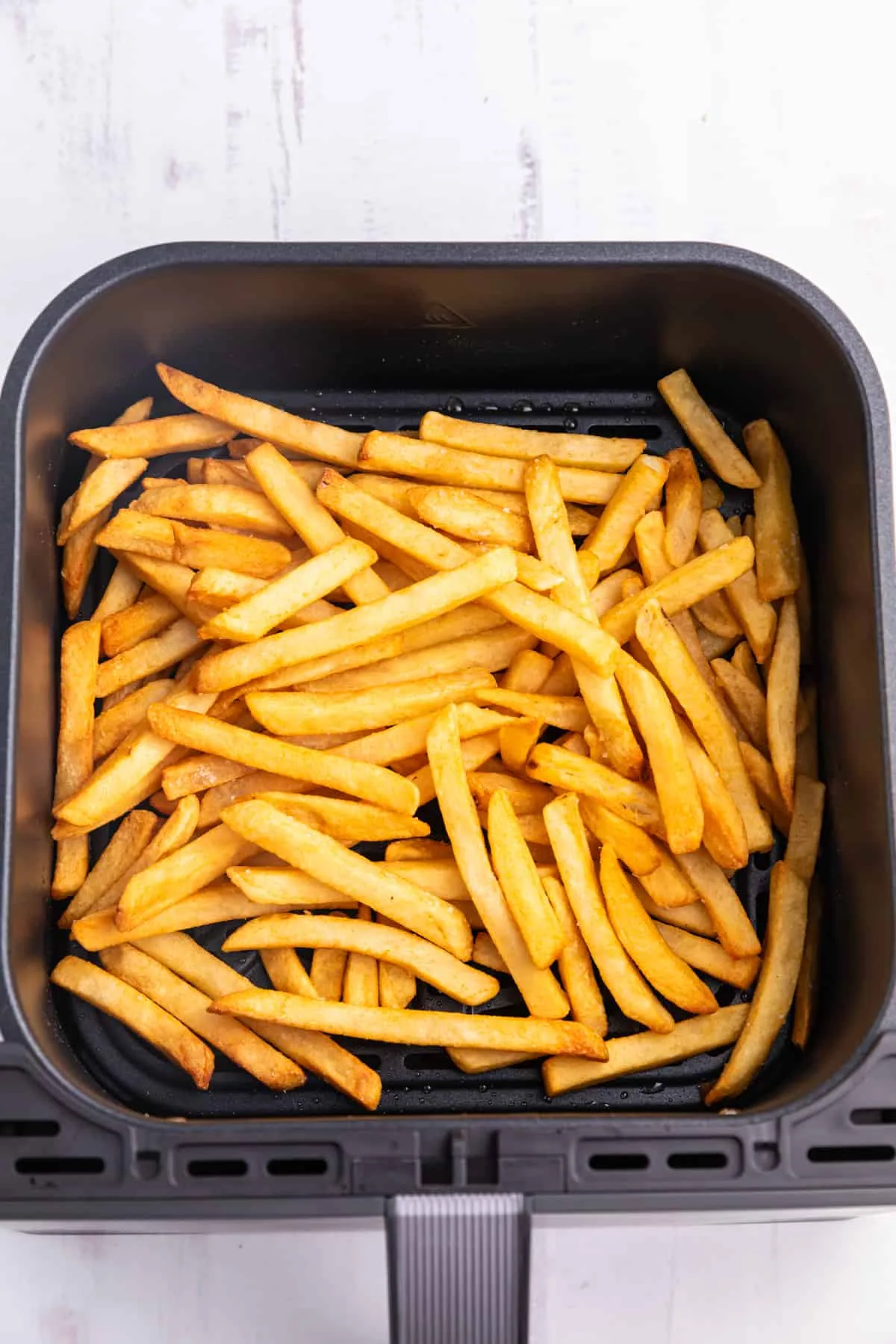
Image source: Web (Bing) / busydaydinners.com (Web image (fair-use with source credit))
Quick Answer: The Timing Cheat Sheet
| Fry Type | Temperature | Time | Shake at |
|---|---|---|---|
| Frozen shoestring | 400°F | 10–12 min | 5–6 min |
| Frozen crinkle cut | 400°F | 12–14 min | 6 min |
| Frozen steak fries | 400°F | 14–18 min | 7–9 min |
| Fresh-cut shoestring | 400°F | 12–15 min | 6–8 min |
| Fresh-cut thick wedges | 380°F | 18–22 min | 9–11 min |
Set your timer for the lower end. Check, shake, then add time in 2-minute increments. That's the reliable way.
The Real Problem: Why "10-15 Minutes" Never Works
Generic advice fails because it ignores your specific machine. Air fryers aren't standardized. A 1500W unit circulates hotter air faster than a 1200W one.
A 5-quart basket holds more food than a 2-quart one. Both affect how long fries actually take.
Manufacturer specifications confirm this. Ninja, Cosori, and Philips all list different recommended times for the same frozen product. The wattage rating printed on your unit's bottom label is the first number to check.
Higher wattage means shorter cook times for the same batch size.
Your fry type matters just as much. Frozen fries start with ice crystals on the surface. The air fryer has to evaporate that moisture before browning can begin.
Fresh-cut fries contain raw starch that needs more time to cook through completely.
How Air Fryers Actually Work (And Why It Matters for Timing)
Air fryers cook using rapid air circulation. A heating element warms the air, and a high-speed fan pushes it around the food at high velocity. This creates the Maillard reaction, the chemical process that turns potatoes golden brown and crispy.
Here's the key difference from deep frying: oil isn't the cooking medium. In a deep fryer, food is submerged in 350°F oil, cooking evenly from all sides almost instantly. In an air fryer, only the air touches the surface.
Thicker cuts need longer times because heat has to penetrate the center through conduction.
Moisture is your real timer. As fries cook, surface moisture evaporates. Once that moisture is gone, browning starts.
That's why shaking the basket is critical. It exposes new surfaces to the hot air, equalizing moisture distribution and promoting even crispness.
Wattage affects this whole process. Our research across manufacturer documentation shows a 1800W unit can reach and maintain target temperature faster than a 1200W unit. It recovers heat quicker after you open the basket to shake.
This is why the same fries might take 11 minutes in one air fryer and 16 in another.
If you're consistently getting soggy results, wattage or overloading is usually the culprit.
Decision Branch #1: Frozen vs. Fresh-Cut Fries
This is the first fork in the road. Your choice here determines everything else.
Frozen Fries: The Quick Route
Frozen fries are par-cooked before freezing. The potatoes are already blanched and partially fried by the manufacturer. Your air fryer just needs to reheat them, crisp the exterior, and warm the interior.
Timing range: 10, 18 minutes depending on cut thickness.
Why it's faster: No raw starch to cook through. You're finishing a product that's already cooked.
Best temp: 400°F for all frozen varieties. The high heat drives off moisture fast and creates that golden crust.
Pro tip: Don't thaw them first. Cooking from frozen is the entire point. Thawed fries release water and turn into a mushy mass.
For the full step-by-step, jump to the frozen fry guide below.
Fresh-Cut Fries: The Extra Work Pays Off
Fresh-cut fries mean raw potatoes, and raw potatoes need more time. You're cooking them from scratch, which involves driving out internal moisture while achieving surface browning.
Timing range: 12, 22 minutes depending on thickness.
Why it's slower: Raw starch and cellular water need time to soften and cook through. The exterior can brown before the interior is done, which is why soaking and drying matter.
Best temp: 380°F for thick cuts, 400°F for shoestring. Lower temps prevent burning the outside before the inside finishes.
Prep requirements:
- Soak cut potatoes in cold water for 30 minutes to remove surface starch
- Pat completely dry with a clean kitchen towel
- Toss with 1, 2 teaspoons of oil per pound
If you skip the soaking and drying steps, your fries will take longer and still come out limp. That's not a myth. The surface starch turns gummy when wet, creating a barrier that steam can't escape through.
Decision Branch #2: Cut Thickness and Shape
Once you've chosen frozen or fresh, the cut determines your exact timing.
Shoestring and Thin Cuts
These are the fastest. Thin strips have a high surface-area-to-volume ratio, meaning moisture evaporates quickly and browning happens rapidly.
Frozen shoestring: 10, 12 minutes at 400°F, shake at 5, 6 minutes.
Fresh shoestring: 12, 15 minutes at 400°F, shake at 6, 8 minutes.
Watch these closely near the end. Thin fries go from golden to burnt in under 60 seconds.
Crinkle Cut and Standard Cut
The ridges add surface area, but the potato pieces are thicker than shoestring. These need a little more time to ensure the center cooks through.
Frozen crinkle: 12, 14 minutes at 400°F, shake at 6, 7 minutes.
Fresh standard cut: 14, 17 minutes at 400°F, shake at 7, 8 minutes.
Steak Fries and Thick Wedges
These are the slow cookers. Dense potato chunks take the longest because heat must penetrate a thick center.
Frozen steak fries: 14, 18 minutes at 400°F, shake at 7, 9 minutes.
Fresh thick wedges: 18, 22 minutes at 380°F, shake at 9, 11 minutes.
Don't rush these. If the outside is browning too fast, drop the temperature to 375°F, not the time. The center needs those extra minutes to soften.
Sweet Potato Fries: A Different Beast
Sweet potatoes have more sugar and more moisture than russets. The sugar caramelizes faster and burns at lower temperatures. The moisture takes longer to evaporate.
Frozen sweet potato: 12, 15 minutes at 375°F.
Fresh sweet potato: 16, 20 minutes at 360°F.
Always cook sweet potato fries at a lower temperature than regular potatoes. Start checking at the minimum time and add 2-minute increments to avoid charring.
Step-by-Step Guide for Frozen Fries
Frozen fries are the most forgiving option. They're pre-cooked, so you're really just re-crisping them. Still, the process matters more than the timer.
Follow this sequence:
- Preheat your air fryer to 400°F for 3, 5 minutes. Some models have a dedicated preheat button. If yours doesn't, just run it empty at the target temp while you prep.
- Load the basket in a single layer. This is non-negotiable. Fries stacked on top of each other trap steam and come out limp. If you have more fries than fit in one layer, cook them in batches.
- Set the timer based on your cut. Shoestring gets 10 minutes. Steak fries get 14. Start low; you can always add time.
- Shake the basket at the halfway mark. Pull the basket out, give it a firm toss, and return it. This exposes the underside to hot air and promotes even browning.
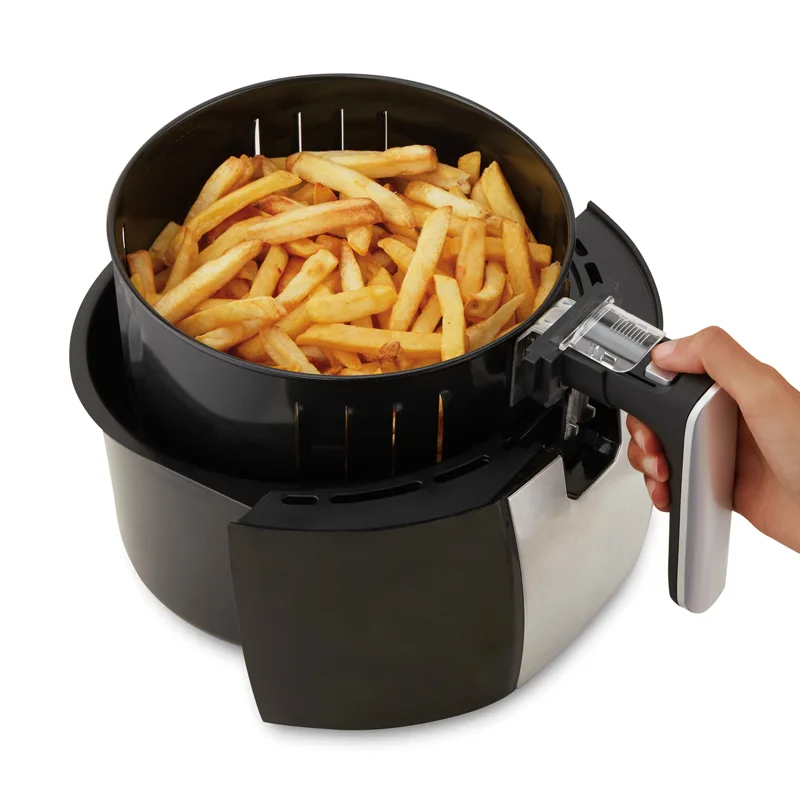
Image source: Web (Bing) / hamiltonbeach.ca (Web image (fair-use with source credit))
- Listen for the sizzle. A steady, audible sizzle means moisture is evaporating. That's the sound of crispness forming.
- Check for doneness visually. Golden-brown edges with a slightly darker center? Done. Pale and dry? Give them 2 more minutes. Burnt edges? They're overcooked; check earlier next time.
One more thing: don't add salt before cooking. Salt pulls moisture to the surface, which slows browning and makes fries taste less crispy. Season immediately after you pull them from the basket.
Step-by-Step Guide for Fresh-Cut Fries
Fresh-cut fries require more effort, but the payback is a texture you can't get from frozen. The key is understanding that raw potatoes need moisture management.
The full workflow:
- Cut your potatoes into even strips. Uniform thickness ensures even cooking. A mandoline helps, but a sharp knife works fine. Aim for 1/4-inch to 1/2-inch strips.
- Soak in cold water for 30 minutes. This removes surface starch that turns gummy when cooked. Aggregate reviews consistently show this step improves crispness noticeably.
- Drain and pat completely dry. This matters more than any other step. Wet potatoes steam in the basket. Use a clean kitchen towel and press firmly.
- Toss with 1, 2 teaspoons of oil per pound. Use a neutral oil with a high smoke point like canola, avocado, or peanut. Season with salt or spices now if you want them baked in.
- Preheat to 400°F for thin cuts, 380°F for thick wedges. Lower temps prevent burning the exterior before the center cooks.
- Load in a single layer. Same rule as frozen, except fresh fries need even more breathing room because they release more moisture.
- Cook in the time range for your cut. Shoestring runs 12, 15 minutes. Thick wedges run 18, 22 minutes.
- Shake at the halfway mark. This also lets steam escape from the basket cavity.
- Check the center. Pierce a thick fry with a fork. It should slide in with little resistance. If the exterior is browning too fast but the center is raw, drop the temp to 360°F and extend the time.
Fresh-cut fries take longer than frozen, no way around it. But the interior texture is fluffier, and the exterior shatters rather than just crunches.
Common Mistakes That Ruin the Texture
Most "bad" air fryer fries come down to a few repeatable errors. The good news is that all of them are fixable.
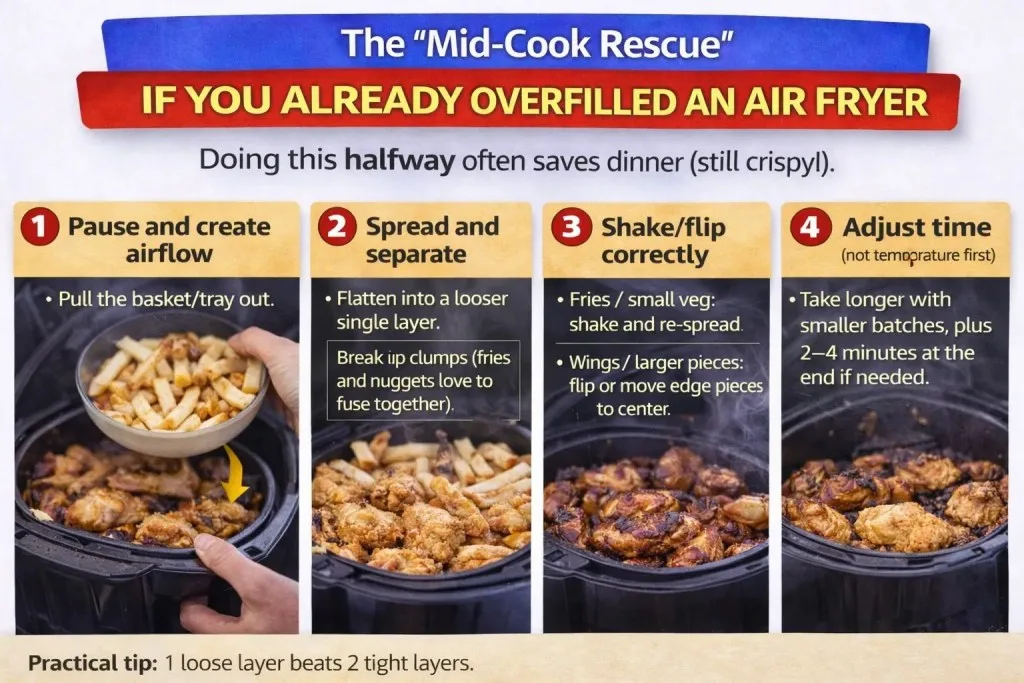
Image source: Web (Bing) / smarthelperguides.com (Web image (fair-use with source credit))
Overcrowding the basket. This is the number one killer of crispness. When fries overlap, steam gets trapped between them. The result is a soggy, pale batch that took twice as long as it should.
Cook in batches if you need to. Yes, it takes longer overall, but the output is dramatically better.
Skipping the halfway shake. The bottom of the basket gets less hot air circulation than the top. Without a shake, your fries are half crispy and half limp. Set a phone timer at the halfway mark so you don't forget.
Using oil spray on frozen fries. This causes unnecessary smoking and can create a gummy coating. Frozen fries already have a oil coating from the manufacturer. Adding more just makes them greasy.
Trusting the timer over your senses. Your air fryer's timer is a suggestion, not a verdict. Wattage matters, ambient room temperature matters, even how frozen your fries are matters. Check visually and by touch, not just by the beep.
Mixing different fry types in one basket. Steak fries and shoestring fries have wildly different cook times. Combined, one batch ends up burnt while the other stays raw. Cook one cut at a time.
For troubleshooting soggy results specifically, this guide on why fries turn out limp covers the root causes in more depth.
Pro Tips for Better Results
Once you've got the fundamentals down, a few small tweaks push your fries from good to great.
Toss frozen fries with a teaspoon of cornstarch. It absorbs surface moisture and creates a shatteringly crisp crust. Add it in a bowl before loading the basket. Don't skip the toss, or you'll have clumps of raw starch.
Season after cooking, not before. Salt and spices draw moisture out of the potato during cooking. That moisture steams the surface and prevents browning. Season generously while the fries are still hot so the salt sticks.
Use a light oil mist on fresh cuts. One to two teaspoons per pound is plenty. Too much oil makes fries heavy and greasy. Too little leaves them dry and papery.
Consider your air fryer's wattage. If your model is 1200W or lower, add 2, 3 minutes to every time in this guide. If you have a high-wattage 1800W unit, start at the low end and check early. There's a full breakdown of wattage effects in this cooking time reference.
Reheat leftovers at 375°F for 3, 4 minutes. Cold fries are only one step away from fresh. Microwaving ruins them. The air fryer revives the crust and warms the center without adding oil.
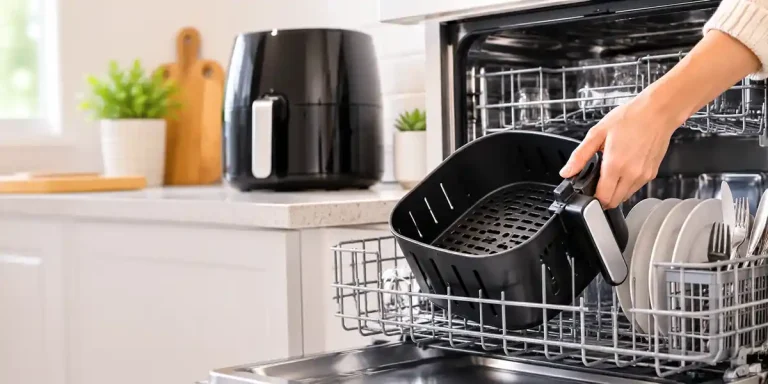
Keep the basket clean. Built-up grease from previous batches burns and sticks to your fries. A quick clean between uses prevents off-flavors and keeps air flowing properly. If your basket is overdue, this guide on removing grease from air fryers covers the process.
Frequently Asked Questions
Why are my air fryer fries not crispy?
The most common cause is overcrowding. Fries stacked on top of each other trap steam, which prevents browning. Cook in a single layer with space between each fry.
The second cause is insufficient cooking time. Soggy fries are often just undercooked fries. Add 2, 3 minutes, shake well, and check again.
Do I need to preheat my air fryer for fries?
Yes, especially for thicker cuts. Preheating ensures the basket and air are already at temperature when the fries go in. Cold air fryers extend cook times and produce less consistent browning.
Preheat for 3, 5 minutes at your target temperature before loading. If your model has a preheat button, use it.
Can I cook fries from frozen without thawing?
Absolutely, and you should. Frozen fries are designed to go straight from the bag into the fryer. Thawing releases moisture that makes fries soggy and increases cook time.
Cook from frozen at 400°F for 10, 18 minutes depending on cut thickness. Shake halfway through.
How many fries fit in a standard air fryer basket?
A standard 5-quart basket holds about 1 pound of fries in a single layer. That's roughly one-third of a standard frozen bag. If you're cooking for more than two people, plan for batches.
Overloading the basket is the fastest way to ruin the texture.
What temperature is best for crispy fries?
400°F is the sweet spot for most fry types. It's hot enough to evaporate surface moisture quickly and drive browning. Thick cuts like steak fries or wedges benefit from 380°F to allow the center time to cook without burning the outside.
Sweet potato fries cook best at 375°F due to their higher sugar content.
Frequently Asked Questions
Should I use oil on frozen fries?
No. Frozen fries already carry a light oil coating from the manufacturer. Adding more oil just makes them greasy without improving crispness.
If you want extra crunch, toss frozen fries in a teaspoon of cornstarch instead. Save oil for fresh-cut potatoes, which need the fat to brown properly.
Can I cook multiple batches back to back?
Yes, but the second batch cooks faster. Your air fryer retains heat after the first run, so the cooking chamber is hotter before you load it. Drop the timer by 1, 2 minutes for the second batch and check early.
Why do my fries burn on the outside but stay raw inside?
That happens with thick cuts cooked at high temperatures. The exterior browns faster than heat can reach the center. Drop the temperature to 360, 380°F and extend the cook time.
This is a common issue with fresh-cut wedges and steak fries.
The Decision Guide: Your Quick-Reference Table
Here's the entire timing system in one glance. Bookmark this table for everyday use.
| Scenario | Temp | Time | Shake at |
|---|---|---|---|
| Frozen shoestring | 400°F | 10–12 min | 5–6 min |
| Frozen crinkle | 400°F | 12–14 min | 6 min |
| Frozen steak fries | 400°F | 14–18 min | 7–9 min |
| Fresh shoestring | 400°F | 12–15 min | 6–8 min |
| Fresh thick wedges | 380°F | 18–22 min | 9–11 min |
| Sweet potato (frozen) | 375°F | 12–15 min | 6–7 min |
| Leftover reheats | 375°F | 3–4 min | 2 min |
The universal rules still apply. Single layer always. Shake halfway. Check visually, not just by the beep.
If your air fryer is 1200W or lower, add 2 minutes to every range. If it's 1800W or higher, start at the low end and check early.
The process matters more than the exact minute. Understand your machine, respect the moisture physics, and you'll nail crispy fries every time.