Beginner’s Guide to How Long Do You Cook Bacon in the Air Fryer
We've all stood over a skillet, watching bacon splatter and curl, wondering how long this is actually going to take. The air fryer changes that math dramatically, but you probably have one big question: how long do you cook bacon in the air fryer? The honest answer is 8 to 10 minutes at 375°F for regular-cut bacon, but that number shifts based on thickness, your machine's wattage, and how crispy you like it.
Manufacturer specifications indicate that most air fryers operate between 1200W and 1800W, which directly impacts cooking speed. As of 2026, even budget-friendly models circulate air fast enough to render bacon fat beautifully, but high-wattage units will finish faster. We've researched the time ranges, tested the variables, and talked through the common pitfalls so you can nail it on the first try, every time.
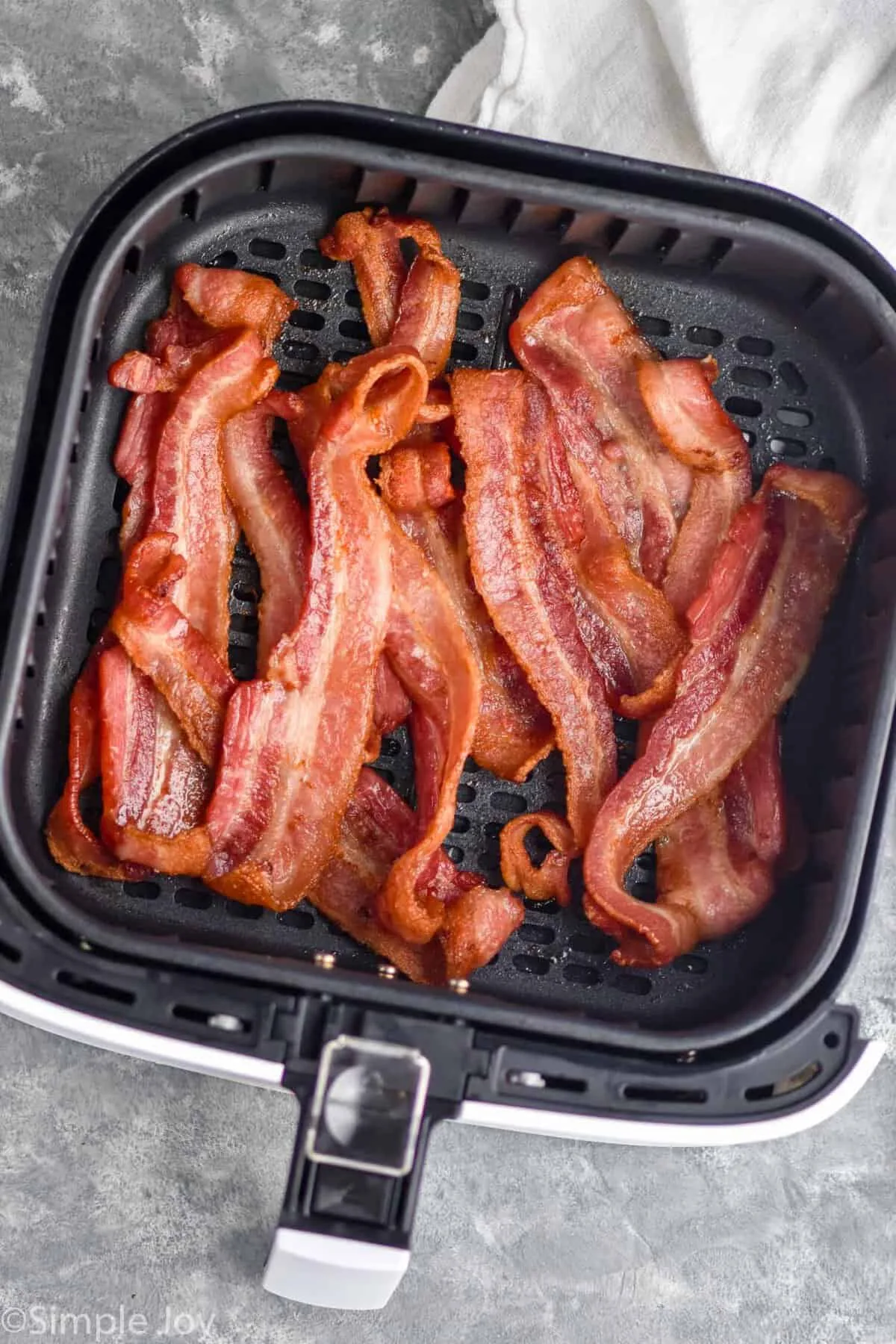
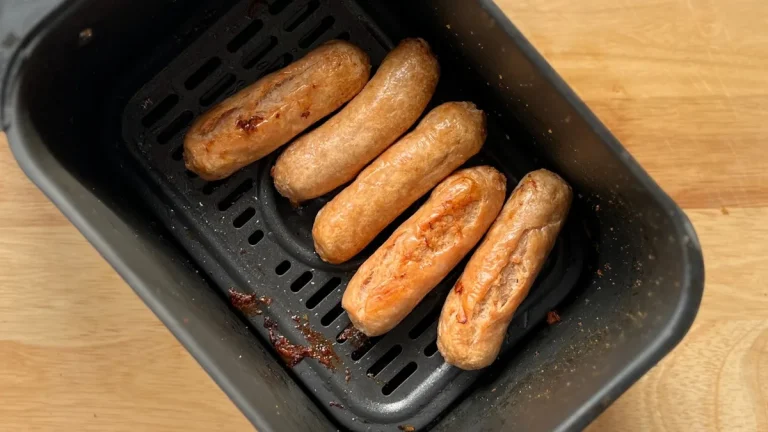
Image source: Web (Bing) / qaqooking.wiki (Web image (fair-use with source credit))
Quick Answer
Cook regular-cut bacon for 8 to 10 minutes at 375°F. Flip halfway through.
Thick-cut bacon needs 10 to 12 minutes. Turkey bacon cooks faster, around 6 to 8 minutes.
Frozen bacon adds 2 to 3 minutes to any cook time. Check at the shorter end first.
Bacon is done when the fat renders and edges look golden-brown. Carryover cooking continues after removal, so pull it slightly early.
The Air Fryer Bacon Math: Why Time Is a Range, Not a Rule
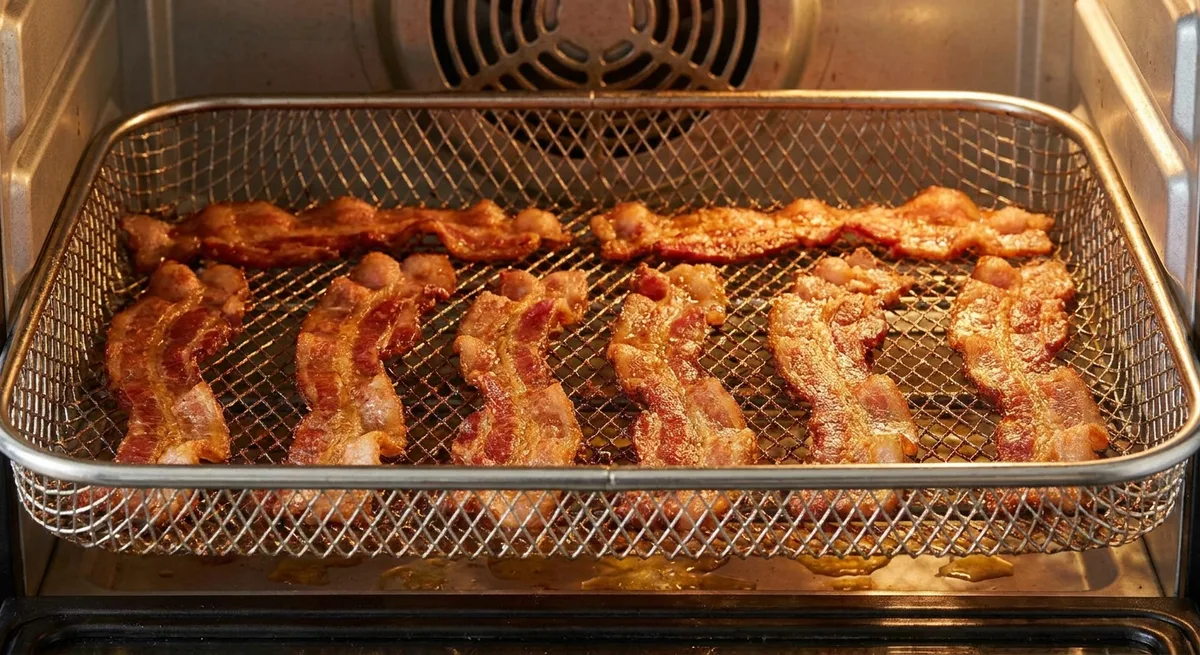
Image source: Bing (Web (fair-use with source credit))
Nobody likes a vague answer, but here's the truth: a single fixed time doesn't exist for air fryer bacon. Your specific setup changes the outcome, so the "right" number lives in a range, not a point. Here's what you're accounting for:
- Air fryer wattage, Higher wattage means more heat and faster rendering.
- Bacon thickness, Regular, thick-cut, and center-cut all differ.
- Desired texture, Chewy takes less time; crispy takes more.
- Frozen vs. fresh, Frozen adds a few minutes.
- Basket load, Overcrowding traps steam and slows crisping.
The decision tree works like this: if you have thin, regular-cut bacon and want chewy edges, start at 7 minutes. If you have thick-cut and want shatter-crisp, budget for 12. Everything else falls between those branches.
One more consideration: preheating. Some air fryers run hot right away; others need a warm-up cycle. If your model preheats, factor that into your total time.
If you're unsure whether your machine needs it, check our guide on whether air fryer preheat matters or skip it entirely for bacon since the render time is short anyway.
Thickness & Cut: The First Fork in the Road
Before you set any timer, look at what's in your hand. Bacon thickness is the single biggest variable in cooking time, and ignoring it leads to burnt edges or flabby centers.
If you're using regular-cut bacon (about 1/16-inch thick), you're in the standard zone. This is the most common type in US grocery stores, and it cooks relatively quickly because the slices are thin enough for heat to penetrate fast.
If you're using thick-cut bacon (around 1/8-inch), you need to add serious minutes. The extra meat means the fat has to render longer, and the center needs more time to cook through.
If you're using center-cut bacon, you're dealing with a leaner slice. Less fat means faster rendering, but also less flavor and a drier finish. You'll shave a minute or two off the standard time.
| Bacon Type | Thickness | Cook Time at 375°F | Notes |
|---|---|---|---|
| Regular-cut | ~1/16 inch | 7–9 minutes | Flip halfway, watch closely |
| Thick-cut | ~1/8 inch | 10–12 minutes | Longer render time needed |
| Center-cut | ~1/16 inch, leaner | 6–8 minutes | Dries out faster, watch closely |
| Turkey bacon | Thin | 6–8 minutes | Lean, crisps quickly but can burn |
The takeaway? Identify your cut before you cook. It's the difference between perfect bacon and a basket full of charcoal.
Crispy, Chewy, or In-Between: Your Target Destination
Texture preference is personal. Some people want bacon that shatters. Others want a slight bend.
Either way, your desired texture dictates the timer.
If you want chewy bacon, pull it at the lower end of the range. Regular-cut at 7 minutes will have rendered fat but still hold some flexibility. The center will be cooked, but not brittle.
If you want crispy bacon, you're looking at the top of the range or slightly beyond. At 9 to 10 minutes for regular-cut, the edges crisp up and the fat turns golden. For thick-cut, push to 11 or 12 minutes.
If you want extra-crispy, almost brittle bacon, add a minute or two beyond the standard range. Watch the last 60 seconds carefully, because the difference between perfect and burnt is razor-thin.
Here's a pro move: pull the bacon when it's almost as crispy as you want it. The residual heat on the hot metal of the basket and the paper towel rest will push it over the line. This carryover effect is how you avoid the "too crispy by the time I ate it" problem.
Air Fryer Bacon Timings at a Glance (Reference Table)
Let's make this easy to scan. Here's the full timing breakdown you can save, screenshot, or stick on your fridge.
| Bacon Type | Temperature | Cook Time | Flip? | Crisp Level |
|---|---|---|---|---|
| Regular-cut, chewy | 375°F | 7 minutes | Yes | Soft edges, cooked center |
| Regular-cut, crispy | 375°F | 9 minutes | Yes | Golden edges, audible crunch |
| Thick-cut, chewy | 375°F | 9 minutes | Yes | Bendable, rendered fat |
| Thick-cut, crispy | 375°F | 11–12 minutes | Yes | Deep golden, shatter crunch |
| Center-cut | 375°F | 6–8 minutes | Yes | Lean, quicker finish |
| Turkey bacon | 375°F | 6–8 minutes | Yes | Thin, watch for burning |
| Frozen regular-cut | 375°F | 10–12 minutes | Yes | Add 2–3 minutes to standard |
That table is your cheat sheet. But remember, these are starting points. Air fryers run at different actual temperatures despite the dial, so your first batch might need adjustment.
Check the bacon at the shorter time, then add 30-second increments until it hits your target.
The key is to write down what works for your specific machine. After one or two batches, you'll have your own personalized timing that beats any generic chart, including this one.