Guide to How Do You Make Salmon in the Air Fryer
If you've ever pulled a beautiful salmon fillet out of the air fryer only to find it dry, chalky, and disappointing, you're not alone. How do you make salmon in the air fryer the right way is a question that stumps even experienced home cooks, because the high heat that makes the skin crispy can easily turn the flesh into cardboard. The good news is that perfect air fryer salmon isn't about luck, it's about technique.
In our research, the difference between a moist, flaky fillet and a sad, rubbery one comes down to three things: internal temperature, fillet thickness, and trusting visual cues over the timer. As of 2026, the USDA still recommends a minimum internal temperature of 145°F (63°C) for food safety, but most culinary professionals target 125°F to 135°F (52°C to 57°C) for a buttery texture that keeps you coming back for more.
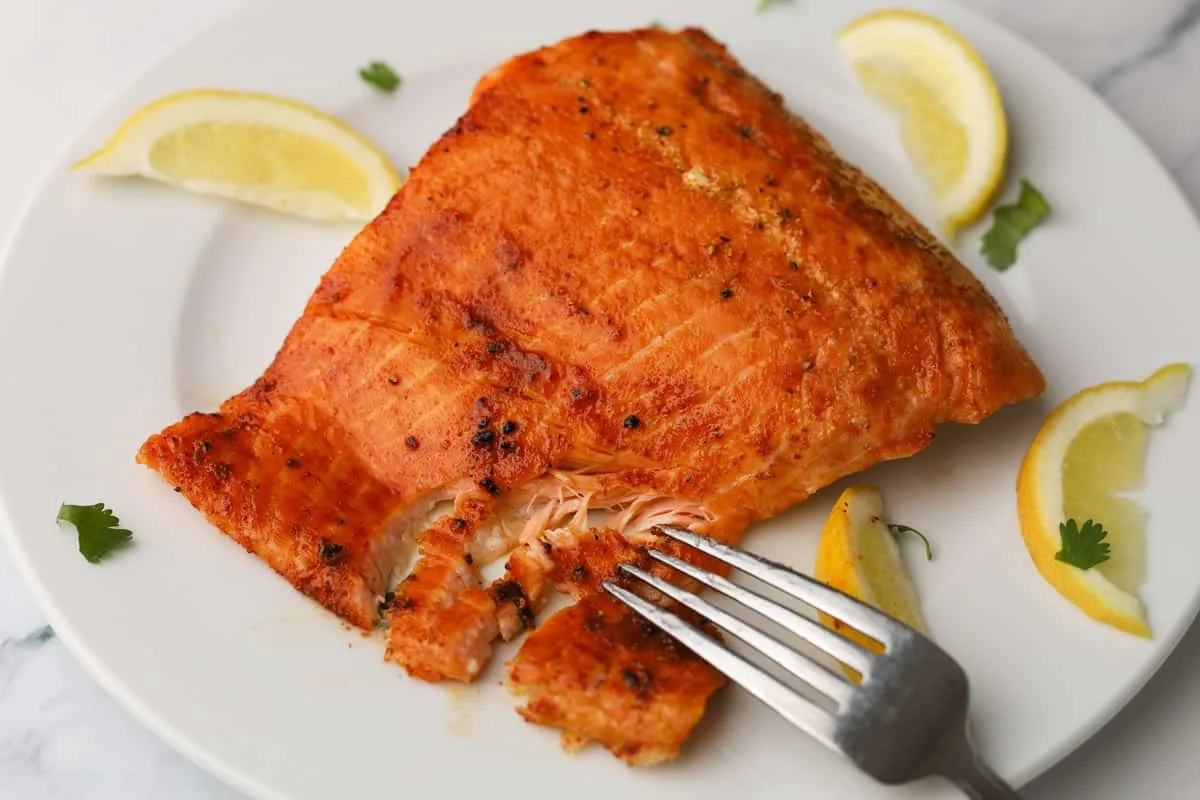
Image source: Web (Bing) / apeachyplate.com (Web image (fair-use with source credit))
The Problem: Why Your Air Fryer Salmon Comes Out Dry or Rubbery
The air fryer is a powerful convection oven in disguise. It circulates hot air at high speed, which is fantastic for crisping up chicken wings or french fries. But salmon is leaner than you think, and that same aggressive heat works against it if you're not careful.
The most common culprit is overcooking. Most generic recipes tell you to cook salmon at 400°F for 12 to 15 minutes, and that's simply too long for a standard fillet. By the time the exterior looks nicely browned, the interior has already passed the point of no return. The connective tissue contracts, squeezing out moisture, and you're left with that dry, mealy texture no one enjoys.
Another frequent mistake is skipping the preheat. Tossing cold fillets into a cold basket means the cooking time becomes unpredictable, and you end up guessing instead of knowing. If your air fryer doesn't have a preheat function, run it empty at your target temperature for 3 to 5 minutes before adding the fish.
Don't overlook the oil factor either. Salmon benefits from a light coating of oil to help the seasonings stick and to promote even browning. But too much oil creates steam, and steam is the enemy of crispy skin. A thin brush of avocado or olive oil is all you need.
Finally, there's the issue of blind trust in timers. Air fryers vary wildly in wattage and airflow, so a recipe that works perfectly in a 1700W model might overcook in a 1200W unit. You need to check doneness visually and with a thermometer, not just follow the clock.
Waiting for the exact minute on a timer is how dry fish keeps happening to good people. If you're noticing your air fryer food generally comes out not quite right, it's worth checking your cooking times and temperature settings against a reliable chart.
Quick Answer: The Best Temperature and Time for Air Fryer Salmon
Here's the short version you came for. Set your air fryer to 380°F (193°C) and cook your salmon for 8 to 12 minutes, depending on thickness. That's the sweet spot where the skin gets crispy without the flesh drying out.
| Fillet Thickness | Temperature | Cook Time | Internal Target |
|---|---|---|---|
| 1 inch (2.5 cm) | 380°F / 193°C | 8–10 minutes | 125°F–135°F |
| 1.5 inches (3.8 cm) | 380°F / 193°C | 10–12 minutes | 125°F–135°F |
| Frozen (1 inch) | 380°F / 193°C | 14–16 minutes | 125°F–135°F |
Place the fillets skin-side down in a single layer, leaving space between each piece for air to circulate. Don't flip them halfway through, the skin side needs consistent contact with the hot basket to crisp up properly.
Use an instant-read thermometer every single time. Insert the probe into the thickest part of the fillet. When it reads 125°F to 135°F, pull the salmon out immediately. It will continue cooking from residual heat, a phenomenon called carryover cooking, which typically raises the internal temperature by another 5°F over the next few minutes.
If you prefer your salmon more well-done, aim for 140°F, but be aware that texture starts to suffer as you climb toward 145°F and beyond. Remember that preheating makes a real difference in consistency, so check out our guide on whether you should preheat your air fryer before you start.
How Air Frying Works (and Why It's Great for Salmon)
Air fryers are essentially small, powerful convection ovens. A heating element at the top warms the air, and a fan circulates it rapidly around the food at speeds that create a drying effect on the surface. That dry, fast-moving air is what transforms a plain salmon fillet into something with a crisp exterior and a tender interior.
The magic lies in the Maillard reaction. At temperatures above 300°F, the amino acids and sugars on the surface of the salmon react, creating hundreds of new flavor compounds and that desirable golden-brown color. The high airflow pulls moisture away from the surface, which is exactly what you need for crispy skin.
Compared to pan-searing, the air fryer is far more forgiving. You don't need to worry about oil splattering across your stovetop or carefully timing a flip to avoid sticking. Compared to oven baking at lower temperatures, the air fryer finishes faster because the intense airflow transfers heat more efficiently.
The one thing an air fryer does poorly for salmon is cooking multiple thick fillets at once. Overcrowding blocks the airflow, turning your crispy-skin dream into a steamed fish nightmare. If you're cooking for more than two people, you're better off working in batches or sticking with the oven. For smaller households, though, the air fryer is arguably the best tool in the kitchen for this job.
One of the biggest advantages is cleanup. A nonstick basket with a quick rinse beats scrubbing a greasy skillet any day. That said, the leftover oil and fish residue can build up over time, so it's worth knowing how to handle cleaning the basket properly so your next batch doesn't taste like last week's dinner.
Before You Cook: Choosing Your Salmon and Prepping the Fillets
Your results start at the grocery store. The quality and type of salmon you choose directly impacts how it performs in the air fryer, so don't grab just any package.
Fresh vs. frozen salmon. Fresh salmon is ideal because it has the best texture and moisture retention. But high-quality frozen fillets, especially those flash-frozen at sea, work beautifully too. The key is to thaw frozen salmon completely in the refrigerator before cooking, which takes about 12 to 24 hours.
Cooking from frozen is possible, but you'll add several minutes to the cook time and lose some control over the final texture.
Skin-on vs. skinless. Always choose skin-on if you want that crispy exterior texture that makes air fryer salmon so satisfying. The skin acts as a protective barrier, keeping the delicate flesh from drying out against the hot basket. Skinless fillets cook faster and are prone to drying, so reduce your cook time by 1 to 2 minutes if you go that route.
Center-cut fillets are your friend. The center section of the fillet has a consistent thickness, which means it cooks evenly. Tail sections taper off and have a thinner profile, making them tricky to cook without overcooking the thin portions.
Prep work that matters:
- Pat the salmon completely dry with paper towels. This is the single most important step for crispy skin. Wet skin steams instead of crisping.
- Let the fillets sit at room temperature for 10 to 15 minutes before cooking. This helps them cook more evenly.
- Lightly brush the skin with oil, then season both sides. A simple mix of salt, black pepper, and garlic powder goes a long way.
If you're using a marinade or glaze, save it for the last 2 minutes of cooking. Sugar-based glazes burn at high temperatures, and you'll end up with a bitter, charred mess instead of a shiny, delicious crust. For more specific cooking tips tailored to other proteins, our guide to keeping chicken moist covers similar principles of temperature and doneness that apply here too.
Visual Cues: How to Know When Salmon Is Perfectly Cooked
A thermometer is your best friend, but you shouldn't have to rely on it alone. Learning to read the visual signals of perfectly cooked salmon means you can cook confidently anywhere, even without your probe.
The flake test. Take a fork and gently press it into the thickest part of the fillet. If the salmon is done, the flesh will separate into clean, distinct flakes that pull apart easily. If the fish resists the fork or looks translucent in the center, it needs more time.
If the flakes are dry and falling apart aggressively, you've gone too far.
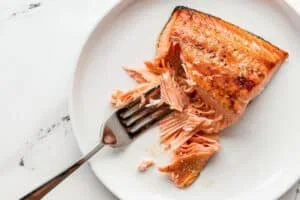
Image source: Web (Bing) / theforkbite.com (Web image (fair-use with source credit))
The color guide. Raw salmon is deep orange or coral-pink and slightly translucent. As it cooks, it transitions to a lighter, opaque pink. When the center is just barely opaque with a slight translucency in the thickest part, it's at medium-rare.
Fully opaque all the way through means well-done. Pull it when the center shows just a hint of that translucent quality, carryover cooking will finish the job.
The white stuff isn't a problem. That white substance that oozes out of the fish is albumin, a protein that's pushed out when muscle fibers contract from heat. White albumin spots mean your salmon is likely overcooked, but small amounts are harmless and don't affect flavor. If you see large amounts of albumin, dial your temperature down next time.
The skin tells a story. Perfectly crisped skin looks golden-brown and sounds crackly when you press it. If it's pale and rubbery, you either didn't dry it well enough before cooking, or you didn't let it cook long enough against the hot basket. A bit of golden color on the edges is exactly what you're aiming for.
Trust your eyes over the clock. The timer is a guideline, not a rule, and visual cues rarely lie. This same principle applies to batch cooking or reheating leftovers, and understanding why your air fryer food might turn out soggy can help you troubleshoot texture issues across the board.