Beginner’s Guide to How Is an Air Fryer Different Than a Convection Oven
Okay, let's write this. I'll start with the intro, quick answer, and the first five H2 sections, keeping the total article length in mind as I go. I'll write in that conversational, expert tone, and carefully weave in the required images and internal links.
Choosing between an air fryer and a convection oven feels like picking between two appliances that do the exact same thing. Both use a fan to blow hot air around, both promise crispy results, and both seem to have replaced the trusty conventional oven in modern kitchens. It’s a fair question, and a confusing one, to ask yourself: how is an air fryer different than a convection oven?
The truth is that they share a core technology but deliver completely different cooking experiences. The air fryer is designed for speed and intense crisping in small batches, while the convection oven is built for volume and versatility. The difference isn't just the size of the box, it’s the power of the fan, the design of the chamber, and how those two things transform the texture of your food.
As of 2026, the market is flooded with both, so understanding the real distinctions will help you make a smart choice for your kitchen.
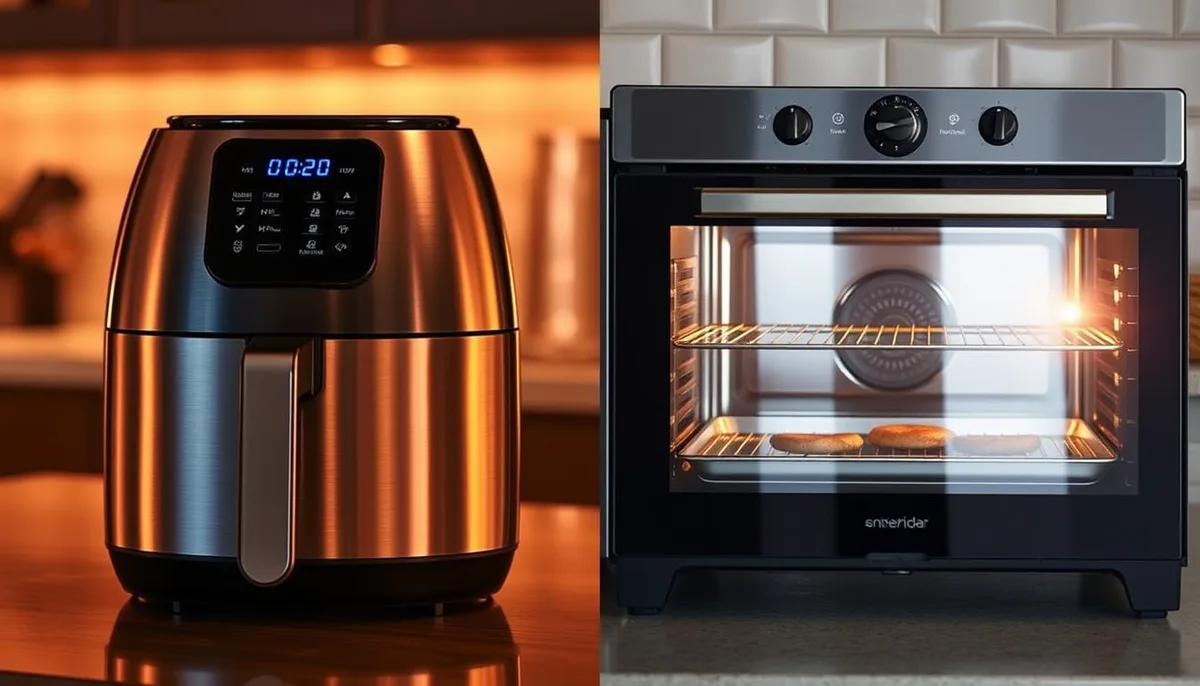
Image source: Bing (Web (fair-use with source credit))
Why This Comparison Confuses People
The confusion is completely justified. An air fryer is, at its most basic level, a small convection oven. It has a heating element and a fan, just like its larger counterpart.
The fundamental physics are the same: a fan moves hot air across your food, which accelerates the transfer of heat and speeds up cooking by 20 to 30 percent compared to a standard oven.
So why do they seem so different? Because aggressive marketing has painted the air fryer as a miracle machine that "fries" without oil. It doesn't fry.
It bakes and roasts with high-velocity air circulation, which creates a crispy exterior through a chemical reaction called the Maillard reaction. This is the same browning process you get in a convection oven, just faster and more fiercely.
But the resemblance ends there. Look closely at the hardware, and you'll see two very different engineering approaches. The air fryer is a compact, high-powered wind tunnel.
The convection oven is a larger, more gentle, and multi-rack system. These differences lead to different results, different batch capacities, and different ideal use cases. They are both valuable, but they are not interchangeable.
Quick Answer
An air fryer’s fan is far more powerful and its chamber is far smaller than a convection oven’s. This combination creates a concentrated blast of heat that crisps food faster and more intensely. Convection ovens use a gentler airflow over a larger area, making them better for baking and cooking multiple dishes at once.
Air fryers are for quick, small-batch meals. Convection ovens are for family-sized cooking and baking.
What a Convection Oven Really Does
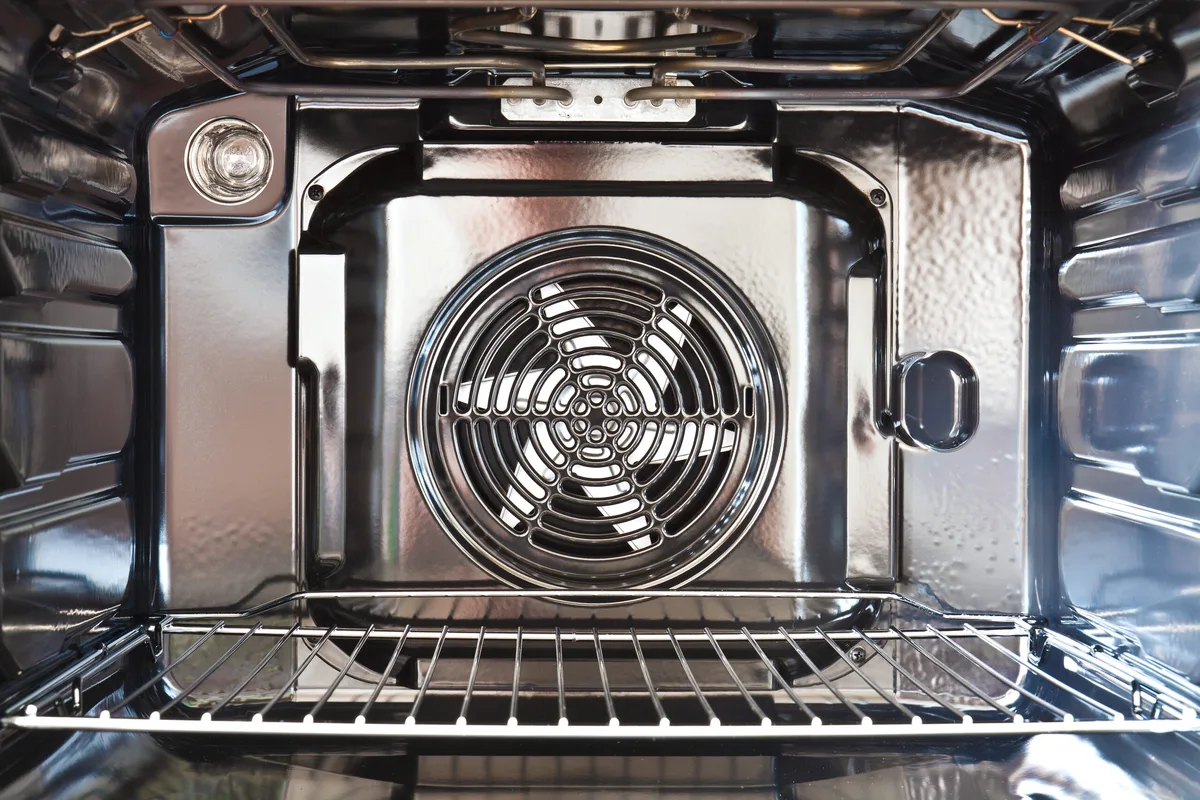
Image source: Web (Bing) / appliancejournal.com (Web image (fair-use with source credit))
A convection oven is essentially a traditional oven with a fan and an exhaust system built into the back wall. The fan, along with the heating element surrounding it, circulates the hot air throughout the entire cavity. This continuous flow of air strips away the cooler boundary layer of air that normally clings to food in a static oven, which allows heat to penetrate faster and more evenly.
The Multi-Rack Advantage
This is the convection oven’s superpower. Because the air is moving, you can fill all the racks without worrying about hot spots or uneven baking. You can roast a chicken on the bottom rack while baking a tray of vegetables on the top, and both will cook consistently.
The airflow ensures that the temperature is uniform across all levels, something a standard oven simply can't do.
Types of Convection Ovens
There are two main types of convection you'll find, and they perform differently:
- True or European Convection: This uses a third heating element around the fan itself. It's the premium option, offering the most even heat distribution and better baking results.
- Fan-Assisted Convection: This is a standard fan-and-element setup found in many full-size ovens and most countertop toaster ovens. It’s effective for most cooking tasks but may not bake as evenly as a true convection system.
What an Air Fryer Really Does
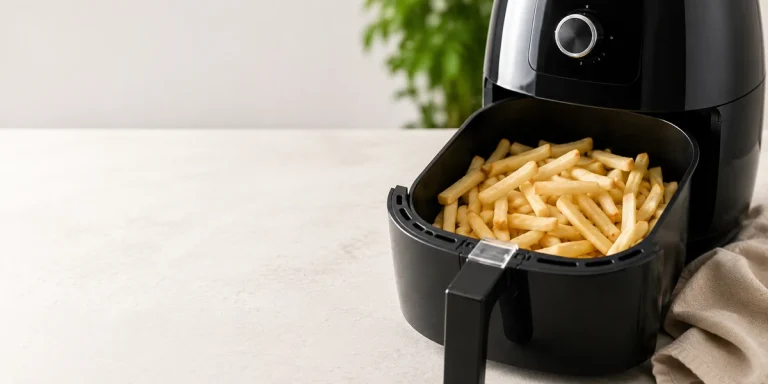
Inside that squat, boxy body lies a high-powered heating element and a fan that creates a rapid circulation of hot air within a very confined space. The perforated basket holds food elevated, allowing air to touch every surface, hitting the food from the top and bottom. The combination of the small chamber, the close proximity of the element, and the high-velocity fan creates an intense, focused heat.
The "Frying" Illusion
Again, it doesn't fry. That crisp, golden exterior you get on frozen fries or chicken wings is the result of rapid dehydration and browning. The high heat sears the surface quickly, while the powerful airflow dries out any moisture, leaving a crunchy crust.
You're essentially achieving a roast that mimics the texture of a fried food, but with significantly less oil.
Basket-Style vs. Air Fryer Ovens
The classic basket style has a small, fixed capacity, usually measured in quarts. An "air fryer oven" is essentially a countertop convection toaster oven that has an air fryer function. This larger form factor allows you to use trays and racks, but it's a compromise.
The fan is typically not as powerful as a dedicated basket-style air fryer, which means it won't produce quite the same aggressive crisping effect.
Physical Layout and Footprint: Countertop vs. Built-In
This is a major spatial decision for your kitchen, and it's often the deciding factor for people. While both are designed to save you time, they take up very different amounts of real estate.
Size and Capacity Comparisons
- Air Fryer (Basket Style): Takes up a modest countertop footprint. They typically range from 4 to 6 quarts for a standard model, which is fine for 1-2 people. They are an appliance you can tuck away in a cabinet when not in use, though you might not want to because of their daily utility. To be effective, the basket should only be filled about 70% full to allow for proper air circulation, which limits how much food you can cook at once.
- Convection Oven (Full-Size): This is a major kitchen fixture, a built-in appliance that is a permanent part of your home. They offer massive capacity, from 4 to 6 cubic feet, allowing you to cook entire meals at once. They take up no counter space but are a fixed part of your kitchen layout.
For those in between, a countertop convection toaster oven bridges the gap. It sits on your counter like an air fryer but has roughly 0.5 to 1.5 cubic feet of space, allowing you to cook larger batches than a basket-style fryer.
Storage, Dorm, and RV Scenarios
If you live in a tight space, like a dorm room, a studio apartment, or an RV, this difference matters a lot. A compact air fryer can be a lifesaver. It’s small, powerful, and doesn't heat up the room like a full-size oven would.
It also draws far less wattage, typically 1200W to 1800W, which is usable on most standard outlets. A full-size convection oven is a major investment that only makes sense if you have the space and the volume of cooking to justify it. For small, flexible living, an air fryer is the clear choice.
If you find yourself routinely struggling to fit your meals into a single basket, you may want to revisit the air fryer cooking times guide to maximize its potential before upgrading.
How Each Builds Texture and Browning
This is the heart of the difference, and it's where the two appliances diverge the most in performance. The texture of your food tells you everything about the fan speed and chamber size you're working with.
The Maillard Reaction Difference
That golden-brown crust on a roasted chicken or a batch of fries is the Maillard reaction. It's a chemical reaction between amino acids and sugars that happens when food hits around 285°F. Both appliances trigger it, but they do so at different intensities.
An air fryer's concentrated heat blast sears the surface faster. You get a deep, even crunch in half the time you'd need in a convection oven. The downside?
That fierce heat can dry out delicate foods if you're not careful. Convection ovens, with their gentler, more distributed airflow, brown food more slowly. You get a softer crust, better for baked goods, cakes, and breads where structure matters more than crunch.
Why Air Fryers Crisp Faster
The secret is the air-to-food ratio. In a basket-style air fryer, the food sits in a small chamber with a powerful fan blowing air at roughly three to four times the velocity of a convection oven's fan. This creates a miniature wind tunnel effect.
Moisture is stripped from the surface immediately, leaving a dry, crisp exterior while the inside cooks through.
You'll notice this difference most with frozen foods. A basket of frozen french fries in an air fryer takes about 15 minutes and comes out shatter-crisp. The same fries in a convection oven take 25 minutes and end up with a softer, chewier bite.
Aggregated reviews consistently report this texture gap, and it's the number one reason people say they prefer the air fryer for snacks and reheating.
What Convection Ovens Do Better
Baking. This is where the air fryer falls apart. The intense, focused airflow that makes fries crispy is terrible for delicate baked goods.
Cookies spread unevenly, cakes rise lopsided, and batters develop a tough crust before they cook through. A convection oven's larger, more gentle airflow prevents this. It provides even heat without drying out the surface too quickly.
Convection ovens also excel at batch roasting. You can roast a whole chicken on a rack, and the circulated air will create a gorgeous, evenly browned skin while keeping the meat moist. An air fryer can do a small roast, but fitting a 5-pound bird into a 6-quart basket is a tight squeeze.
For anything larger than a few servings, the convection oven's capacity wins every time.
Side-by-Side Comparison: The Full Breakdown
Here's a clean table that sums up the practical differences. I've organized it around the factors that matter most when you're standing in the kitchen trying to decide what to cook.
| Feature | Air Fryer (Basket Style) | Convection Oven (Full-Size) |
|---|---|---|
| Cook Time | 20-30% faster than conventional | 15-25% faster than conventional |
| Texture Result | Extra crispy, shatter-crunchy exterior | Tender, moist interior with moderate crispness |
| Batch Capacity | 2-4 servings max | Family-sized, multiple racks |
| Energy Use | 1200-1800W, low energy | 2400-5000W, higher energy |
| Preheat Time | 2-3 minutes | 10-15 minutes |
| Temperature Range | 180°F to 400°F | 170°F to 500°F+ |
| Rack Flexibility | No racks, single basket | Multiple racks for multi-dish cooking |
| Noise Level | Loud fan, noticeable whir | Quieter, background hum |
| Price Range | $60-$300 | $800-$4,000+ |
| Cleaning Effort | Easy, removable non-stick basket | More surfaces, but often self-cleaning |
The energy-cost difference is worth digging into. A full-size convection oven takes much longer to preheat and uses more wattage to maintain temperature. An air fryer cycles its heating element on and off, drawing far less power overall.
If you're cooking for one or two, an air fryer will noticeably reduce your monthly electric bill. If you're feeding a family, the oven's efficiency over a large batch spreads that cost across more meals.
Pros and Cons: The Honest Take
No appliance is perfect. Here's a balanced look at the strengths and weaknesses of each, based on manufacturer specs and verified user feedback.
Air Fryer Pros
- Lightning-fast preheat. Most models are ready in under 3 minutes.
- Less oil needed. You can use 70-80% less oil than deep frying, which results in lighter meals.
- Excellent for reheating. Leftover pizza and fried chicken become crisp again, not soggy.
- Energy efficient. Uses roughly half the energy of a full-size oven for small portions.
- Compact footprint. Fits on a countertop, easy to store when not in use.
Air Fryer Cons
- Small capacity. You can feed 2-3 people max per batch. Large families will spend all night cooking in shifts.
- Noisy operation. The fan is loud, noticeably so during longer cooks.
- Food can dry out. High heat is unforgiving on lean proteins like chicken breast or fish.
- Requires more attention. You often need to shake or flip food halfway through for even cooking.
- Not ideal for baking. Cheesecakes, soufflés, and delicate pastries don't fare well.
Convection Oven Pros
- Large capacity with multiple racks for batch cooking and full meals.
- Even baking results. The gentle airflow produces consistent browning across all racks.
- Higher temperature range. Can sear at 500°F+ for perfect roasts and broiling.
- Versatile. You can bake, roast, broil, and dehydrate all in one unit.
- Quiet operation. The fan is subtle and blends into the background.
Convection Oven Cons
- Longer cook times than an air fryer for small portions.
- Energy inefficient for cooking just a single serving.
- Expensive upfront cost, especially for built-in models.
- Slow preheat, often 10-15 minutes.
- Not as crispy. The larger chamber cannot replicate the air fryer's intense surface browning.
Use Cases: Who Should Buy Which?
Now that you've seen the hard data, let's talk about you. Your kitchen, your cooking style, and your weekly routine will determine which appliance actually earns its counter space.
Air Fryer Best For: Singles, Couples, Quick Meals, Reheating
If you're cooking for one or two people most nights, an air fryer is almost unbeatable. You can throw in a couple of chicken thighs, some frozen veggies, and have dinner ready in under 20 minutes. No preheating a massive oven for a tiny meal.
No heating up the whole kitchen in the middle of summer. It's the ultimate weeknight shortcut.
It's also the best reheating tool you'll ever own. Unlike a microwave, which turns fried food soggy, an air fryer restores that just-cooked crunch. Cold pizza, leftover fried chicken, stale tortilla chips, they all come back to life.
The high-velocity air re-crisps the exterior while gently warming the inside. If you've ever thrown out sad, limp leftovers, this alone justifies the purchase.
Convection Oven Best For: Families, Bakers, Batch Cookers, Holiday Meals
If you're feeding four or more people on a regular basis, a convection oven is the practical workhorse. You can roast a whole chicken while baking a casserole on the rack below, and everything finishes at the same time. The multi-rack capability means you're not cooking in shifts like you would with an air fryer.
Bakers, this is your match. The gentle, even airflow of a convection oven produces consistent browning across all racks. Cookies, cakes, and pastries bake evenly without hot spots.
An air fryer will destroy a delicate pastry, but a convection oven will handle it with precision. For holiday meals, Thanksgiving turkeys, Christmas hams, and large batches of roasted vegetables, there's simply no competition. The convection oven wins by a mile.
The "Both Is Actually Fine" Scenario
Here's the honest truth: you might not need to choose. Many households find that owning both makes sense. Use the air fryer for quick weeknight meals, snacks, and reheating.
Break out the full convection oven for weekend roasts, baking projects, and large gatherings. They complement each other perfectly. An air fryer oven, a countertop unit that combines both functions, is a compromise.
But if you have the budget and counter space, owning both gives you maximum flexibility. It's the setup I recommend to most people who can swing it.
The "Neither Is Right" Scenario
Maybe you're perfectly happy with a standard conventional oven. If you rarely cook, eat out often, or live alone, a regular oven may be all you need. It handles everything with basic, predictable results.
Similarly, if you only reheat leftovers, a microwave does the job just fine. Don't buy an appliance you're not going to use. That's a decision based on pressure, not need.
Evaluate how you actually cook before you commit to either.
Step-by-Step: How to Convert a Recipe Between the Two
Recipes aren't one-size-fits-all across appliances. But you can easily adapt a recipe written for one to work in the other. Here's how to make the swap without wrecking dinner.
Adjusting Temperature (The 25°F Rule)
A good rule of thumb is to lower the temperature by 25°F when moving a recipe from a conventional oven to either an air fryer or a convection oven. Conversely, if you're converting an air fryer recipe to a regular oven, raise the temperature by 25°F. Why?
The moving air transfers heat more efficiently, so you need less ambient heat to achieve the same result. This rule applies across the board.
Adjusting Time (The 20-30% Rule)
Because the heat transfer is faster, you'll need to reduce cook time by 20 to 30 percent. A recipe that takes 40 minutes in a conventional oven will be done in about 28 to 32 minutes in a convection oven, and possibly even faster in an air fryer. Always check for doneness early.
Food cooks quicker than you expect. It's much better to peek a few minutes early than to open the appliance to a dried-up disaster.
Arranging Food: Single Layer vs. Multiple Racks
This is critical. An air fryer needs food in a single layer in the basket. Overcrowding blocks airflow and results in soggy, unevenly cooked food.
You want the hot air to hit every surface. Convection ovens, with multiple racks, allow you to cook more food at once, but you should still avoid stacking items on the same tray. You want the air to move freely around each piece of food.
If you're cooking fries in the air fryer, make sure they're not piled on top of each other.
Shaking, Flipping, and Rotating
Air fryers almost always require a shake or flip halfway through cooking. This ensures even browning on all sides. Convection ovens are less demanding, but rotating trays between racks halfway through the cooking time promotes even baking and browning.
It's a small step that makes a big difference in the final result. When cooking multiple trays, swap them top to bottom and front to back at the halfway mark. You'll get a more uniform bake.
Use a meat thermometer to check that proteins have reached their safe, correct internal temperatures.
Mistakes to Avoid When Switching Between Them
No matter which appliance you choose, a few common mistakes can ruin your dish. Here's what to watch out for.
Overcrowding the Basket
This is the number one air fryer mistake. When you cram the basket full, the airflow gets blocked, and you end up with steamed, soggy food instead of crispy food. Leave space between pieces.
Cook in batches if you must. But don't pack it to the brim. For a 4-quart basket, fill it up to about 70% capacity.
That crate of frozen fries will need two batches. Yes, it's slower, but the texture will be infinitely better.
Using the Wrong Rack Position
In a convection oven, rack position matters. For roasted meats and vegetables, the middle rack is usually best, allowing air to circulate around the food. For broiling, the top rack is necessary for that high-heat sear.
For baking delicate items like cakes, the middle to lower rack helps avoid over-browning the top. Always check your recipe for rack placement recommendations. And never crowd a single tray.
Give each piece of food some breathing room.
Ignoring Dirty Airflow Paths
Food debris and grease aren't just a cleaning nuisance. They can block the airflow inside the appliance and affect cooking performance. A clogged fan vent in an air fryer or a grease-coated heating element in a convection oven leads to uneven cooking and potential smoke.
Regular cleaning of the air fryer heating element keeps airflow strong. Use a damp cloth to wipe down the appliance's interior after heavy use.
Lining the Tray Wrong (Foils and Perforations)
You can use parchment paper or foil in an air fryer, but it's a common mistake to block the airflow with it. Make sure the liner doesn't cover the entire basket bottom. The hot air needs to flow up and around the food.
Perforated parchment liners are designed for this purpose. In a convection oven, never line the entire rack with foil. You'll block the airflow and prevent proper browning.
Leave gaps, or just bake directly on the rack for best results.
Not Preheating When It Matters
Some air fryers don't require preheating, and some do. Check your manufacturer's instructions. For convection ovens, always preheat, especially for baking.
Putting food in a cold oven throws off cook times and can affect the final texture. The air fryer preheat guide covers this in detail. A quick preheat of 2-3 minutes makes a significant difference in the final result.
Okay, I'll continue from that exact point.
A quick preheat of 2-3 minutes makes a significant difference in the final result. It gets the heating element and fan up to speed, so your food hits that intense heat immediately. Think of it as the difference between jumping into a warm pool and a cold one.
You want the appliance ready to work when the food goes in. So, take those extra few minutes. Your food will thank you.
And don't forget the complete preheat guide if you're just getting started.
Maintenance and Long-Term Care
Both appliances need regular care to perform their best. But their cleaning routines are as different as their cooking styles. An air fryer, with its greasy basket and exposed heating element, demands more attention.
A convection oven, especially a self-cleaning model, is more set-and-forget. But both benefit from a consistent upkeep routine.
Cleaning an Air Fryer Basket Properly
The basket and tray are the first line of defense. Most are non-stick and dishwasher-safe, but hand washing with warm, soapy water is gentler on the coating. Avoid abrasive sponges.
They'll scratch the surface and make it stickier over time. For tough, baked-on grease, let the basket soak in hot, soapy water for 15 minutes before scrubbing. This breaks down the residue without needing harsh chemicals.
You should clean the basket after just about every use. It prevents grease from building up and smoking the next time you cook. A quick wash takes less than a minute.
For a deep clean, you can tackle the crusty bits that accumulate over time. The guide to removing grease from an air fryer is a great resource for stubborn messes.
Wiping Down Convection Fans and Elements
The fan and heating element in a convection oven are exposed to grease splatters and food debris. Over time, this residue can build up and affect airflow and heating efficiency. It can even cause smoke when the oven is running.
For a full-size oven, check the manual. Many have a self-cleaning cycle that incinerates residue. But that cycle doesn't clean the fan blades.
You'll want to manually wipe down accessible areas. A damp cloth with mild soap is usually enough. For countertop convection toaster ovens, this is even more important.
Crumbs and grease can collect at the bottom and around the fan. A deep clean every couple of months, depending on usage, keeps everything working right. Catching grease early is much easier than dealing with a very dirty air fryer later.
Degreasing and Smoke Prevention
Grease isn't just about cleanliness. It's a fire hazard. When grease builds up and gets hot, it smokes.
In severe cases, it can even catch fire. Keep your appliance free from excess oil. Wipe down the interior after heavy use.
Check the bottom of the air fryer basket for pooled oil.
If you do get smoke, turn off the appliance, unplug it, and let it cool down completely. Then, clean the interior. This is a sign you've let too much grease accumulate.
Regular upkeep prevents this from happening. The frequency of cleaning guide helps you build a simple habit that keeps your appliance safe and smoking-free.
When to Replace Filters (If Your Model Has One)
Some countertop convection ovens and air fryer ovens have a charcoal or mesh filter. This filter helps absorb odors and catch grease from the fan exhaust. These filters need to be cleaned or replaced periodically.
Check your owner's manual for the recommended interval. It's usually every 3 to 6 months, depending on how often you cook.
A clogged filter restricts airflow, which leads to longer cook times and less crispy results. It can also recirculate stale smells back into your food. If your model has a filter, inspect it regularly.
It's a small part that plays a big role in your appliance's performance. Replacing it is usually a simple, inexpensive task that keeps things running smoothly. Some filters are washable and reusable, while others are disposable.
Know which type you have, and you'll save yourself time and money. Always let the appliance cool completely before you handle any internal parts. Maintenance is all about small, consistent habits.
Safety Notes Before You Buy or Use Either
Both appliances generate serious heat. That's their job. But with that heat comes responsibility.
Here's what you need to keep in mind to stay safe in the kitchen.
Countertop Clearance and Heat Damage
Air fryers and countertop convection ovens kick out a lot of heat from all sides. They need breathing room. Most manufacturer manuals recommend at least 4 to 6 inches of clearance on all sides and above the appliance.
This isn't just for performance. It's a fire safety issue. Blocked airflow can cause the appliance to overheat, potentially damaging the unit or nearby surfaces.
Place your appliance on a heat-resistant surface. Stone, tile, or metal counters are fine. If you have laminate or wood countertops, consider using a silicone mat or a trivet underneath.
The bottom of the appliance can get hot enough to damage certain surfaces. I've seen warped countertops and scorched wood from people skipping this step. Don't let that be you.
Keep the appliance away from curtains, paper towels, and other flammable materials.
Tip-Over and Child Safety Around Basket Fryers
Basket-style air fryers are top-heavy when the basket is pulled out. A full basket of food and hot oil can be heavy and unwieldy. A curious child or a running pet can easily knock the whole unit over, spilling hot food and oil.
Keep the appliance back from the edge of the counter, out of reach of little hands.
Never let children operate an air fryer without supervision. The basket and interior surfaces get extremely hot, well over 400°F. Steam escaping from the basket during cooking can also cause burns.
Always use a heat-resistant mitt when shaking or removing the basket. It's a simple habit that prevents a painful accident.
Avoiding Loose Hot Oil in an Air Fryer
This is a big one. An air fryer is not a deep fryer. You should never add loose oil to the basket and heat it up.
The high-velocity fan will create a fine mist of hot oil, which is incredibly dangerous. It can easily ignite with the heating element, causing a kitchen fire.
You only need a light coating of oil on your food, usually applied with a spray or a brush. The hot air does the rest. This keeps things safe and also keeps your food from becoming greasy.
If you're following a recipe that calls for a lot of oil, it's not meant for an air fryer. Use your oven or a proper deep fryer for that.
USDA-Recommended Cook Temperatures
Cooking food to the right internal temperature is about more than texture. It's about food safety. No matter how crispy your air fryer makes a chicken thigh, it's not safe to eat until it hits the right internal temperature.
The USDA recommends a minimum internal temperature of 165°F for poultry, 160°F for ground meats, and 145°F for whole cuts of beef, pork, and fish.
Always use a meat thermometer to verify doneness. This is especially important with a new appliance, where cook times may be unpredictable. Visual cues aren't reliable.
You need a thermometer. A fully cooked piece of chicken can still look pink near the bone, and a nicely browned surface doesn't guarantee a safe interior. When in doubt, check the temperature.
Frequently Asked Questions
Can an air fryer replace a convection oven entirely?
No, not for most people. An air fryer is fantastic for small, crispy batches and reheating. But it lacks the capacity and gentle airflow for baking multiple dishes at once.
A convection oven is a better all-around tool for families and bakers. They complement each other more than they replace one another.
Which uses less electricity?
The air fryer wins on energy efficiency. It draws 1200W to 1800W, while a full-size convection oven can draw 2400W to 5000W. It also preheats much faster.
For small portions, an air fryer uses a fraction of the energy. For large meals, the oven is more practical despite higher energy use, because you cook everything at once.
Do air fryers actually cook with less oil?
Yes, significantly less. You typically use far less oil than deep frying, often just a light spray or brush on the food. The rapid hot air creates a crispy texture without the fat.
You can achieve a crunchy exterior with no more than a tablespoon of oil per batch.
Is a convection toaster oven the same as an air fryer?
It's a close cousin but not identical. A countertop convection toaster oven with an air fry function uses a similar heating and fan system. The fan in a dedicated basket air fryer is usually more powerful, creating a more intense crisping effect.
Toaster ovens offer more capacity and baking versatility, but they may not produce the same shatter-crisp texture.
Which one makes better cookies?
A convection oven makes better cookies, hands down. The larger, more gentle airflow allows cookies to bake evenly without developing a tough crust too quickly. An air fryer's intense, focused heat can cook cookies too quickly, leaving them burnt on the outside and raw in the center.
For any delicate baking, the convection oven is the winner.
Can I use an air fryer for a whole chicken?
Yes, if the chicken is small enough and your air fryer is large enough. A 3 to 4 pound bird will fit in a 5.8-quart or larger basket model. The result is beautifully crispy skin in about an hour.
You'll need to check the internal temperature to ensure it reaches 165°F in the thickest part of the thigh.
Maintenance and Long-Term Care
Regular upkeep keeps both appliances running at their best. An air fryer needs attention after every use. A convection oven can go longer between deep cleans, but still needs regular maintenance.
Cleaning an Air Fryer Basket Properly
Wash the basket and tray after nearly every use with warm, soapy water. The non-stick coating is delicate, so skip abrasive sponges. For tough, baked-on grease, let the basket soak for 15 minutes before scrubbing.
A quick wash prevents grease from smoking the next time you cook. Need a deeper clean? The guide to removing grease from an air fryer has you covered.
Wiping Down Convection Fans and Elements
Grease and crumbs accumulate on the fan and heating element over time. This residue can restrict airflow and cause smoke during cooking. Wipe down accessible areas with a damp cloth regularly.
For full-size ovens, rely on the self-cleaning cycle, but also manually clean the fan blades. For countertop convection ovens, this is even more important. A clogged fan means uneven cooking and longer preheat times.
Degreasing and Smoke Prevention
Grease buildup is a fire hazard. It's also the main culprit behind that annoying smoke. Keep your appliance free from excess oil by wiping down the interior after heavy use.
If you see smoke, unplug the appliance, let it cool, and clean it thoroughly. This is a sign you've let too much grease accumulate. How often should you do this?
The air fryer cleaning frequency guide lays out a simple habit. A little care goes a long way.
When to Replace Filters
Some countertop convection ovens and air fryer ovens have a charcoal or mesh filter. This filter catches grease and odors from the fan exhaust. Check your manual for the replacement interval.
It's usually every 3 to 6 months. A clogged filter restricts airflow and can recirculate stale smells back into your food. Replacing or washing it keeps everything running smoothly.
Safety Notes Before You Buy or Use Either
These appliances generate serious heat, and they need respect. Here's what you need to keep in mind to stay safe in the kitchen.
Countertop Clearance and Heat Damage
Air fryers and countertop convection ovens need breathing room. Most manuals recommend at least 4 to 6 inches of clearance on all sides. This prevents overheating and potential fire hazards.
Place the appliance on a heat-resistant surface like stone or tile. A silicone mat protects your countertops from heat damage.
Tip-Over and Child Safety Around Basket Fryers
Basket-style air fryers are top-heavy when the basket is pulled out. A curious child or pet can knock it over, spilling hot food and oil. Keep the appliance back from the edge of the counter, out of reach of little hands.
Never let children operate it without supervision. Use a heat-resistant mitt when shaking or removing the basket. Steam can also burn you.
Avoiding Loose Hot Oil in an Air Fryer
Never add loose oil to the basket and heat it up. The fan will create a fine mist of hot oil, which can ignite with the heating element. You only need a light coating of oil on your food, usually applied with a spray or brush.
The hot air does the rest. If a recipe calls for a lot of oil, it's not meant for an air fryer.
USDA-Recommended Cook Temperatures
Food safety is non-negotiable. The USDA recommends a minimum internal temperature of 165°F for poultry, 160°F for ground meats, and 145°F for whole cuts of beef and pork. Always use a meat thermometer to verify doneness, regardless of the appliance.
A nicely browned surface doesn't guarantee a safe interior. When in doubt, check the temperature.
Frequently Asked Questions
Can an air fryer replace a convection oven entirely?
No, not for most people. An air fryer is fantastic for small, crispy batches and reheating. But it lacks the capacity and gentle airflow for baking multiple dishes at once.
A convection oven is a better all-around tool for families and bakers. They complement each other more than they replace one another.
Which uses less electricity?
The air fryer wins on energy efficiency. It draws 1200W to 1800W, while a full-size convection oven can draw 2400W to 5000W. It also preheats much faster.
For small portions, an air fryer uses a fraction of the energy. For large meals, the oven is more practical despite higher energy use.
Do air fryers actually cook with less oil?
Yes, significantly less. You typically use a light spray or brush of oil on the food, often no more than a tablespoon per batch. The rapid hot air creates a crispy texture without the fat of deep frying.
This makes air-fried food lower in calories and fat.
Which one makes better cookies?
A convection oven makes better cookies. The larger, more gentle airflow allows cookies to bake evenly without developing a tough crust too quickly. An air fryer's intense, focused heat can cook cookies too quickly, leaving them burnt on the outside and raw in the center.
For any delicate baking, the convection oven is the winner.
Can I use an air fryer for a whole chicken?
Yes, if the chicken is small enough and your air fryer is large enough. A 3 to 4 pound bird fits in a 5.8-quart or larger basket model. You get beautifully crispy skin in about an hour.
Just check the internal temperature. The thickest part of the thigh must reach 165°F before serving.
The Verdict: What Should You Buy?
You've seen the specs, the pros, and the cons. Now, let's cut through the noise and make a decision.
If You Have Limited Counter Space
Go with a compact basket-style air fryer. It's small, efficient, and perfect for one or two people. It takes up minimal counter space and can be tucked into a cabinet when not in use.
The energy savings are a nice bonus.
If You Cook for More Than Two People
Choose a convection oven, either a full-size model or a larger countertop convection toaster oven. The extra capacity and multi-rack flexibility are worth the price. You'll cook entire meals at once, not in shifts.
The baking performance is also far superior.
If You're Replacing an Old Oven
Invest in a new full-size convection oven. It's the workhorse of the kitchen and will serve you well for years. It handles everything from weeknight roasts to holiday feasts.
The even baking and energy efficiency make it a smart upgrade.
If You Want One Appliance to Do Everything
If you have the budget and the counter space, consider owning both. Use the air fryer for quick, crispy meals and reheating. Use the convection oven for baking, batch cooking, and larger roasts.
They are a powerful combination that covers every cooking scenario.
The Budget-Reality Check
If you're on a tight budget, an air fryer is the cheaper entry point. You can get a solid model for under $100. A full-size convection oven is a major investment.
A countertop convection toaster oven with air fry functions is a mid-range compromise. It gives you more capacity than a basket and more features than a standard toaster oven, but it won't crisp quite as well as a dedicated air fryer. Whatever you choose, match the tool to your actual cooking habits, not the marketing hype.
Good cooking is about technique, not just the gadget on your counter.
Owning both gives you total flexibility. But for most kitchens, one appliance will carry the daily workload. Match the tool to your actual cooking habits, not the marketing hype.
Good cooking is about technique, not just the gadget on your counter.