Can You Make a Baked Potato in Air Fryer Perfectly?

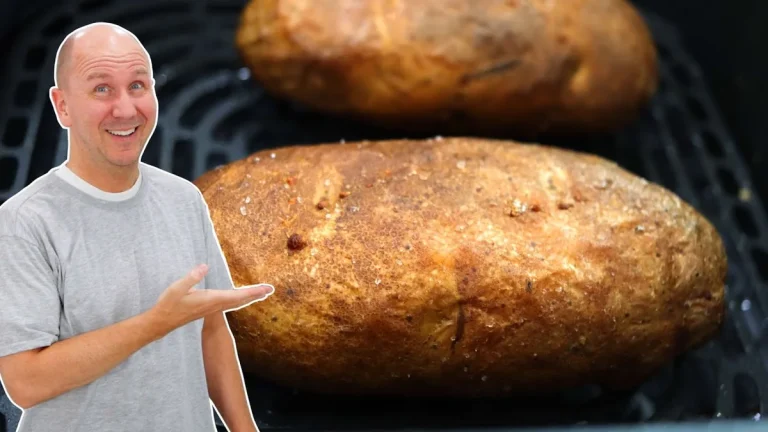
Image source: YouTube / Blendology (YouTube thumbnail (fair-use with source credit))
Many home cooks struggle to get the perfect balance of a crunchy exterior and a soft, pillowy interior when preparing potatoes. The oven takes too long, and the microwave leaves the skin wet and wrinkled. If you are wondering, “can you make a baked potato in air fryer,” the answer is absolutely.
It is one of the most efficient ways to achieve textbook steakhouse results with minimal effort.
Convection technology circulates dry, intense heat directly around the potato. This rapid air movement quickly rids the skin of moisture while trapping steam inside. By the time the center reaches its ideal fluffy state, the outside has formed a salty, satisfying crust.
Let’s look at how this modern kitchen tool completely changes the game for this classic side dish.
Quick Answer
Yes, you can make a baked potato in an air fryer. The circulating heat creates incredibly crispy skin. The inside of the potato stays fluffy.
Cook a medium Russet at 400°F (200°C) for 35 to 45 minutes. Poke holes in the skin first. Rub the outside with oil and salt.
The Baked Potato Dilemma: Crispy Skin vs. Fluffy Interior
A truly great baked potato is a lesson in contrasting textures. You want a skin that is deeply browned, crispy, and structural enough to hold its shape. At the same time, the interior flesh needs to be exceptionally light, dry, and airy.
Achieving both at once is surprisingly difficult with traditional cooking methods.
The secret to this contrast lies in starch gelatinization and moisture control. As a potato heats up, the water inside turns to steam, which cooks the starch granules. If that steam cannot escape, it re-absorbs into the flesh.
This leaves you with a heavy, wet, and gummy potato.
To prevent this, you need an environment that quickly dries the outer peel while steadily heating the core. If the heat is too low, the potato dries out completely before the starches soften. If the heat is too high, the outside burns before the center loses its crunch.
Finding the right balance is the ultimate kitchen challenge.
Why the Air Fryer Works Better Than the Oven and Microwave
The air fryer excels at this task because of its rapid air circulation. Unlike a traditional thermal oven, which relies on stagnant hot air, an air fryer uses a powerful convection fan. This fan continuously strips moisture away from the surface of the food.
It creates an immediate browning effect known as the Maillard reaction.
This process transforms the potato skin into a crispy, seasoned shell. Because the appliance is compact, it concentrates the heat directly onto the potato. You do not have to wait 15 minutes for a giant oven cavity to heat up.
This design also prevents your kitchen from getting uncomfortably warm during the summer months.
The microwave is incredibly fast, but it fails on texture. It heats water molecules inside the food, which essentially steams the potato from the inside out. Since there is no dry, ambient heat, the skin becomes wrinkled, tough, and damp.
By using the air fryer, you combine the speed of a smaller appliance with the superior dry-heat texture of a professional convection oven.
Side-by-Side Comparison: Air Fryer, Traditional Oven, and Microwave
When deciding how to cook your dinner, it helps to see how the three primary methods stack up. Each tool has its own strengths and weaknesses. The right choice depends on your schedule and how much you care about texture.
| Feature / Metric | Air Fryer Method | Traditional Oven | Microwave Oven |
|---|---|---|---|
| Average Cook Time | 35 to 45 minutes | 50 to 60 minutes | 7 to 10 minutes |
| Preheat Time | Zero minutes | 10 to 15 minutes | Zero minutes |
| Skin Texture | Extremely crispy and blistered | Moderately crispy | Soft, damp, and chewy |
| Interior Texture | Fluffy, light, and dry | Fluffy but can dry out | Dense, wet, and heavy |
| Energy Usage | Very low | High | Minimal |
| Kitchen Heat | None | Significant | None |
For those who want a quick meal without sacrificing quality, the air fryer is the clear winner. It delivers the fast-cooking benefits of the microwave while yielding a skin that is even crispier than what a standard oven can produce. It is the most balanced approach for everyday cooking.
Step-by-Step Guide to the Perfect Air Fryer Baked Potato
Preparing a potato this way is incredibly straightforward. It requires minimal active prep time. Following these steps ensures your potato cooks evenly and develops a beautiful, savory crust.
If you plan to serve this alongside a main course, you can easily prepare other items while the air fryer does the heavy lifting. For instance, learning about cooking proteins at high heat will help you coordinate your entire dinner timeline.
What You Need
- Medium Russet potatoes: 6 to 8 ounces each is the ideal size.
- High-smoke-point oil: Avocado oil, olive oil, or canola oil.
- Coarse salt: Kosher salt or sea salt works best.
- A fork and tongs: For prepping and safe handling.
Step 1: Scrub and Dry Thoroughly
Wash the potatoes under cold running water to remove any dirt or debris. Use a stiff brush if necessary. Once clean, dry each potato completely with a clean kitchen towel.
Any residual water on the skin will create steam in the air fryer, which prevents the surface from getting crispy.
Step 2: Poke Holes for Venting
Take a sharp fork and pierce the potato five to six times all over. Go about half an inch deep. This step is critical.
As the potato heats, steam builds up inside. If there are no exit points, the pressure can cause the potato to burst open inside your air fryer.
Step 3: Coat with Oil and Salt
Pour a small amount of oil onto each potato. Use your hands to rub it over the entire surface. Sprinkling coarse salt over the oiled skin ensures it sticks.
The oil acts as a heat conductor, while the salt draws out surface moisture to maximize the crunch.
Step 4: Arrange in a Single Layer
Place the prepared potatoes directly onto the crisping plate in your air fryer basket. Ensure they are not touching or crowded. The hot air needs to flow completely around each potato to cook it evenly.
Step 5: Cook and Flip
Set your air fryer to 400°F (200°C). Cook for 35 to 45 minutes. Halfway through the cooking process, around the 20-minute mark, use silicone-tipped tongs to flip the potatoes over.
This ensures the bottom side gets just as crispy as the top.
Why You Should Never Wrap Air Fryer Potatoes in Foil
A very common mistake is wrapping potatoes in aluminum foil before putting them in the air fryer. While this is a standard practice for campfires or backyard grills, it ruins the convective process of an air fryer. Foil acts as a barrier that traps steam.
When you wrap a potato in foil, you are essentially boiling or steaming it in its own natural moisture. The skin remains wet, pale, and soggy. You also miss out on the Maillard browning process that makes the skin taste so savory.
Leaving the potato exposed to the circulating air is the only way to get that classic, crunchy skin. Additionally, placing metal foil in some air fryers can restrict airflow too much or even cause safety hazards if it comes into contact with the heating element. Keep things simple and leave the foil in the drawer.
Selecting the Right Potato: Why Russets Reign Supreme
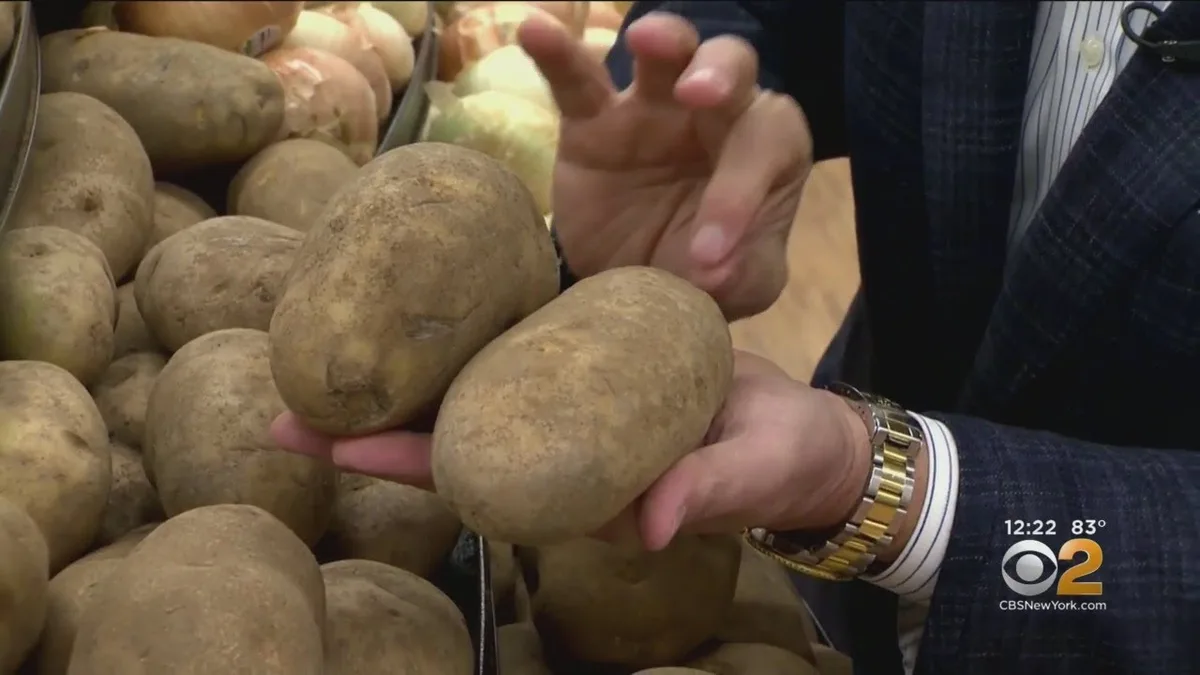
Image source: YouTube / CBS New York (YouTube thumbnail (fair-use with source credit))
Not all potatoes are created equal. To get that iconic, fluffy baked texture, you must choose the right potato variety. Potatoes generally fall into three categories: starchy, waxy, and all-purpose.
For baking, starchy potatoes are the absolute best choice. The Russet selection, often sold as Idaho potatoes, is the gold standard. According to agricultural research from the Idaho Potato Commission, Russet potatoes have a high solid content and low moisture density.
When cooked, the starch cells swell and separate from one another. This separation is what creates the dry, fluffy finish. If you try to bake a waxy variety, like a Red Bliss, the cells hold onto their moisture.
This leaves you with a dense, wet, and heavy potato that feels gummy rather than light.
Flavor Enhancements: How to Season the Skin Properly
Most people focus entirely on the toppings inside the potato. However, seasoning the skin properly turns the jacket into one of the best parts of the meal. The oil you choose acts as the glue for your seasonings.
It also determines how high you can set the temp.
Using oils with a high smoke point, like avocado oil, ensures the fat does not burn and taste bitter during the 40-minute cook time. While butter smells incredible, it contains water and milk solids that burn quickly at 400°F (200°C). Save the butter for the inside of the potato after it is cooked.
You can also experiment with other botanical ingredients. For example, learning about air-frying squash varieties can give you great ideas for seasoning vegetable skins.
For the seasoning itself, coarse kosher salt is the baseline. You can elevate this by tossing the oiled potatoes in a mixture of garlic powder, onion powder, and dried rosemary. Avoid using fresh herbs or fine table salt.
Fine salt dissolves too quickly and can make the skin overly salty, while fresh herbs will burn to a crisp in the air fryer’s high-speed wind.
4 Common Mistakes That Lead to Soggy or Hard Potatoes
Even with a simple process, it is easy to make minor mistakes that lead to disappointing results. Keeping an eye on these details will keep your meals consistent.
- Crowding the basket: Stacking potatoes on top of each other blocks the airflow. This traps steam and makes the skins soggy. Always cook in a single layer with space between each tuber.
- Using too much oil: While a light coat of oil is necessary, drowning the potato in oil makes the skin greasy instead of crispy. It can also cause smoke to billow from your air fryer.
- Skipping the drying step: If you put a wet potato straight into the air fryer, the machine has to work twice as hard to evaporate that surface water. Always pat them bone-dry.
- Cutting them open too late: If you let a hot, baked potato sit without cutting it open, the trapped steam will condense back into water. This turns your beautifully fluffy potato gummy within minutes. Squeeze it open immediately after cooking.
How to Tell When Your Potato Is Done Without a Thermometer
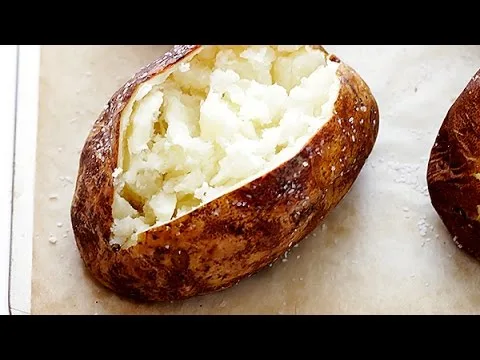
Image source: YouTube / Gimme Some Oven (YouTube thumbnail (fair-use with source credit))
You do not need a fancy digital kitchen scale or a thermometer to know when your dinner is ready. A few simple physical tests will tell you everything you need to know.
First, try the gentle squeeze test. Using a clean oven mitt or a dry kitchen towel, gently squeeze the sides of the potato. It should yield easily to the pressure and feel soft throughout.
If it feels firm or has a hard core, it needs another 5 to 10 minutes.
Second, use the poke test. Insert a fork or a metal skewer directly into the thickest part of the potato. It should slide all the way to the center with absolutely zero resistance.
If you feel a stubborn, crunchy spot in the middle, keep cooking. Remember that larger potatoes naturally take longer to heat through.
Adapting the Method for Sweet Potatoes and Yukon Golds
While Russets are the classic choice, you can easily use this air fryer method for other types of potatoes. You just need to make a few minor adjustments to account for their different chemical makeups.
Yukon Gold potatoes are an all-purpose variety. They have a naturally buttery flavor and medium starch content. They will not get quite as fluffy as a Russet.
However, they develop an incredibly rich, creamy center when air-fried. Because they are often smaller, check them for doneness around the 30-minute mark.
Sweet potatoes contain much more sugar and moisture than white potatoes. Because of the high sugar content, the skin can scorch easily at high temperatures. To prevent burning, drop your air fryer temperature to 375°F (190°C) and cook for 35 to 40 minutes.
They will feel incredibly sweet, soft, and carmelized inside.
Safe Handling: Preventing Steam Burns and Starch Degradation
Cooking at high temperatures means you must prioritize safety in the kitchen. When you remove the potatoes from the basket, they will be incredibly hot. The steam inside is pressurized and can cause severe burns if you are not careful.
Always use heat-resistant silicone or metal tongs to lift the potatoes out of the basket. Never try to grab them with a damp towel, as the moisture in the towel can instantly turn to steam and burn your hand. When cutting the potato open, slice a shallow slit lengthwise, then use your hands, protected by a towel, to press the ends inward.
This venting action lets the steam escape away from your face. It also releases the internal pressure before the starch cells can collapse. This quick release of steam is what preserves that beautifully light, fluffy texture you worked so hard to achieve.
Frequently Asked Questions About Air Fryer Baked Potatoes
Can you cook frozen baked potatoes in the air fryer?
Yes, you can cook pre-baked, frozen potatoes in the air fryer. Set the temperature to 350°F (175°C) and heat them for 20 to 25 minutes until the center is hot. Since they are already cooked, this is simply a reheating process to restore the crispy texture.
Why is my air fryer potato still hard in the middle?
If your potato is hard in the center, it simply needs more time. This usually happens if the potato is exceptionally large or if your air fryer runs slightly cool. Add 5 to 10 minutes to the cook time and test it again with a fork.
Do I need to peel the potato before air frying?
No, leaving the skin on is highly recommended. The skin protects the interior flesh from drying out and provides a delicious, crispy texture. Simply wash the skin thoroughly to remove any dirt before cooking.
Can I cook these ahead of time and reheat them?
Yes. To reheat a baked potato, place it back in the air fryer at 350°F (175°C) for 10 to 12 minutes. This will restore the crispy skin without making the inside soggy, which is a common issue when using a microwave for leftovers.
What is the maximum number of potatoes I can cook at once?
This depends entirely on the size of your air fryer basket. For a standard 4-quart basket, you can easily cook two to three medium potatoes. For larger 6-quart or 8-quart models, you can cook four to six potatoes, as long as they sit in a single layer with space between them.
Selecting the Right Potato: Why Russets Reign Supreme
Image source: YouTube / CBS New York (YouTube thumbnail (fair-use with source credit))
Starchy potatoes work best for baking because of their internal structure. The Russet variety, often grown in specialized soil like that monitored by the Idaho Potato Commission, features high starch levels and low water content. When heated, these starches swell and separate to create a dry, delicate interior.
Waxy varieties, such as red potatoes, hold onto their moisture tightly during cooking. If you use them, you will end up with a heavy, dense texture. For the ultimate contrast of crispy skin and fluffy flesh, always look for Russets with rough, netting-like skins.
Flavor Enhancements: How to Season the Skin Properly
Your choice of oil and salt directly impacts how the skin browns and crisps. It is best to use cooking fats with a high smoke point, like avocado oil or canola oil. These oils easily withstand the 400°F (200°C) environment without burning, which prevents your potatoes from acquiring a bitter taste.
Coarse kosher salt or flaky sea salt is ideal for seasoning. The larger granules cling to the oiled skin, drawing out remaining surface water as the potato cooks. Avoid using table salt, which is too fine and can easily make the exterior taste overwhelmingly salty.
If you are cooking a complete meal, you can coordinate your seasoning styles. For example, learning about air-frying onion toppings can reveal great ways to layer savory, crispy textures across your plate. Save dairy-based fats like butter for the inside of the potato after it splits open.
4 Common Mistakes That Lead to Soggy or Hard Potatoes
- Crowding the heating chamber: Stacking your potatoes blocks the convection currents. This forces the tubers to steam in their own moisture, ruining your chances of getting a crispy outer skin.
- Leaving the skin damp: Skipping the drying step means the air fryer must spend the first 10 minutes evaporating surface water. Always dry the skins completely with a clean towel before oiling.
- Using too much oil: Drowning the potato in oil makes the skin greasy rather than crispy. A light coating of about one teaspoon per potato is all you need.
- Allowing the potato to rest intact: If you do not split the potato open immediately after cooking, the trapped steam will cool and condense. This turns the fluffy starch into a heavy, gummy mass.
How to Tell When Your Potato Is Done Without a Thermometer
Image source: YouTube / Gimme Some Oven (YouTube thumbnail (fair-use with source credit))
You can easily check if your potato is done by using two simple manual tests. First, press the sides of the potato gently using an oven mitt or a thick towel. The potato should yield immediately to the pressure and feel soft to the touch.
Second, insert a standard fork or a metal skewer directly into the center. The tines should slide deep into the potato flesh with absolutely no resistance. If you feel a firm, stubborn core, return the potato to the air fryer for another 5 minutes and test again.
Adapting the Method for Sweet Potatoes and Yukon Golds
You can use this convective cooking method for other potato varieties with just a few simple adjustments. Yukon Golds have a medium starch level, which yields a creamy, buttery interior. Since they are typically smaller than Russets, check them for doneness around the 30-minute mark.
Sweet potatoes contain much more natural sugar, which can scorch easily under high heat. To prevent burning, reduce the cooking temperature to 375°F (190°C) and cook for 35 to 40 minutes. The skins will caramelize beautifully while the inside turns incredibly soft.
Safe Handling: Preventing Steam Burns and Starch Degradation
The steam inside a freshly cooked potato is incredibly hot. Always use heavy-duty kitchen tongs to remove the potatoes from the hot air fryer basket. Never use a damp kitchen cloth to hold them, as the heat will instantly turn the moisture in the cloth into steam, causing a painful burn.
To open the potato safely, cut a clean slit lengthwise along the top. Wrap your hands in a dry towel, grab both ends of the potato, and squeeze inward toward the center. This action vents the hot steam safely away from your face while fluffing up the interior starch cells before they can flatten.
Frequently Asked Questions About Air Fryer Baked Potatoes
Can you cook frozen baked potatoes in the air fryer?
Yes, you can easily reheat pre-baked frozen potatoes in your air fryer. Set the appliance to 350°F (175°C) and heat them for 20 to 25 minutes. Since they are already cooked, this process simply warms the center and crisps the outer skin.
Why is my air fryer potato still hard in the middle?
If the center is hard, your potato is likely quite large and simply needs more time. Add 5 to 10 minutes to the cooking cycle. You must also ensure you are not using plastic accessories inside the basket, as noted in guidelines regarding safe materials for air fryers, which can block airflow.
Do I need to peel the potato before air frying?
No, leaving the skin intact is highly recommended for air frying. The skin serves as a protective jacket that keeps the steam inside, allowing the potato to cook evenly. It also provides the perfect surface for catching oil and salt to create a crispy texture.
Can I cook these ahead of time and reheat them?
Yes, you can easily reheat baked potatoes to restore their freshly cooked texture. Place the cold potato back into the air fryer at 350°F (175°C) for 10 to 12 minutes. This method is far superior to using a microwave, which often makes pre-cooked skins incredibly chewy.
What is the maximum number of potatoes I can cook at once?
This depends on the physical size of your cooking basket. For most standard 4-quart air fryers, two to three medium potatoes will fit comfortably. Ensure there is at least half an inch of space between each potato so the convection air can circulate freely.
Topping and Serving Ideas
You can transform your potato into a main course with the right toppings. Classic combinations like butter, sour cream, sharp cheddar cheese, and chives are always a crowd-pleaser. For a more filling meal, top your potato with shredded barbecued pork or leftover chili.
If you are cooking for a family, consider setting up a baked potato bar. Simply arrange various toppings in small bowls so everyone can customize their own meal. This is a highly cost-effective way to feed a crowd.
For a complete dinner guide, you can also read about perfectly baking potatoes in your appliance.
Storage and Reheating Best Practices
Store left-over potatoes in an airtight container in your refrigerator for up to four days. Do not wrap them tightly in plastic dynamic wrap, as this will trap moisture and make the skin unappealingly soggy.
Reheating is incredibly easy and restores that original crunchy texture. Place the cold potato in your air fryer basket at 350°F (175°C). Air fry for 10 to 12 minutes until the skin is crisp and the center is hot.