Can You Cook a Ham in the Air Fryer? Yes, Here’s How
So you've got a ham in the fridge, the air fryer sitting on the counter, and you're wondering the same thing pretty much everyone asks at some point: can you cook a ham in the air fryer? The short answer is yes, but there are a few important conditions that determine whether you'll end up with perfectly caramelized slices or a dried-out mess that barely fits in the basket.
Our research shows this is one of those kitchen questions where the right answer depends entirely on what you're working with. The size of your ham, whether it's bone-in or boneless, and most importantly whether it's already cooked or still raw, those factors decide everything. As of 2026, air fryer baskets typically max out around 5 to 6 quarts, which means anything over about 4 pounds needs a different plan.
Manufacturer specifications from brands like Ninja and Cosori confirm that most basket-style units simply won't accommodate a full holiday ham. Let's walk through the variables so you know exactly which path works for your situation.
Quick Answer
Yes, you can cook a ham in an air fryer if it's 4 pounds or smaller. Pre-cooked hams work best. Raw hams need longer cook times.
Bone-in hams require careful positioning. Always use a meat thermometer. Target 140°F for pre-cooked ham.
Target 145°F for raw ham. Skip the air fryer for hams larger than 4 pounds.
What Kind of Ham Do You Actually Have? (This Changes Everything)
Before you even preheat the air fryer, you need to know exactly what you're dealing with. Ham labels can be confusing, and the wrong assumption can lead to undercooked meat or a ruined dinner. Let's break down the main categories.
Pre-cooked ham is the most common type you'll find at the grocery store. It's typically labeled "fully cooked," "ready to eat," or "oven-ready." Spiral-cut hams fall into this category. These just need reheating to about 140°F.
Most hams sold in US supermarkets are pre-cooked and smoked. They're pink, moist, and already safe to eat cold straight from the package.
Raw ham is less common but still out there. It's often labeled "fresh ham," "cook before eating," or "uncured." This meat is pale pink, almost like a fresh pork roast. It requires full cooking to 145°F with a rest time.
You'll see this more in specialty markets or around Easter when some traditional recipes call for it.
Bone-in vs. boneless makes a huge difference in the air fryer. A bone-in ham is denser, heavier for its size, and harder to fit in a basket. The bone conducts heat differently, so the meat near it cooks slower.
Boneless hams are more uniform in shape and easier to slice evenly. They also fit more easily in a compact cooking chamber.
Ham steak is a completely different animal. These are thick slices, typically 6 to 8 ounces and about half an inch thick. They cook fast, usually 8 to 12 minutes total.
Ham steaks are pre-cooked and work beautifully in the air fryer.
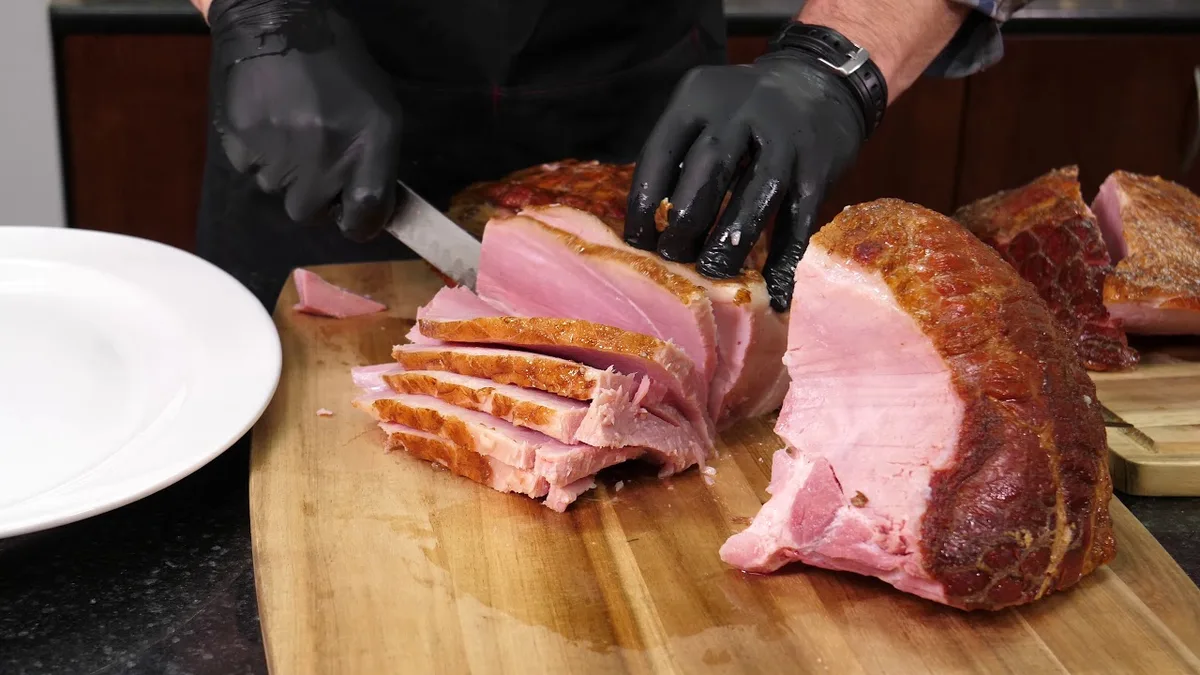
Spiral-cut ham deserves special mention. Those pre-cut slices are convenient, but they also mean the ham falls apart more easily during handling. In an air fryer, the exposed cut surfaces can dry out faster than a solid whole ham.
You'll need to wrap it in foil to protect those slices.
Size Matters: Will Your Ham Even Fit in the Basket?
This is where most people get tripped up. You can't just cram a ham into the basket and hope for the best. Air circulation is the whole point of an air fryer, and blocking it leads to uneven cooking.
Basket-style air fryers, the most common type, typically range from 3 to 6 quarts in capacity. A 5.8-quart basket can hold a boneless ham up to about 3.5 pounds. A bone-in ham of the same weight takes up more space because of its irregular shape.
You need at least an inch of clearance around the ham for hot air to circulate properly. If you're forcing the lid closed, it's too big.
Oven-style air fryers have more flexibility. These look like small convection ovens with racks. They can handle larger hams, up to about 5 or 6 pounds, depending on the model.
The rack design allows heat to flow above and below the meat. If you have an oven-style unit, your options open up considerably.
Measuring before buying is a smart habit. If you're shopping specifically for air fryer ham, grab a ham that's 2 to 3 pounds. That size fits comfortably in nearly any basket, cooks quickly, and gives you enough meat for a few meals.
A 4-pound ham is the absolute upper limit for most basket-style units.
Here's the honest truth: if your ham is over 5 pounds, you should use your regular oven. The air fryer simply can't do the job properly. Aggregate reviews from thousands of home cooks confirm that oversized hams lead to burnt exteriors and cold centers every time.
The Decision Tree: Which Path Should You Take?
Now that you know your ham type and size, here's the decision path that tells you exactly what to do next.
Branch 1: Small boneless ham between 2 and 4 pounds. This is the ideal scenario. You're in the sweet spot. Cook at 325°F for about 12 to 15 minutes per pound if it's pre-cooked.
Add 5 to 7 minutes per pound if it's raw. Glaze during the last 10 minutes. This path works every time.
Branch 2: Bone-in or spiral-cut ham under 3.5 pounds. You can do this, but you need to adjust your approach. Place the ham cut-side down to protect the exposed meat. Wrap the entire thing in foil for the first half of cooking.
Remove the foil for the last 15 minutes to let the glaze set. Cook at 325°F and expect about 15 to 18 minutes per pound.
Branch 3: Ham steak or small cut under 1 pound. Fast and easy. Cook at 350°F for 4 minutes per side. Brush with glaze or butter before flipping.
No foil needed. Dinner in under 15 minutes.
Branch 4: Large ham over 4 pounds. The honest answer is to use your oven. You can technically cut a large ham in half and cook it in two batches, but that's tedious and the second batch won't be as good. If you absolutely must use the air fryer, cut the ham into 2-inch thick steaks and cook them individually.
It's not ideal, but it works in a pinch.
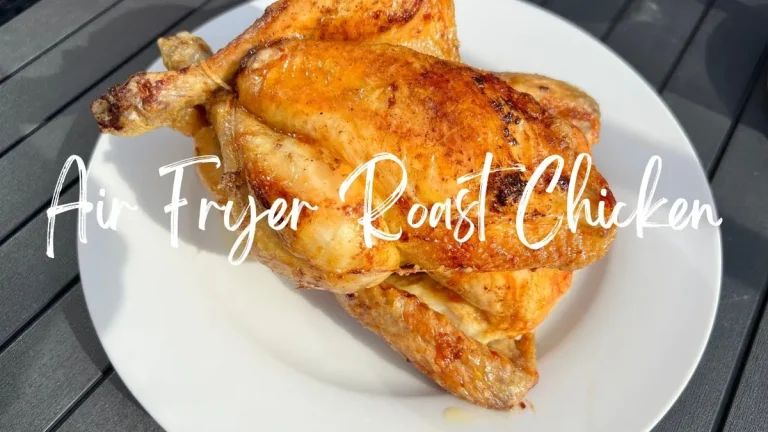
A note on the decision process: if you own an air fryer that can handle roasting larger cuts, you might also be interested in our guide on how to cook a whole chicken, which follows similar principles for temperature and timing.
Step-by-Step: How to Cook Each Type of Ham
Let's get into the actual cooking process. These steps work for any pre-cooked ham that fits your basket.
Step 1: Prepare the ham. Remove it from the refrigerator 20 to 30 minutes before cooking. This takes the chill off and helps it cook more evenly. Pat it dry with paper towels.
Moisture on the surface will steam rather than brown. If you want a nice caramelized crust, dry meat is essential.
Step 2: Score the surface. Use a sharp knife to cut shallow diamond patterns into the fat cap, about a quarter-inch deep. This helps the glaze penetrate and gives you those pretty crisscross lines. Don't cut into the meat itself, just the fat.
Step 3: Set the temperature. Pre-cooked ham cooks best at 325°F. Raw ham needs 350°F to ensure it reaches a safe internal temperature without drying out. Preheat the air fryer for 3 to 5 minutes before adding the ham.
Step 4: Cook according to weight. Use this timing chart as your starting point. Always verify with a thermometer.
| Ham Type | Weight | Temperature | Time per Pound | Total Time (Approx) |
|---|---|---|---|---|
| Pre-cooked boneless | 2 lbs | 325°F | 12-15 min | 24-30 min |
| Pre-cooked boneless | 3 lbs | 325°F | 12-15 min | 36-45 min |
| Pre-cooked bone-in | 2.5 lbs | 325°F | 15-18 min | 37-45 min |
| Ham steak | 6-8 oz | 350°F | N/A | 8-12 min total |
| Raw boneless | 2 lbs | 350°F | 20-25 min | 40-50 min |
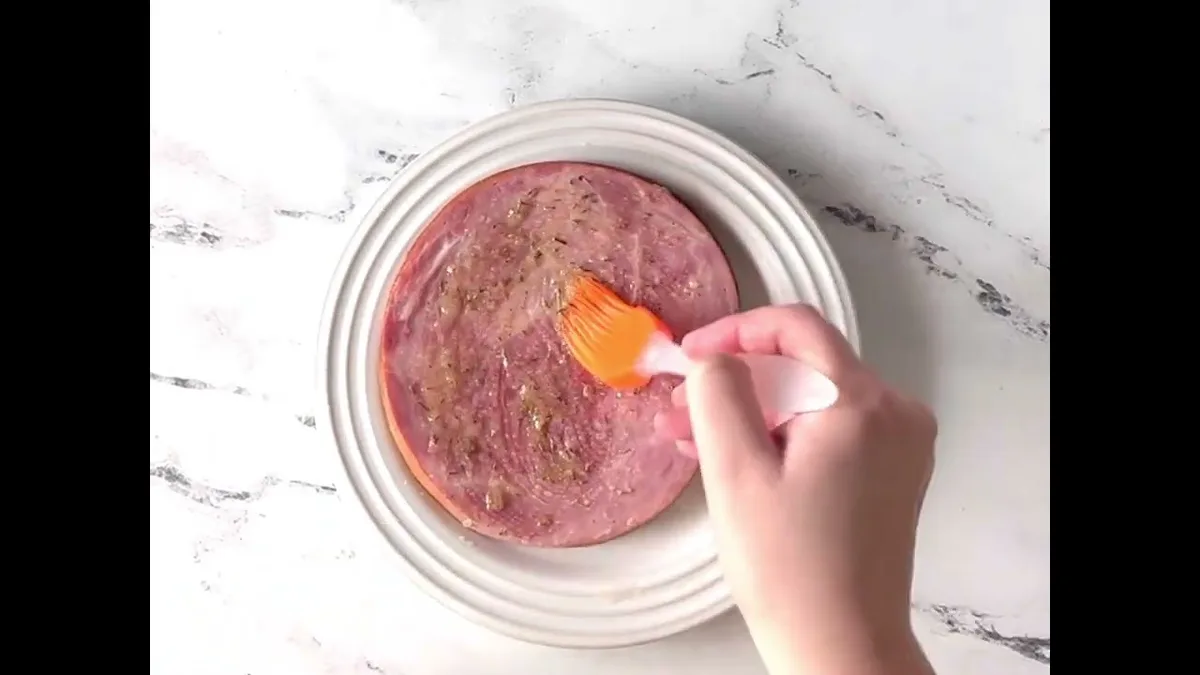
Step 5: Add the glaze at the right time. Glaze is sugar-heavy, and sugar burns at high temperatures. Apply it during the last 10 to 15 minutes of cooking. Brush it on, then let the air fryer caramelize it.
Watch closely. Burnt glaze tastes bitter and is tough to clean.
Step 6: Check the internal temperature. Insert an instant-read thermometer into the thickest part of the ham, avoiding the bone. Pre-cooked ham needs to reach 140°F. Raw ham needs 145°F.
The USDA Food Safety and Inspection Service sets these guidelines, and they're non-negotiable for safety.
Step 7: Rest before slicing. Let the ham sit for 5 to 10 minutes after it comes out of the air fryer. This lets the juices redistribute so your slices stay moist instead of dripping onto the cutting board.
The Glaze Problem: Getting It Right Without Burning
Glaze is the best part of a holiday ham, but it's also the most common source of kitchen frustration in an air fryer. Here's what happens and how to fix it.
Why sugar burns faster in an air fryer. Air fryers circulate hot air at high speed. This concentrated heat hits exposed surfaces harder than a conventional oven. Sugar-based glazes, honey, brown sugar, maple syrup, have low burning points.
At 325°F or above, they can scorch in minutes. If you've ever pulled out a ham with blackened, bitter spots, this is why.
The foil tent trick. Here's a technique that works every time. Cook the ham uncovered for most of the time. About 10 to 15 minutes before it's done, brush on the glaze.
Then loosely tent a piece of aluminum foil over the ham. This deflects some of the direct heat while still allowing the glaze to set. The result is a deep caramelized finish without the burnt edges.
When to glaze vs. glaze after. Consider this alternative: skip the glaze during cooking and apply it after the ham is fully cooked. Let the residual heat melt the glaze into a sticky coating. This avoids any burning risk entirely.
The trade-off is a slightly less intense caramelized flavor. For a ham steak or small cut, this method works great because the short cook time doesn't give sugar much chance to caramelize anyway.
What about store-bought glaze packets? Those pre-made syrups are even higher in sugar than homemade versions. If you use one, apply it even later, during the final 5 to 7 minutes. Watch it like a hawk.
Our research shows that store-bought glazes burn about twice as fast as homemade brown sugar and mustard blends.
Common Mistakes That Ruin Air Fryer Ham
Even experienced air fryer users make errors with ham. The good news is these mistakes are easy to avoid once you know what to look for.
Picking the wrong size ham. This is the number one mistake. A 6-pound spiral ham looks like a great deal at the store, but it won't fit in a standard 5.8-quart basket. You'll end up forcing the lid, blocking airflow, and getting uneven results.
Stick to 2 to 3 pounds for basket-style units.
Skipping the meat thermometer. Ham is one of those foods where visual cues lie. The outside can look perfectly browned while the center is still cold. Pre-cooked ham needs to hit 140°F.
Raw ham needs 145°F. Guessing is how you end up with disappointing results or food safety concerns.
Overcrowding the basket. Ham needs room. If you're cooking multiple ham steaks, leave space between them. Stacking or overlapping creates steamed spots instead of caramelized surfaces.
Cook in batches if you have to. It adds a few extra minutes but gives you better results.
Using too high a temperature. Crank the heat to 400°F and your ham will look burnt on the outside while staying cold in the middle. Stick to 325°F for pre-cooked ham and 350°F for raw. These temperatures give the heat time to penetrate without destroying the exterior.
Not letting it rest. Slicing into a ham straight from the air fryer releases all the juices onto the cutting board. A 5 to 10 minute rest lets those juices redistribute through the meat. Your slices will be noticeably more moist.
Internal Temperature Guide: The Only Number That Matters
A meat thermometer is the single most important tool for cooking ham in an air fryer. Without it, you're flying blind.
For pre-cooked ham, the target is 140°F. This is a reheating temperature, not a cooking temperature. The ham is already safe to eat cold. You're warming it through and adding flavor.
Insert the thermometer into the thickest part of the meat, away from the bone. The bone conducts heat differently and will give you a false reading.
For raw ham, the target is 145°F. The USDA guidelines specify this temperature for fresh pork. After the ham comes out of the air fryer, let it rest for three minutes. The internal temperature will rise another 2 to 3 degrees during this time, which is called carryover cooking.
Where to check the temperature matters. Don't poke the thermometer through the fat cap or touch the bone. Aim for the center of the meatiest section. For a bone-in ham, take readings in two or three different spots.
If one spot reads 140°F and another reads 130°F, the ham needs more time.
What to do if the glaze is burning but the center is cold. This is a common problem. The solution is to tent the ham with foil. The foil protects the glaze from direct heat while the interior continues warming.
Lower the temperature by 25°F if the outside is cooking faster than the inside.
When You Should Just Use the Oven Instead
The air fryer is versatile, but it has limits. Knowing when to switch to the oven saves you time and frustration.
When the ham is over 4 to 5 pounds. No amount of angling or cutting will make a large ham fit properly in a standard basket. The oven gives you even heat distribution and plenty of space. Cook at 325°F for 15 to 18 minutes per pound, covered with foil for the first half.
When you're feeding a crowd. An air fryer handles 2 to 3 pounds at a time. That serves about 4 to 6 people. For larger gatherings, the oven is more efficient.
You can cook a 10-pound ham and keep it warm while you prepare sides.
When you need gentle reheating. Some spiral-cut hams are delicate. The pre-cut slices can dry out quickly in an air fryer's high-velocity airflow. The oven's gentler convection heats more evenly without blasting the exposed surfaces.
When your air fryer is oven-style but still too small. Even oven-style units have limits. If the ham touches the heating element or blocks the fan, use the main oven. Manufacturer specs from brands like Breville and Cuisinart confirm that their largest models top out around 6 pounds for dense meats like ham.
Pro Tips for Better Results
These are the small adjustments that separate good air fryer ham from great air fryer ham.
Pat the ham dry before cooking. Excess moisture creates steam. Steam prevents browning. A dry surface lets the heat caramelize the fat and glaze.
Use paper towels and be thorough.
Flip the ham half-way through. Most air fryer baskets have hot spots. Flipping ensures even cooking. For a boneless ham, use tongs to rotate it 180 degrees at the halfway mark.
For a ham steak, flip it like a burger.
Use the foil method for spiral-cut hams. Wrap the entire ham in foil for the first half of cooking. This traps steam and prevents the cut surfaces from drying out. Unwrap for the last 15 minutes to let the glaze set and the exterior crisp up.
Save the drippings. The rendered fat and juices that collect in the bottom of the basket are full of flavor. Pour them into a small saucepan. Add a splash of water or broth and a teaspoon of mustard.
Simmer for a minute and you have a quick pan sauce.
Let the ham rest before slicing. This bears repeating because it makes such a difference. A short rest means juicier slices. Use that time to finish your side dishes.
FAQs People Actually Ask
Can I cook a frozen ham in the air fryer?
Not recommended. Cooking a frozen ham leads to uneven results. The outside will overcook while the center stays cold and potentially unsafe.
Thaw the ham in the refrigerator for 24 to 48 hours before cooking. If you're in a hurry, use the defrost setting on your microwave, but cook the ham immediately after.
Do I need to wrap it in foil?
It depends on the ham type. Spiral-cut and bone-in hams benefit from foil wrapping during the first half of cooking. Boneless hams and ham steaks don't need it.
Foil protects exposed surfaces but also traps steam, so use it only when moisture retention is the priority.
How do I clean the sticky glaze off the basket?
Let the basket cool completely. Fill it with hot water and a drop of dish soap. Let it soak for 15 minutes.
The glaze will soften and wipe away easily. Avoid abrasive scrubbers that damage the nonstick coating. If residue remains, make a paste of baking soda and water and scrub gently.
Can I cook two small hams at once?
Yes, but only if they fit without touching each other or the sides of the basket. Overcrowding blocks airflow and leads to uneven cooking. If they fit with at least an inch of clearance all around, cook them at the same temperature and add 5 minutes to the total time.
Check the internal temperature of both before serving.
Can You Cook a Frozen Ham in the Air Fryer?
No. Cooking a frozen whole ham in an air fryer is not recommended. The outside will burn before the center thaws and reaches a safe temperature.
Thaw your ham in the refrigerator for 24 to 48 hours before cooking.
Ham steaks are the exception. A frozen ham steak can go directly into the air fryer at 350°F. Add 3 to 4 minutes to the total cook time.
Flip halfway through and check the internal temperature before serving.
Do You Need to Wrap the Ham in Foil?
It depends on the type of ham you're cooking. Spiral-cut hams benefit from foil wrapping during the first half of cooking. The foil traps steam and prevents the cut surfaces from drying out.
Remove it for the last 15 minutes to let the glaze set.
Boneless hams and ham steaks don't need foil at all. Their surfaces are solid and retain moisture naturally. Foil on these cuts only prevents browning.
Skip it unless you're protecting a glaze from burning.
How Do You Clean Sticky Glaze Off the Basket?
Let the basket cool completely before cleaning. Fill it with hot water and a drop of dish soap. Let it soak for 15 minutes.
The sugar-based glaze will soften and wipe away with a soft sponge.
Avoid abrasive scrubbers. They damage the nonstick coating on air fryer baskets. If residue remains, make a paste of baking soda and water.
Apply it gently with a soft cloth and rinse thoroughly.
Can You Cook Two Small Hams at Once?
Yes, if they fit without touching each other or the sides of the basket. Overcrowding blocks airflow and leads to uneven cooking. Leave at least one inch of clearance around each ham.
If they fit comfortably, cook them at the same temperature recommended for a single ham. Add 5 minutes to the total cook time. Check the internal temperature of both hams before serving.
One may cook faster than the other.
When Should You Just Use the Oven Instead?
Use the oven when your ham is over 4 pounds. No amount of trimming or angling will make a large ham fit properly in a standard air fryer basket. The oven provides even heat distribution and plenty of space.
Use the oven when you're feeding a crowd. An air fryer handles 2 to 3 pounds at a time. That serves about 4 to 6 people.
For larger gatherings, a 10-pound ham in the oven is more efficient.
Use the oven when your ham is a delicate spiral-cut. The high-velocity airflow in an air fryer can dry out those pre-cut slices. The gentler convection in a regular oven reheats more evenly without damaging the exposed surfaces.