Step-by-step: How Long Do You Cook Sausages in an Air Fryer
If you've ever stood in front of your air fryer wondering how long do you cook sausages in an air fryer without ending up with a burnt exterior and raw center, you're not alone. It's one of the most common questions we get, and honestly, the answer isn't a single number. It depends on what type of sausage you're cooking, whether it's frozen, and how thick it is.
The good news? Air fryers are genuinely excellent for sausages. They produce a crisp, snappy casing in less time than a conventional oven, without the splatter mess of a stovetop pan.
As of 2026, most major air fryer manufacturers recommend temperatures between 350°F and 400°F for sausage, but the exact timing varies. Let's break down precisely what to do so you get juicy, fully-cooked sausages every single time.
Quick Answer
Cook fresh sausages in an air fryer at 380°F for 12 to 15 minutes. Flip halfway through. Pre-cooked sausages take 6 to 8 minutes at 350°F.
Frozen sausages need 16 to 20 minutes at 360°F. Always check the internal temperature hits 160°F before serving.
What Affects Cooking Time in an Air Fryer?
Three main variables change your cooking time. Understanding them is the difference between perfect sausages and a disappointing dinner.
Fresh vs. Pre-Cooked vs. Frozen
This is the biggest factor. A raw breakfast sausage needs to cook all the way through before it's safe to eat. A hot dog or smoked kielbasa is already fully cooked, so you're only reheating it and crisping the casing.
- Fresh sausages (breakfast links, Italian sausage, bratwurst): require full cooking through to 160°F
- Pre-cooked sausages (hot dogs, smoked sausage, chicken sausage): only need reheating to 145°F or hotter
- Frozen sausages: add roughly 40 to 50 percent more time than fresh, and you'll need a lower temperature to prevent burning the outside before the inside thaws
Sausage Thickness and Casing
A skinny breakfast link cooks in about 9 minutes. A thick bratwurst or Italian sausage needs closer to 15 minutes. The casing matters too.
Natural casings crisp up beautifully in an air fryer. Synthetic casings may not brown as evenly and can sometimes split if the heat is too high.
Your Specific Air Fryer Model
Not all air fryers run at the same temperature. A 1500W model will heat faster than a 1000W compact unit. Older air fryers can also run hotter or cooler than their dials suggest, sometimes by 20 to 50 degrees.
If you have an oven-style air fryer with a rotating basket, you may need slightly less time because the constant motion cooks more evenly. Check your manufacturer's manual, and consider using an oven thermometer to verify your unit's accuracy.
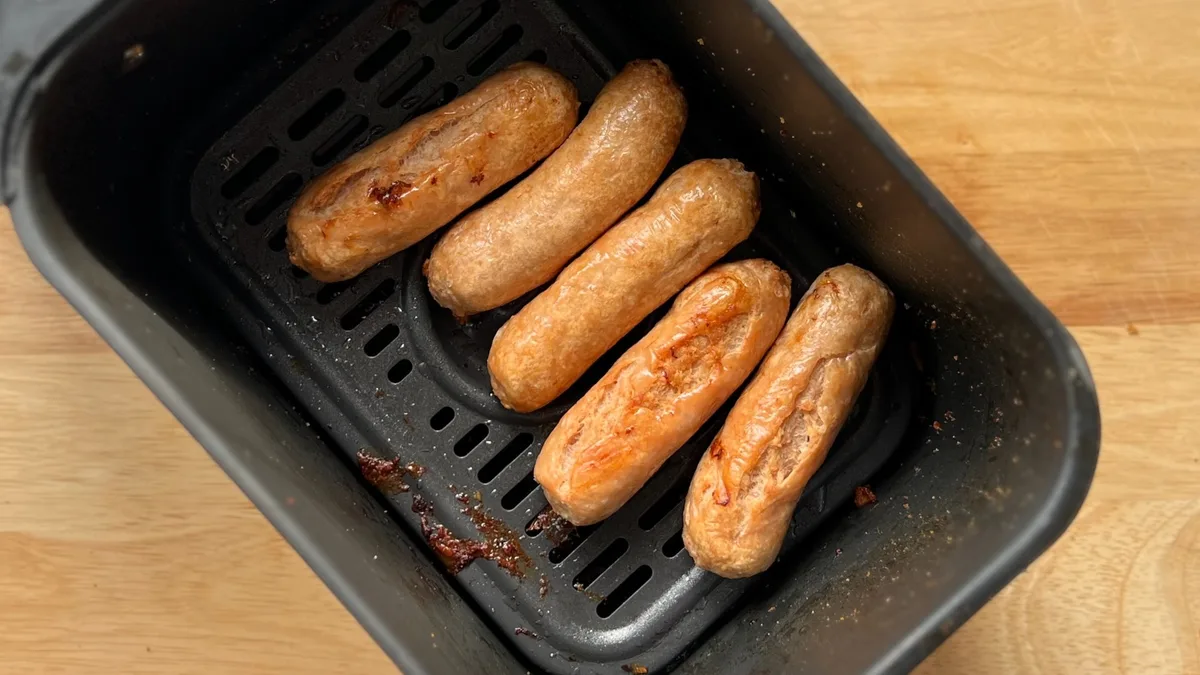
Image source: Web (Bing) / studenteats.co.uk (Web image (fair-use with source credit))
The Decision Guide: Choosing Your Time Based on What's in the Basket
Rather than guessing, use this simple guide to match your sausage type to the right time and temperature. Start with the timer on the shorter end, then check the internal temperature before serving.
| Sausage Type | Temperature | Cooking Time | Flip? |
|---|---|---|---|
| Fresh breakfast links | 380°F | 9 to 11 minutes | Flip at 5 minutes |
| Fresh Italian sausage | 380°F | 12 to 15 minutes | Flip at 7 minutes |
| Fresh bratwurst | 380°F | 14 to 16 minutes | Flip at 7 minutes |
| Pre-cooked smoked sausage | 350°F | 6 to 8 minutes | Flip at 4 minutes |
| Hot dogs | 375°F | 4 to 6 minutes | Flip at 3 minutes |
| Frozen breakfast links | 360°F | 12 to 14 minutes | Flip at 6 minutes |
| Frozen bratwurst or Italian | 360°F | 16 to 20 minutes | Flip at 9 minutes |
Image source: Bing (Web (fair-use with source credit))
Keep in mind these are starting points. Air fryer wattage, altitude, and how many sausages you're cooking all shift the numbers slightly. If you're making a half batch, you might shave a minute or two off.
Crowding the basket with a full load adds a couple of minutes since air needs room to circulate.
How to Cook Sausages in an Air Fryer, Step by Step
The process is straightforward, but a few details separate good results from great ones.
First, preheat your air fryer. Most models take 3 to 5 minutes to reach temperature. A preheated basket gives you an immediate sear on the casing, which locks in moisture. If you're skipping the preheat, add about 2 minutes to your cooking time.
Some newer air fryers handle preheating automatically, but with manual models, just run the basket empty at your target temperature for a few minutes. For more on whether this step really matters, our guide on preheating or not breaks down the differences.
Prep the sausages. Pat them dry with a paper towel. Excess moisture steams rather than crisps. Don't bother pricking the casings, despite what older recipes say.
Those little holes let out the juices that keep the sausage moist. That said, if you're using extra-fatty sausages and see excessive smoke, a gentle fork prick at one end can help release drippings.
Arrange them in a single layer. This is non-negotiable. Overlapping sausages steam each other, creating soft spots and uneven cooking. Leave about half an inch between each link.
If you're cooking more than four thick sausages, work in batches. The table in the previous section assumes a single layer, which keeps the timing accurate.
Flip halfway through. Set a reminder or just check at the halfway mark. Use tongs to roll each sausage. This ensures even browning on all sides.
Since air fryers circulate heat from above and below, flipping gives the bottom of each sausage its turn near the heat source.
Check the temperature. Use an instant-read thermometer inserted into the thickest part of the sausage. It should read 160°F for pork or beef, and 165°F for chicken or turkey. Don't skip this step.
Visual cues are unreliable with sausages because browning doesn't guarantee the center is done.
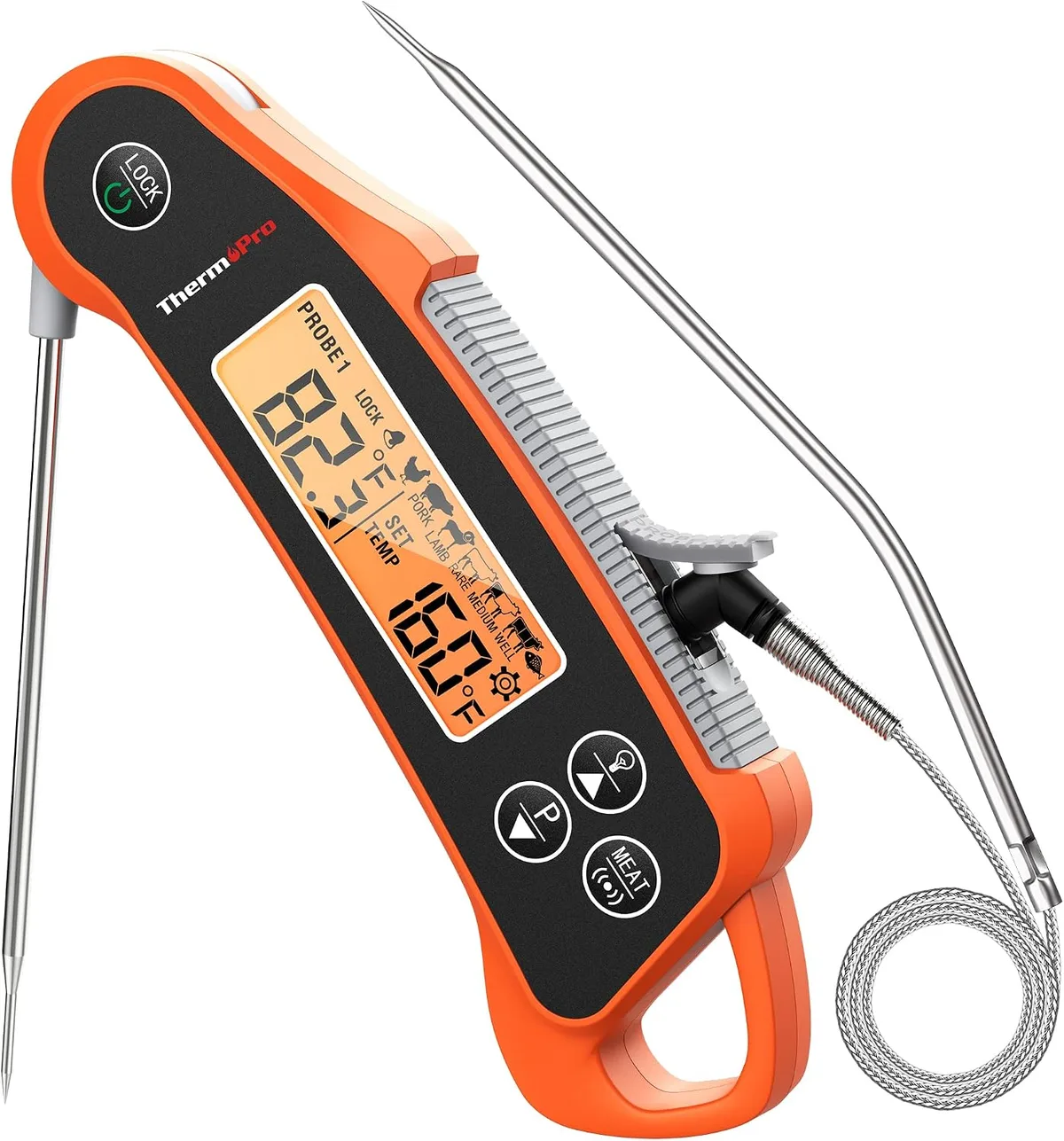
Image source: Web (Bing) / manuals.plus (Web image (fair-use with source credit))
Rest for 3 minutes. Set the sausages on a clean plate and let them rest. This lets the juices redistribute, so every bite is moist rather than dry. Resting time also finishes the cooking process, so a sausage that reads 155°F will climb the last few degrees on the plate.
Serve and clean up. After your sausages are done, let the basket cool slightly before washing. Leftover grease can harden and become stubborn. If you're wondering about the best way to handle the mess, our tips on removing grease from your air fryer will save you time on cleanup.
Should You Prick the Casing? The Great Sausage Debate
It's the classic kitchen question, and the air fryer adds a new angle. Pricking was originally recommended to prevent sausages from exploding when cooked at high heat in a pan. The theory was that an airtight casing would burst under pressure.
In an air fryer, that logic doesn't really hold. The heating is more even than a screaming-hot skillet, so pressure builds more slowly. Manufacturers of natural-casing sausages generally advise against pricking because it drains the juices and leaves the meat dry.
A quick google of your sausage brand's preparation instructions will confirm this.
However, there's one scenario where a tiny vent helps. If you're cooking very fatty sausages like chorizo, the rendered fat can cause popping and smoke inside the basket. A single small slit at one end releases pressure while keeping most of the moisture locked in.
Just don't go overboard. Five or six punctures across the length of the sausage will dry it out.
For most standard sausages, skip the fork. Let the casing do what it's designed to do, which is hold in flavor. If you're worried about bursting, lower your temperature by 10 degrees.
Brown the sausages for an extra minute or two if the casing looks pale, rather than sacrificing the internal moisture.
One more thing to keep in mind. Sausages with natural casings will sometimes puff up as they cook. This is a good sign.
It means steam is building inside, which is what keeps the meat tender. Let the sausage rest after cooking and the puffing usually subsides. If it bothers you, flip the sausages gently at the halfway point rather than squeezing them with heavy tongs.