Ultimate Guide to How Long Do You Reheat Wings in an Air Fryer
There's nothing quite as disappointing as biting into a leftover wing that's gone cold, rubbery, and sad. You've been there. The microwave turns them into chewy, soggy messes, and the oven takes forever just to warm up.
That's why so many people are asking how long do you reheat wings in an air fryer, and honestly, it's the right question. The air fryer is the single best tool for bringing leftover wings back to life, restoring that crisp exterior and juicy interior you loved the first time around.
The short answer is 4 to 10 minutes depending on what you're reheating, but the real magic lies in the details. Manufacturer specifications and USDA guidelines both point to a critical benchmark: your wings need to hit 165°F internally before they're safe to eat, and the air fryer does that without destroying texture. Ready to stop eating sad leftovers?
Let's walk through exactly how to nail it every time.
Quick Answer
Reheat bone-in wings at 375°F for 8 to 10 minutes. Reheat boneless wings at 350°F for 4 to 6 minutes. Flip halfway through.
Check that the internal temperature reaches 165°F. That's the whole secret.
The Reheat Struggle: Why Wings Go Soggy in the Microwave
Every wing lover knows the pain. You order too many, stash the extras in the fridge, and then face the dilemma the next day. The microwave seems convenient, but it's actually the worst possible tool for this job.
Here's why.
Microwaves work by exciting water molecules. That means they heat the moisture inside the wing, creating steam. Steam has nowhere to go, so it soaks into the breading and the skin.
What you get is a hot, floppy, sad imitation of the crispy wing you enjoyed hours earlier.
The oven does slightly better, but it's slow and energy-hungry. You're waiting 15 to 20 minutes for preheat alone, and even then, the dry heat can zap moisture right out of the meat. The air fryer sits right in the sweet spot between the two.
It uses rapid hot air circulation to dry out the surface and crisp it back up, all while keeping the inside tender and juicy.
This isn't just opinion. Aggregate reviews from thousands of home cooks consistently point to the air fryer as the top method for leftover fried food. The USDA confirms that reheating to 165°F kills any bacteria that may have developed overnight, and the air fryer gets you there fast.
What's Happening in the Air Fryer (and Why It Wins)
Understanding the mechanics makes you a better cook, so let's get into it. An air fryer is essentially a countertop convection oven. It has a heating element at the top and a fan that rapidly circulates hot air around your food.
This rapid circulation does two things. First, it blows moisture off the surface of the wing, allowing the skin to dry out and crisp up. Second, it transfers heat efficiently, so the food cooks from the outside in quickly, without drying out the interior.
Manufacturer specifications indicate that most air fryers generate temperatures between 200°F and 400°F. For reheating, you don't need maximum heat. You need enough heat to warm the meat through before the exterior burns.
That's why 350°F to 375°F works so well for most reheating scenarios.
There's also an airflow consideration. The wings need space. If you pile them in, the fan can't circulate air around each piece, and you'll get uneven results.
Some pieces will be hot and crispy while others stay lukewarm and soft. That's one reason the single-layer rule exists.
The process also deals with how heat penetrates the food. A bone-in wing takes longer to heat through because the bone acts as a cold sink, absorbing heat away from the meat. It's not just about the surface, it's about the whole piece.
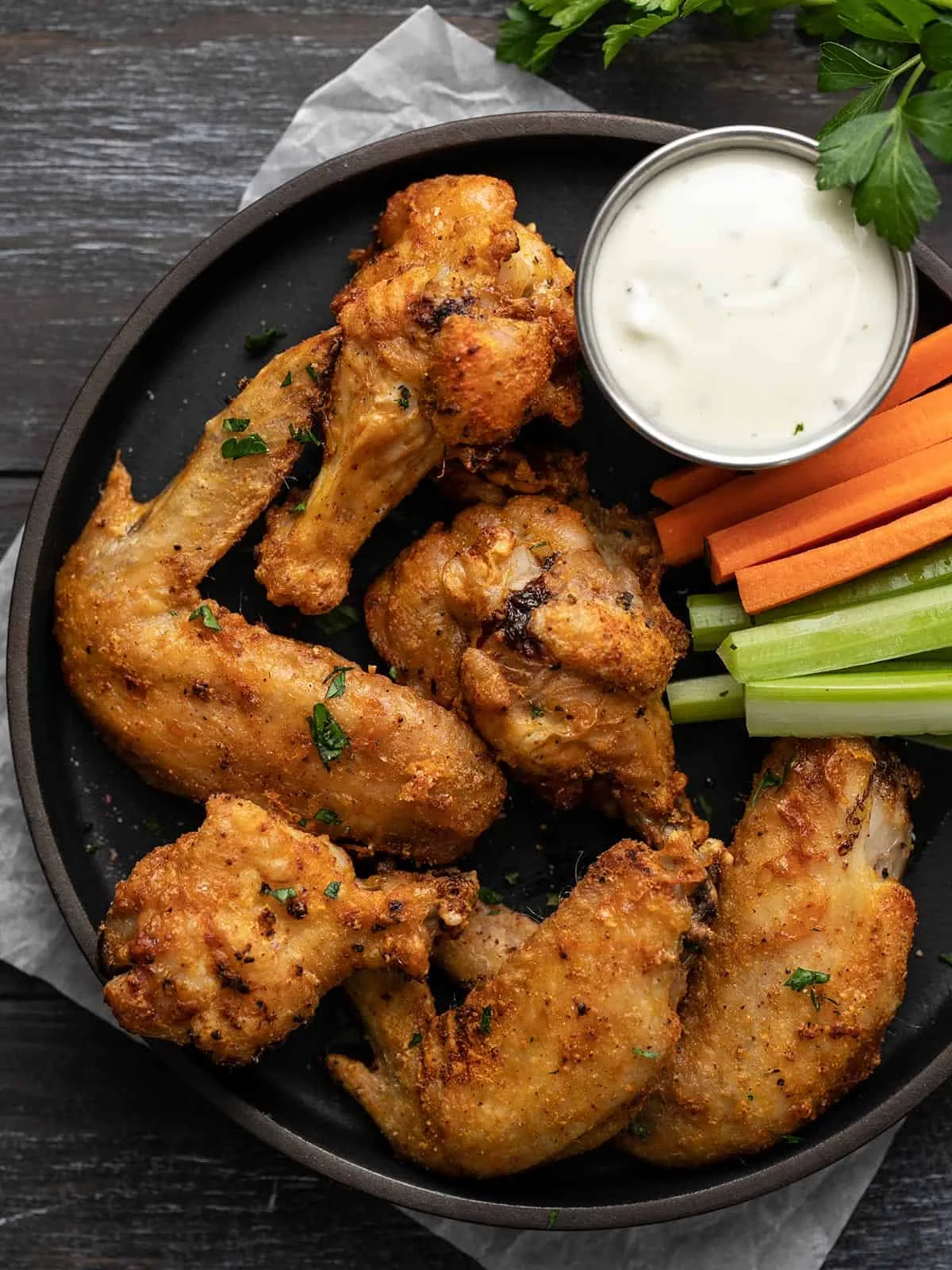
Image source: Web (Bing) / foodcrazies.com (Web image (fair-use with source credit))
The Main Decision: Bone-In vs. Boneless Wings
Before you set any temperature, you need to know what you're reheating. Bone-in wings and boneless wings are fundamentally different when it comes to reheating, and treating them the same will lead to disappointment.
Bone-in wings have a larger mass, a bone that affects heat distribution, and typically thicker skin. They take longer to heat all the way through. Boneless wings, which are often just chicken breast nuggets or tenders, heat faster because they're smaller and more uniform in shape.
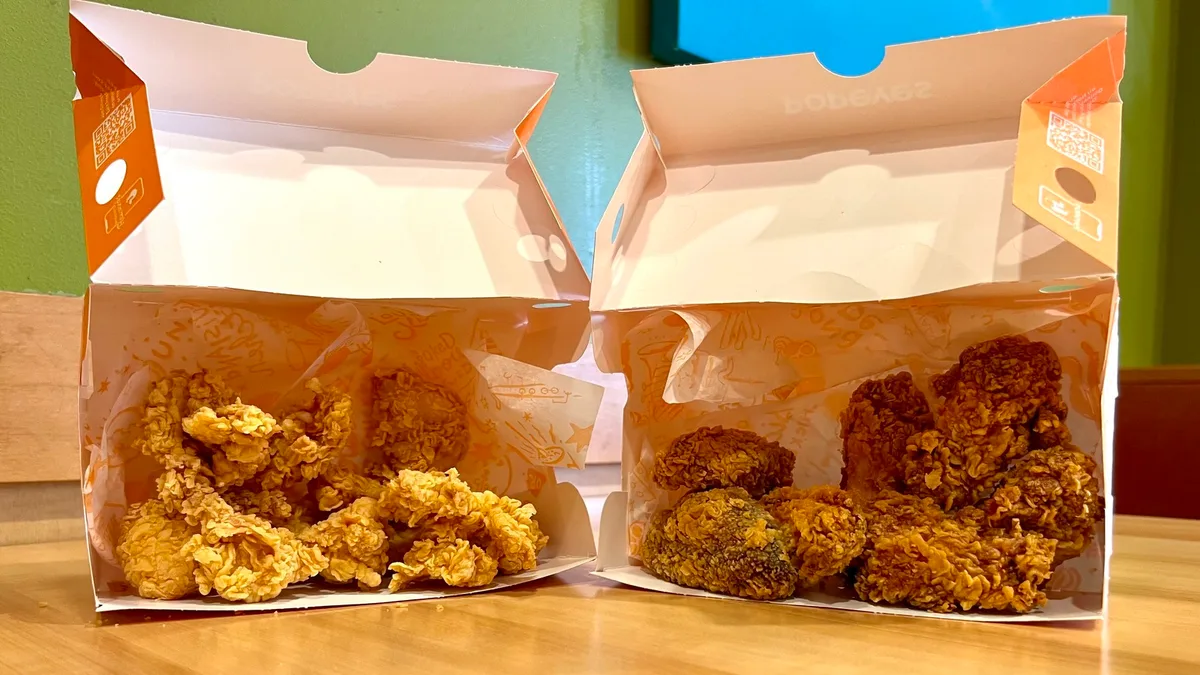
Image source: Bing (Web (fair-use with source credit))
Here's a quick breakdown to guide your decision:
- Bone-in wings: Aim for 375°F for 8 to 10 minutes. Flip at the halfway mark.
- Boneless wings: Aim for 350°F for 4 to 6 minutes. Shake the basket halfway through.
- Party wings (smaller): On the shorter end of the bone-in range, 7 to 8 minutes.
- Jumbo wings: The longer end, 10 to 12 minutes, and check the internal temp.
The main reason for the temperature difference comes down to the coating. Boneless wings are often coated in a thick batter or breading. At higher temperatures, that coating burns before the chicken inside gets hot.
Lower temperatures give the heat time to penetrate without scorching the outside.
Keep in mind that the air fryer's fan helps here too. It creates a kind of pressure-cooker effect, locking in moisture while driving out surface humidity. But it's not magic, so match your time to what's actually in the basket.
Bone-In Wings: The 375°F Rule
If you're reheating classic buffalo wings with the bone still in, 375°F is your sweet spot. This temperature is high enough to re-crisp the skin in under 10 minutes but low enough to prevent the outside from burning while the inside warms.
Set the air fryer to 375°F and preheat for 3 minutes if your model calls for it. Place the wings in a single layer in the basket, leaving a little space between each piece for airflow. Cook for 4 to 5 minutes, flip each wing, then continue for another 4 to 5 minutes.
Check the internal temperature at the thickest part of the meat, avoiding the bone. Your target is 165°F. If you're not there yet, add 2 more minutes and check again.
Boneless Wings: Faster and Hotter, Not the Same
Boneless wings are the quick win of the leftover world. They're smaller, more uniform, and usually breaded, which means they crisp up fast. But that same breading burns easily, so you need to dial the temperature down slightly.
Set the air fryer to 350°F. Place the boneless wings in a single layer, giving them some room. Cook for 2 to 3 minutes, shake the basket, then cook for another 2 to 3 minutes.
Check the internal temperature and then serve.
Why lower? Because the coating on boneless wings acts as an insulator. At 375°F or higher, the breading can turn dark brown or bitter before the chicken center is fully warm.
At 350°F, you get a crisp exterior and a properly heated middle.
The Next Branch: Sauced vs. Naked Wings
Once you've figured out bone-in versus boneless, you need to consider the sauce situation. This is where most people mess up. If you have saucy wings, throwing them in the air fryer the same way you would a dry rub wing will cause problems.
Here's the core idea: sauce is moisture, and moisture in the air fryer creates steam. Steam keeps the skin from crisping and can make everything turn soft. It can also cause the sauce to burn or caramelize into a sticky mess on your basket.
So the question becomes, what do you do? You can't just leave the sauce on and hope for the best. It rarely works out well.
Dry-Rub and Breaded Wings
Dry-rub wings are the easiest to reheat. They have no extra moisture on the surface, so the hot air can work directly on the skin or coating to restore crispness.
Follow the bone-in or boneless times based on what you're working with. No adjustments needed. Just toss them in and let the air fryer work its magic.
If you want to add a little extra seasoning, do it after reheating, not before.
One tip for breaded wings: a light spritz of cooking spray can help re-crisp the breading. It adds a thin layer of oil that helps the coating brown evenly and get crunchy again. Just don't drench them.
Sticky, Sauced, and Buffalo Wings
This is the trickier category. Sauced wings have a coating of buffalo sauce, barbecue sauce, or something similar. These sauces are mostly moisture, sugars, and vinegar, which makes them prone to burning or steaming.
The best approach is to reheat them naked first, then re-sauce. Begin by reheating the wings at 375°F for bone-in, or 350°F for boneless, without any sauce. This restores the crispiness of the skin or breading.
Then, once they're hot and crispy, toss them in your sauce of choice. The residual heat will warm the sauce without compromising the texture. This method produces wings that taste nearly fresh, and it's how many professionals handle leftovers.
If you absolutely must reheat sauced wings directly, expect some trade-offs. Lower the temperature to 350°F and check frequently. The sauce may not crisp the same way, but it will at least warm through evenly.
You'll also want to be ready for extra cleanup, because caramelized sauce can stick to the basket. That's where having a solid cleaning routine comes in handy.